



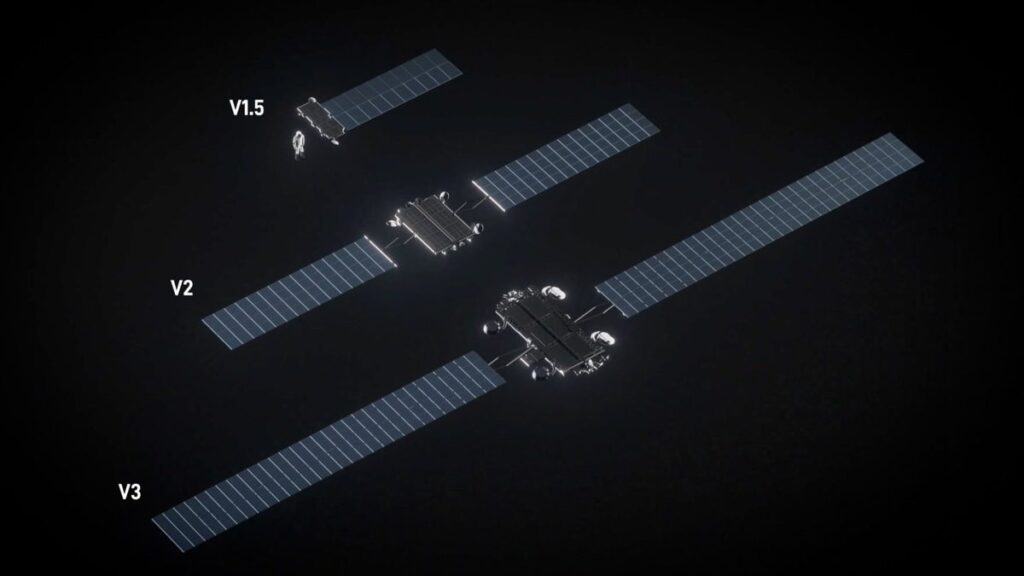
SpaceX’s ambitious plan to deliver gigabit internet speeds globally by 2026 hinges on the deployment of its V3 Starlink satellites. However, CEO Elon Musk recently indicated that the mass deployment of these satellites will likely not occur until the fourth quarter of 2026. The announcement was made via a tweet on Wednesday, where Musk stated that the V3 satellites are expected to launch “at scale around Q4 next year.”
The V3 Starlink satellites are anticipated to bring significant performance enhancements to the existing satellite internet system. While Musk hinted at the possibility of an earlier appearance for the V3 units in 2026, possibly as early as the first quarter, the timeline remains uncertain. In June, Musk mentioned that the initial V3 units could start launching “in 6 to 9 months,” suggesting a potential launch window in early 2026.
Challenges and Developments
SpaceX’s timeline predictions have historically been fluid. Originally, Musk suggested there was a “good chance” that the V3 satellites would launch in 2024. In a 2021 FCC presentation, the company even projected that it could eventually offer speeds of up to 10Gbps, a significant leap from the current Starlink speeds, which typically range from 100Mbps to over 300Mbps.
To facilitate the launch of its next-generation satellites, SpaceX is relying on its Starship vehicle, a powerful rocket that is still under development. Over the past year, Starship has completed several successful test flights, including the deployment of dummy Starlink satellites. However, the rocket has faced numerous challenges and setbacks as SpaceX continues to refine its design and capabilities.
Regulatory and Technical Hurdles
The successful deployment of V3 satellites is contingent upon overcoming several hurdles. One significant challenge is obtaining the necessary approvals from the Federal Communications Commission (FCC). Additionally, SpaceX must ensure that the Starship vehicle can achieve new milestones in 2026, which would pave the way for commercial launches and potential missions to the Moon.
Meanwhile, Musk has been focusing on another ambitious initiative: the development of space-based data centers. In a tweet, he highlighted SpaceX’s extensive experience, noting, “SpaceX has way more satellites in orbit than the rest of the world combined, so maybe we know a thing or two about the subject.” He further suggested that converting the V3 satellites into AI-capable units, equipped with GPUs and capable of receiving up to 150 kilowatts of solar energy, would be feasible.
Financial and Strategic Implications
In addition to the technical and regulatory challenges, SpaceX’s plans for the V3 satellites are intertwined with its financial strategies. Musk has indicated that a rumored initial public offering (IPO) for SpaceX could be leveraged to generate funding for the development of space-based data centers. He confirmed in a tweet that reports by Ars Technica on this topic were “accurate.”
The move represents a strategic alignment of SpaceX’s satellite and financial ambitions, potentially positioning the company at the forefront of both internet service provision and space-based data solutions. The implications of these developments could extend beyond SpaceX, influencing the broader satellite internet industry and its competitive landscape.
Looking Ahead
The deployment of V3 Starlink satellites marks a critical juncture for SpaceX as it seeks to expand its service offerings and technological capabilities. The successful execution of this plan could redefine global internet connectivity, offering unprecedented speeds and coverage. However, the path forward is fraught with challenges, from technical hurdles to regulatory approvals and financial considerations.
As the world watches SpaceX’s progress, the company’s ability to navigate these complexities will be crucial. If successful, the V3 satellites could set a new standard for satellite internet, potentially paving the way for future innovations in space-based technology and services.