



As the mosquito season arrives earlier than expected, New South Wales (NSW) Health has issued a warning to residents to protect themselves against two mosquito-borne viruses capable of causing severe brain damage. The alert highlights the increased risk of the Japanese encephalitis virus (JEV) across 60 local government areas (LGAs) in the region.
These areas, which span northern NSW and west of the dividing range, include Lismore, Orange, Albury, the Upper Hunter, Liverpool Plains, and Broken Hill. The early detection of JEV in mosquitoes in Victoria last week, approximately three-and-a-half hours northwest of Melbourne, underscores the urgency of the situation.
Heightened Concerns Over Mosquito-Borne Viruses
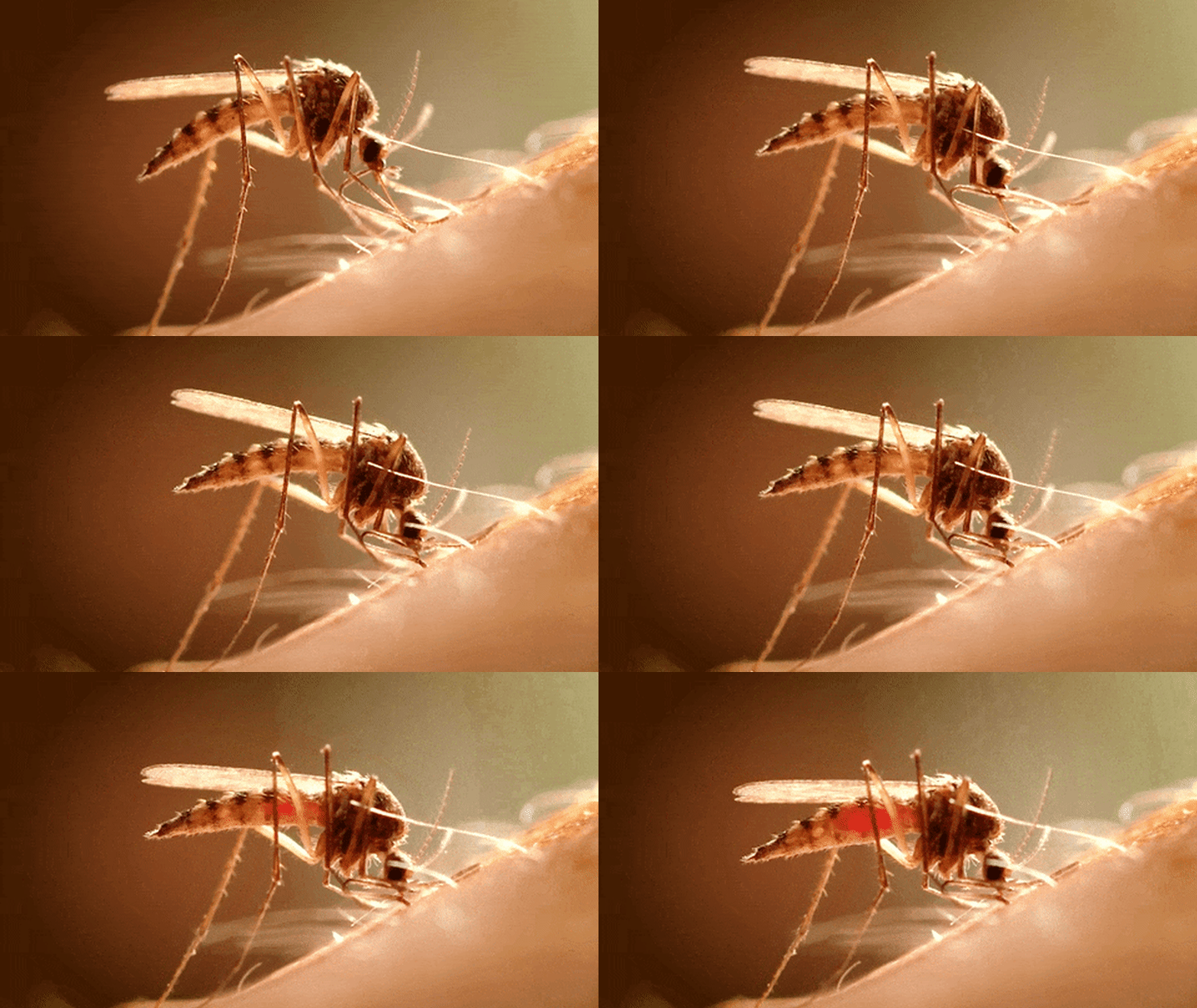
Another virus, the Kunjin virus, was identified in western NSW at Cowra through a routine surveillance program by NSW Health in late November. This virus, like JEV, spreads when mosquitoes bite infected animals such as waterbirds, pigs, or horses, and then transmit the virus to humans. It is important to note that these viruses cannot be spread from person to person.
Dr. Stephen Conaty, NSW Health’s director of health protection, expressed concern over these early detections. “Mosquito numbers will likely increase with warmer weather, and we remind everyone in NSW to protect themselves against mosquito bites, which can cause diseases such as Japanese encephalitis and Murray Valley encephalitis, and infection with Kunjin virus, Ross River virus, and Barmah Forest virus,” he stated.
Preventive Measures and Vaccination
To minimize the risk of infection, NSW Health advises residents and travelers, particularly those in the 60 higher-risk LGAs, to take precautions against mosquito bites, especially between dusk and dawn when mosquitoes are most active. Residents in these areas are eligible for a free JE vaccine, with a booster recommended one or two years later.
While most individuals infected with JEV or Kunjin virus do not develop symptoms, those who do may experience severe health complications. JEV symptoms typically appear five to 15 days after being bitten and can include fever, headache, and vomiting. In severe cases, symptoms may progress to neck stiffness, disorientation, tremors, coma, seizures, and paralysis.
Permanent neurologic, cognitive, and behavioral symptoms occur in 30 to 50 percent of those with encephalitis, with children under 15 being the majority of cases.
Historical Context and Current Statistics
JEV has claimed four lives in NSW over the past five years, with two deaths occurring between 2021-2022 and another two between 2024-2025. Since 2021, there have been 19 recorded cases of JEV in the state. Meanwhile, Kunjin virus symptoms can include fever, enlarged lymph nodes, rash, swollen and aching joints, headache, muscle weakness, and fatigue. Severe infections may lead to lifelong neurological complications or even death.
There is currently no specific treatment for these mosquito-borne viruses, aside from the JE vaccine. Medical care focuses on alleviating severe symptoms and supporting patients through the infection.
Looking Ahead: Public Health Implications
The early arrival of mosquito season and the detection of these viruses highlight the need for increased public health measures and awareness. As climate conditions continue to change, the potential for mosquito-borne diseases to spread earlier and more widely poses a significant challenge to health authorities.
Residents are urged to stay informed about the risks and take proactive steps to protect themselves and their communities. The situation underscores the importance of ongoing surveillance and vaccination programs to mitigate the impact of these viruses.
For more information and updates, residents can refer to NSW Health advisories and consult with healthcare providers about vaccination options.