


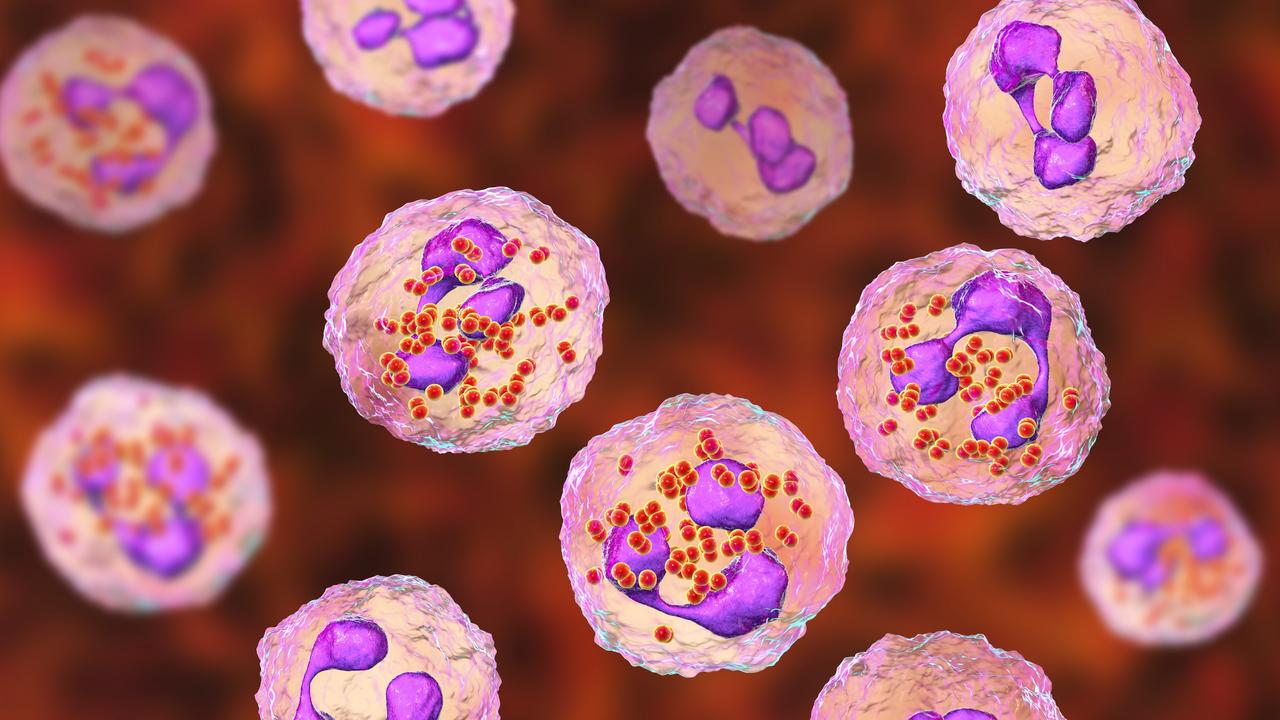
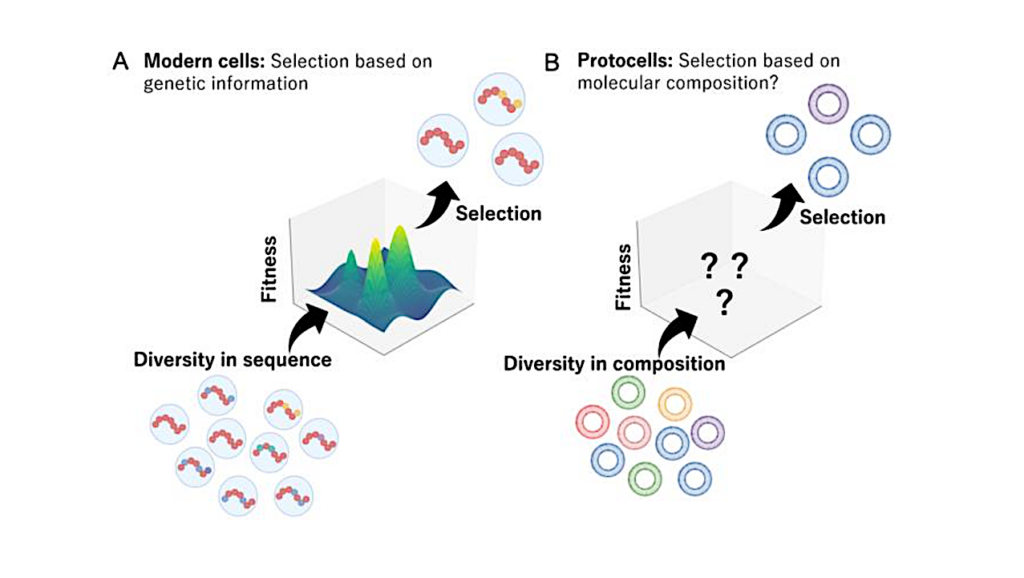
Modern cells are intricate chemical entities, equipped with cytoskeletons, finely regulated molecules, and genetic material that dictates nearly every aspect of their function. This complexity allows cells to thrive in diverse environments and compete based on their fitness. However, the earliest primordial cells were far simpler, consisting of small compartments where a lipid membrane enclosed basic organic molecules. Bridging the gap between these simple protocells and complex modern cells is a major focus of research into the origins of life on Earth.
A recent study conducted by researchers, including scientists at the Earth-Life Science Institute (ELSI) at the Institute of Science Tokyo, explores how simple cell-like compartments behave under physically realistic, non-equilibrium conditions reminiscent of early Earth. Rather than promoting a specific hypothesis about the origin of life, the research experimentally examines how variations in membrane composition can influence protocell growth, fusion, and the retention of biomolecules during freeze–thaw cycles.
Insights from Membrane Composition Experiments
The research team prepared membrane compartments, or vesicles, from two phospholipids with distinct acyl-chain structures, each encapsulating a different DNA species. Upon repeated freeze–thaw (F/T) cycles, the vesicles grew in size, showing a clear compositional preference towards PLPC—the lipid species with a higher growth propensity—and towards the DNA molecules originally encapsulated within PLPC vesicles. These results suggest that prebiotic environmental fluctuations, like F/T cycling, can drive processes of growth, selection, and inheritance in primitive membrane compartments.
“We used phosphatidylcholine (PC) as membrane components due to their chemical structural continuity with modern cells, potential availability under prebiotic conditions, and ability to retain essential contents,” said Tatsuya Shinoda, a doctoral student at ELSI and lead author of the study. Despite their similarities, small but crucial differences exist between these molecules. POPC has one unsaturated acyl chain with a single double bond, PLPC also has one unsaturated acyl chain but with two double bonds, and DOPC has two unsaturated acyl chains with one double bond on each chain. Consequently, POPC forms relatively rigid membranes, whereas PLPC and DOPC produce more fluid membranes.
Freeze/Thaw Cycles and Protocell Dynamics
The team subjected large unilamellar vesicles (LUVs) to freeze/thaw cycles to simulate temperature changes that affect protocells. After three F/T cycles, POPC-rich LUVs formed aggregates of vesicles in close contact, while PLPC- or DOPC-rich LUVs merged to form larger compartments. Vesicles were more likely to merge and grow as their PLPC content increased, demonstrating that phospholipids with more unsaturated bonds were more likely to merge and grow.
“Under the stresses of ice crystal formation, membranes can become destabilized or fragmented, requiring structural reorganization upon thawing. The loosely packed lateral organization due to the higher degree of unsaturation may expose more hydrophobic regions during membrane reconstruction, facilitating interactions with adjacent vesicles and making fusion energetically favorable,” remarked Natsumi Noda, a researcher at ELSI.
Implications for the Origin of Life
What do these findings mean for the origin of life? When LUVs merge, their contents can mix and interact. In the “soup” of organic molecules on a primordial Earth, these fusion events might have brought important molecules together, allowing them to react and evolve into more complex structures resembling cells today. The team confirmed this by studying how well 100% POPC and 100% PLPC LUVs retained DNA. Not only were PLPC vesicles better at capturing DNA before F/T cycles, but they also retained more DNA than POPC vesicles with each cycle.
Dry-wet cycles on Earth’s surface and hydrothermal vents in the deep sea are popular environments where chemical and prebiotic evolution are believed to have occurred. This study suggests that icy environments might also have played a crucial role. On a primordial Earth, F/T cycles would occur over long periods, with ice formation excluding solutes from growing ice crystals, thereby increasing the local concentration of organic molecules and vesicles. Phospholipids with a higher degree of unsaturation form more loosely packed membranes, facilitating vesicle fusion and content mixing. Conversely, a compartment composed of more fluid phospholipids can become destabilized under freeze–thaw-induced stress, leading to leakage of its contents.
Future Research and Evolutionary Implications
Permeability and stability present contradictory requirements, and the composition of the lipid compartment deemed “most fit” would change based on environmental conditions. “A recursive selection of F/T-induced grown vesicles across successive generations may be realized by integrating fission mechanisms such as osmotic pressure or mechanical shear. With increasing molecular complexity, the intravesicular system, i.e., gene-encoded function, ultimately may take over the protocellular fitness, consequently leading to the emergence of a primordial cell capable of Darwinian evolution,” concludes Tomoaki Matsuura, Professor at ELSI and principal investigator behind this study.
Compositional selection of phospholipid compartments in icy environments drives the enrichment of encapsulated genetic information, Chemical Science (open science)
For more information, visit the Earth-Life Science Institute (ELSI) at the Institute of Science Tokyo. ELSI is one of Japan’s ambitious World Premiere International research centers, aiming to achieve progress in broadly interdisciplinary scientific areas by inspiring the world’s greatest minds to collaborate on the most challenging scientific problems.