




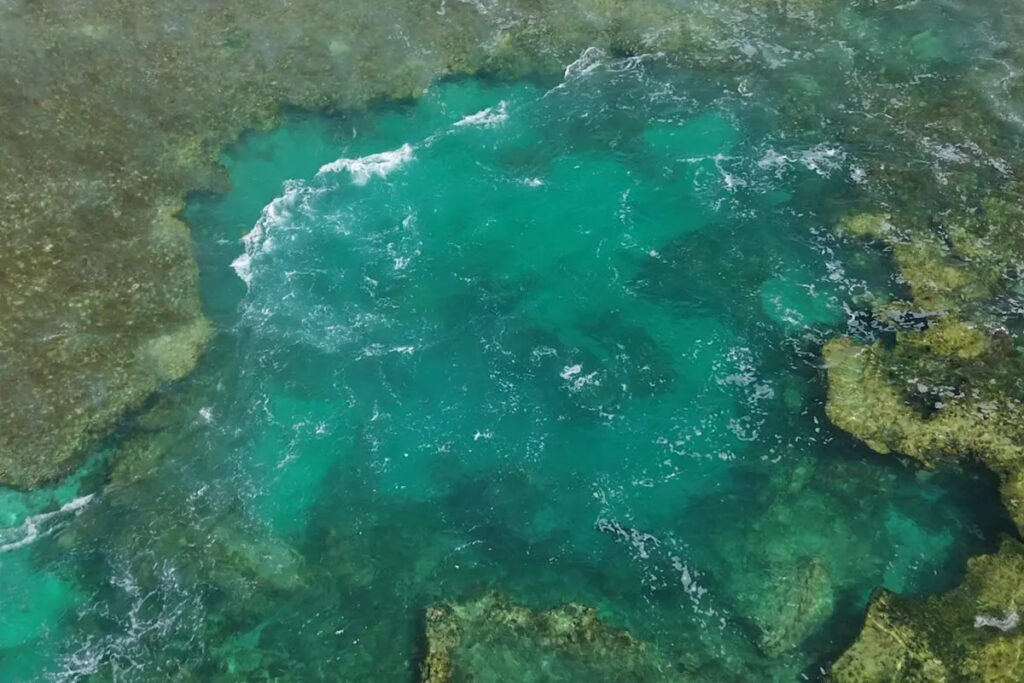
Just 40 meters from the shore, a diver spotted a large shark lurking in the shallows of a reef off a remote beach in Western Australia’s Margaret River region. The 2.5-meter-long bronze whaler might have gone unnoticed by most, but Hunter Campbell, an experienced diver, has honed his skills to detect such predators, ensuring his safety in the water.
“I’ve got a bit of a keen eye for them,” Campbell shared with Yahoo News. “Just as we’ve pulled up to our diving spot, I’ve seen the fins cruising over the reef, so I put the drone up and followed it around.” The striking image of the shark, captured by Campbell’s drone, has since garnered over 1.6 million views on Instagram, underscoring the often unseen dangers of ocean waters.
The Elusive Predator
Campbell’s image challenges viewers to spot the shark, which can be seen beneath a streak of white wash in the center blue patch of the photo. This visual puzzle highlights the potential risks of entering unfamiliar waters, where such predators may be present without being immediately visible.
“It’s always the ones you don’t see that get you,” Campbell remarked. Despite the sighting, he and his companions did enter the water later, confident that the shark had moved on.
Shark Activity Across Australia
The Margaret River region is renowned as a prime location for observing sharks, attracting divers to its relatively quiet beaches. Shark encounters, however, vary across the country. In New South Wales, there were four shark incidents involving humans in January alone, while Victoria has not recorded a fatal shark attack in 35 years.
Bronze whalers, like the one Campbell spotted, are considered potentially dangerous but are not typically aggressive towards humans. “I think sharks get a pretty bad rap. But obviously, they can do some damage if you’re not careful,” Campbell noted. “I’ve swam with some monster tiger sharks that are big enough to pretty much swallow me whole, but they pretty much left me alone.”
Encouraging a Return to Nature
Despite the inherent risks, Campbell advocates for embracing nature and stepping away from digital distractions. His adventures, shared widely on social media, aim to inspire respect for the environment and demonstrate that thrilling experiences await just beyond urban confines.
“It’s nice to get people out into the natural world, rather than just scrolling on phones,” he emphasized. This sentiment resonates with a growing movement encouraging people to reconnect with nature for both mental and physical well-being.
Understanding Shark Behavior
While sharks are often feared, experts stress the importance of understanding their behavior to mitigate risks. According to marine biologists, most shark species pose little threat to humans. However, unpredictable circumstances can lead to dangerous encounters, as highlighted by a 2025 report documenting a fatal dusky shark attack on a snorkeler in the Middle East.
Efforts to educate the public about shark behavior and safety measures are crucial, especially in regions where human and shark interactions are more common. Initiatives include public awareness campaigns and technological advancements like drones, which provide real-time insights into marine life activity.
As Australians continue to enjoy their vast and diverse coastlines, understanding and respecting the ocean’s inhabitants remain paramount. Whether through technological tools or traditional vigilance, the goal is to ensure safe and harmonious coexistence with the marine world.