



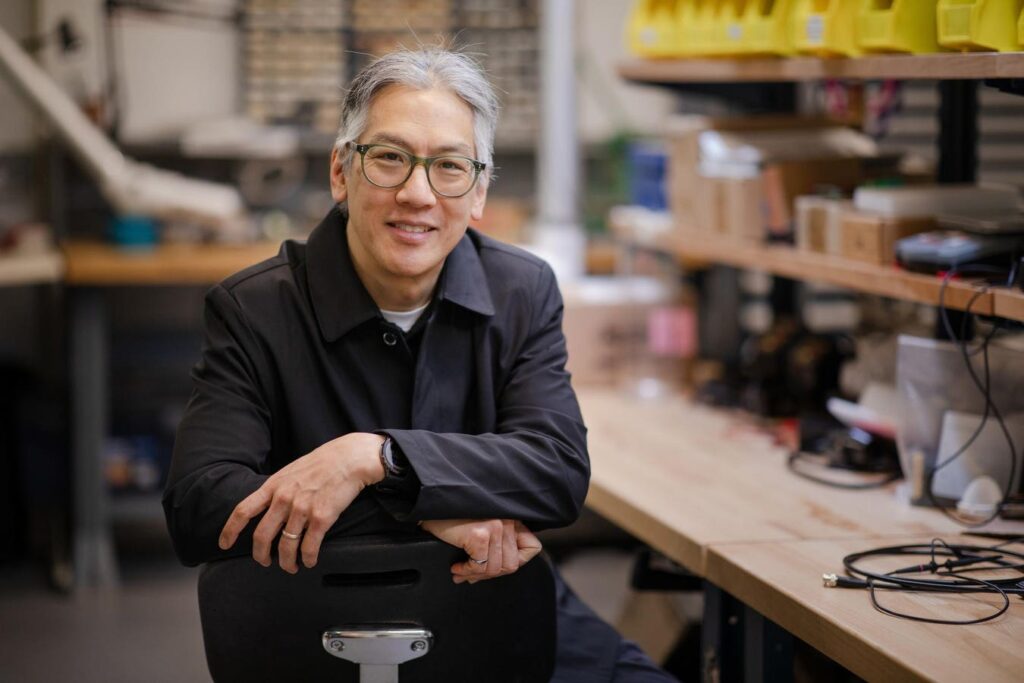
Dr. Tom Chau has dedicated over 25 years to a cause that society often overlooks: ensuring that nonverbal children are seen and heard. Despite being fully aware and expressive in their own ways, these children are frequently rendered invisible due to their inability to speak. Chau’s mission is rooted in the belief that communication is not merely a convenience but a fundamental human right, essential for dignity and autonomy.
As a distinguished senior scientist at the Bloorview Research Institute at Holland Bloorview Kids Rehabilitation Hospital in Toronto, Chau has been recognized for his groundbreaking work. He was recently appointed an Officer of the Order of Canada and inducted into the Canadian Disability Hall of Fame, honoring his contributions to enhancing communication and participation for children with disabilities.
Innovations in Assistive Technology
Through his PRISM Lab, Chau has been at the forefront of developing assistive technologies that empower children with disabilities to communicate more effectively. Among these innovations is the Hummingbird device, the first of its kind in Canada, enabling children with limited communication and physical abilities to express themselves through humming. Additionally, his team has advanced brain-computer interface technology, allowing children to engage in activities such as racing cars, painting, or moving their wheelchairs using only their thoughts.
Holland Bloorview has integrated these breakthroughs into everyday life with its clinical brain-computer interface program, a pioneering initiative using non-invasive technology to facilitate recreational participation for clients.
The Impact of “Together We Dare”
The momentum of Chau’s work is further propelled by “Together We Dare,” the largest fundraising campaign for childhood disability in Canadian history. With a goal of raising $100 million, the campaign aims to establish the Centre for Excellence in Childhood Disability, amplifying the reach and impact of Chau’s innovations.
Chau’s journey into healthcare was not straightforward. Originally working at IBM in enterprise resource planning, a transformative moment with his newborn son inspired him to pursue a career with more meaningful impact on children’s lives. He left IBM, never looking back, to focus on improving the quality of life for children with disabilities.
A Personal Journey and Commitment
One of Chau’s pivotal experiences was an early meeting with four fathers of children with disabilities. They shared their struggles with the lack of reliable communication methods for their children and challenged Chau to make a difference. This encounter led to the establishment of a satellite lab in a school for children with special needs, marking the beginning of Chau’s deep commitment to this cause.
Chau views the inability to communicate as a human rights issue, emphasizing the importance of autonomy in even the simplest decisions, such as consenting to medical treatments. His work is driven by the understanding that every child deserves the means to express their preferences and direct their care.
Real-Life Transformations
Chau’s innovations have led to remarkable transformations in the lives of children. One notable case involved a Grade 10 student who could only make faint vocalizations. With a sensor designed by Chau’s team, the student could communicate by selecting letters on a screen, leading to his first typed words: “Doom 3” and “R-H-O-D-A,” the latter being a misspelled name of his educational assistant. These breakthroughs highlight the profound impact of Chau’s work on individual lives.
Adapting Technology to the Child
Chau’s approach is centered on the principle that technology should adapt to the child, not the other way around. In brain-computer interface projects, children generate signals through mental imagery, producing machine-discernible brain signals. Personalization is key, ensuring that solutions are tailored to each child’s unique needs.
The philanthropic support from the community is crucial for advancing these technologies. The “Together We Dare” campaign plays a vital role in scaling these innovations, with significant contributions like the $2 million investment from the Slaight Family Foundation helping to expand brain-computer interface technology across Ontario.
Dr. Tom Chau’s work continues to redefine possibilities for nonverbal children, offering them new avenues for communication and participation. His commitment to ensuring that every child has a voice is not just a professional pursuit but a personal mission that has already transformed countless lives and promises to impact many more in the future.