



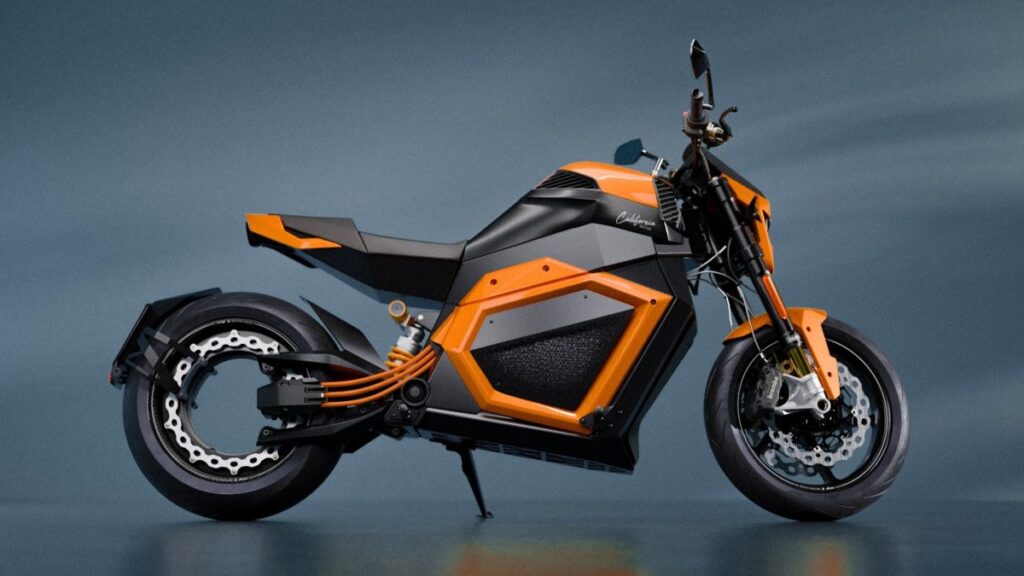
Over years of steady improvements to the batteries that power electric vehicles, solid-state batteries have been likened to the elusive promise of fusion power: a technological breakthrough perpetually just beyond reach. However, at CES 2026, an Estonian startup, Donut Labs, claimed to have achieved what many considered improbable. The company announced that it had not only developed solid-state batteries but also brought them into production, showcasing a high-end electric motorcycle from its partner firm Verge, powered by this groundbreaking technology. The motorcycle is available for purchase, with deliveries slated for the first quarter of the year.
Donut Labs boasts an impressive array of features for its solid-state battery design: a high-energy density of 400 watt-hours per kilogram, costs lower than lithium-ion batteries, a rapid five-minute charge time to full capacity, and tolerance for extreme temperatures ranging from -30 to 100 degrees Celsius. Furthermore, the batteries promise no “thermal runaway” fire risk and an extraordinary lifespan of 100,000 charge cycles.
“It’s going to transform the industry,” CEO Marko Lehtimäki declared in a 24-minute video presentation. “Once you see what it enables, combustion doesn’t just look outdated, it looks unnecessary.” During a conversation at CES, Lehtimäki elaborated on these claims, emphasizing the cost-effectiveness and scalability of the architecture, which can be adapted for battery sizes ranging from tiny to massive. He also mentioned interest from a representative of an unidentified train manufacturer.
Unanswered Questions Linger
Despite the bold claims, Donut Labs remains reticent about the specifics of their technological breakthrough. “I would say it’s a combination of materials science and production innovation,” Lehtimäki stated when pressed for details. He assured that the minerals used are sourced from supply chains free of problematic labor or environmental records, a common issue with lithium-ion batteries.
At the CES exhibit, Ian Digman, Donut’s business development director, offered little more information about the battery’s components, stating, “This is made out of generally available materials that are not geopolitically constrained.” When asked about potential drawbacks, he simply replied, “There isn’t.” However, he acknowledged that initial manufacturing constraints at their Finnish factory would limit production capacity to 1-gigawatt-hour in 2026.
Market and Industry Reactions
The Verge TS Pro, a solid-state battery-powered motorcycle, was a highlight of Donut’s display at the Las Vegas Convention Center. However, this progress comes at a premium price compared to older electric motorcycles like Harley-Davidson’s LiveWire series. The Verge model costs $29,900 for a 20.2kWh battery with a 217-mile range and $34,900 for a 33.3kWh battery rated for 370 miles, with an additional $1,000 for an optional “California Edition” trim.
Verge’s advertised charging times via the bike’s Tesla Supercharger-compatible NACS port are slower than Donut’s claims for the battery design: 10 minutes to add up to 124 miles to the smaller battery, up to 186 miles for the larger one. Despite quoting fewer charge cycles—”just” 10,000—it still far exceeds the typical 1,500 cycles estimated for conventional EV batteries.
Donut’s exhibit also featured a two-seat-roadster “skateboard” platform for EVs from the British firm Watt Electric Vehicle Company, illustrations of a battery-electric truck trailer from Cova Power, and mockups of Donut battery cases. The exhibit attracted a steady stream of visitors intrigued by the technology’s potential. Joel Honeyman, vice president of global innovation at Doosan Bobcat, expressed his enthusiasm for what a solid-state battery could mean for construction and industrial equipment.
Challenges and Skepticism
Despite the excitement, Donut’s presentation lacked clarity on the inner workings of its battery. The absence of published research makes it difficult to assess the design’s potential and whether it can overcome the historical challenges faced by solid-state EV batteries. In 2017, Fisker unveiled a solid-state battery design it planned to commercialize by 2023, a goal it never achieved before going bankrupt in 2024.
“Everyone’s always said it’s been three to five years away, and they’ve been saying it for the last 10 years,”
remarked Nathan Niese, global lead for EVs and energy storage at Boston Consulting Group, during a conversation at CES. One significant challenge in solid-state battery design is preventing the formation of dendrites, metal filaments that can cause short circuits. Donut claims to have resolved this issue, though details remain scarce.
Many previously proposed solutions involved applying pressure to the battery, which Niese noted could introduce additional failure modes. While he refrained from commenting on Donut’s prospects, he listed various questions, including the breakdown between manufacturing and operating costs and the battery’s performance at different temperatures. BCG estimates that “real commercialization” of solid-state batteries might not occur until the 2030s, with significant scaling up possible by 2032.
Speculation and Future Prospects
In the absence of concrete details from Donut, speculation has run rampant on platforms like LinkedIn and YouTube. Analysts have scrutinized Donut’s connections to firms like Helsinki-based Nordid Nano and dissected the company’s battery-introduction video. Some skepticism has targeted Lehtimäki’s resume and his involvement in other startups, such as Asilab, which claimed to have developed “the world’s first true artificial superintelligence.”
Engineer Ryan Inis Hughes explored the possibility that Donut’s design incorporates elements of a supercapacitor, a shorter-term form of electrical storage. In a 14-minute video on his ZirothTech channel, Hughes admitted uncertainty about the design but expressed confidence in the integrity of Donut’s engineers. In a post-CES email, Hughes reiterated his belief in the supercapacitor theory, though it was not based on new information from Donut contacts.
The strongest point in Donut’s favor is the imminent release of the Verge electric motorcycle, which will allow competitors and researchers to examine the battery firsthand. Automotive journalist Tim Stevens concluded in a post at The Verge, “That alone gives me reason for optimism, but at the very least I won’t have to wait long to be disappointed.”
Meanwhile, the global demand for electric vehicles continues to surge, with researchers and manufacturers racing to introduce the next battery breakthrough. Industry giants like Samsung and Toyota, along with startups like QuantumScape and Flint, are developing their own solid-state battery designs. Chemistry improvements to traditional architectures, such as Group14’s silicon-based concept, could also match many of solid-state’s promised benefits.