



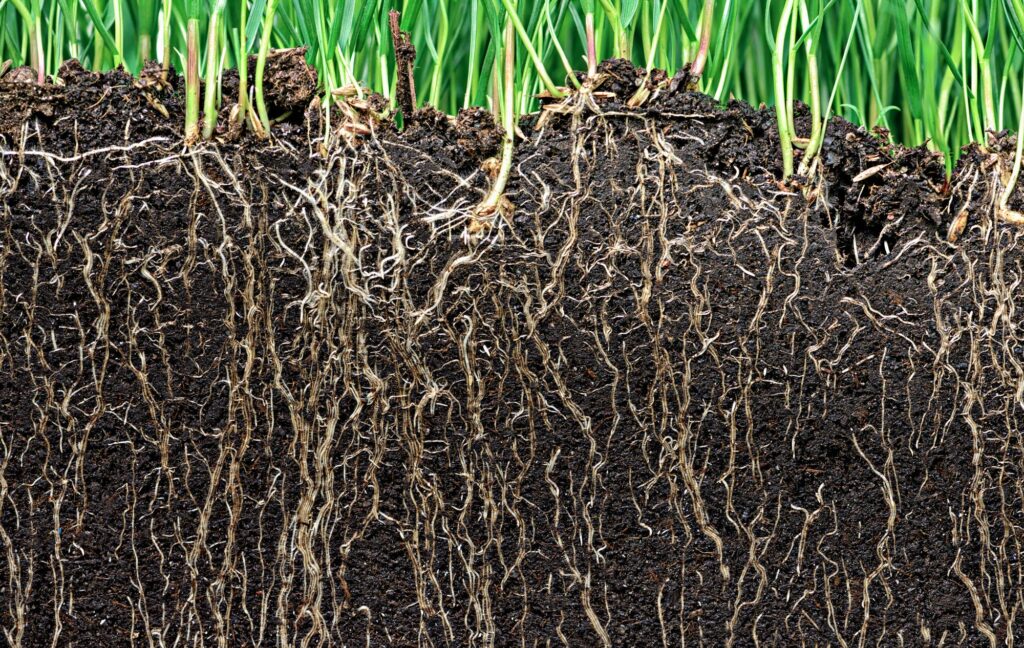
As you stroll through a field of wheat, ryegrass, or clover, the gentle sway of stems and leaves is evident. However, the real action unfolds beneath the surface, where plant roots spread, compete, and quietly shape the future of agriculture and climate science. These underground systems anchor plants, draw in water and nutrients, and sequester carbon into the soil. Despite their significance, scientists have long struggled to measure them accurately.
The invisibility of roots has made them one of the most challenging aspects of plant biology to study. While researchers understand that roots are crucial for plant health and soil stability, they have lacked a reliable method to quantify root biomass and determine species origin. Henrik Brinch-Pedersen, a professor at the Department of Agroecology at Aarhus University, likens the challenge to studying marine life without diving below the ocean’s surface.
Why Measuring Roots Has Been So Difficult
Traditionally, studying roots involved labor-intensive processes. Scientists would dig up soil, wash it through sieves, extract tangled roots, dry them, and weigh the remnants. This method was not only time-consuming but often destructive to the delicate fine roots, which are the most active parts of a root system.
Fine roots, responsible for nutrient absorption and carbon release into the soil, are easily damaged. Consequently, traditional methods frequently undercount root biomass, leading to misconceptions about plant behavior underground. The challenge intensifies when multiple species grow together, making it nearly impossible to distinguish root origins. This limitation has hindered progress in climate studies, plant breeding, and biodiversity research.
A DNA-Based Breakthrough Underground
Researchers at Aarhus University have pioneered a new approach by leveraging genetics instead of physical extraction. Their method employs droplet digital PCR (ddPCR) to detect plant DNA directly from soil samples. This technique divides a soil sample into tens of thousands of tiny droplets, each tested for plant DNA traces.
The core of this method is a genetic marker known as ITS2, which functions like a barcode. Each plant species possesses a unique version of this marker, enabling researchers to identify species presence and estimate root material contribution.
“It’s a bit like giving the soil a DNA test,” Brinch-Pedersen explains. “We can suddenly see the hidden distribution of species and biomass without digging up the whole field.”
Turning DNA Signals Into Root Mass
To ensure reliability, the research team developed reference curves by preparing soil samples with known root quantities, extracting DNA, and measuring it using ddPCR. This process allowed them to correlate DNA signals with root biomass accurately.
In semi-field experiments with grasses such as perennial ryegrass, hybrid ryegrass, and cocksfoot, the DNA-based method often detected more root material, particularly fine roots missed by traditional methods. The technique also proved effective in mixed samples, accurately identifying species contributions even when roots were intertwined.
Recognition From the Scientific Community
The study, conducted by Nurbanu Shynggyskyzy, Claus Krogh Madsen, Per L. Gregersen, Jim Rasmussen, Uffe Jørgensen, and Henrik Brinch-Pedersen, has garnered international attention. Experts have described it as a significant advancement in root science, a field that has historically lagged behind studies of leaves and stems.
This recognition underscores the long-standing need for a method like this, which helps bridge the gap in understanding plant root systems.
Roots, Carbon, And Climate Potential
Roots are increasingly recognized for their role in carbon storage. As plants grow, they absorb carbon dioxide from the atmosphere, channeling some of it into their roots. Under favorable conditions, this carbon can remain in the soil for decades or longer.
This makes root systems a vital component of climate solutions. Unlike mechanical or fuel-based interventions, roots operate quietly and continuously. However, without precise measurements, it has been challenging to quantify how much carbon different crops store underground.
The new DNA method revolutionizes this by allowing scientists to measure root biomass with unprecedented accuracy, paving the way for documenting carbon storage in ways previously unattainable.
Limits And The Road Ahead
Despite its promise, the method is not without limitations. Closely related species, such as genetic hybrids, pose challenges due to their similar DNA. Additionally, each new species requires a specific DNA probe, which takes time to develop.
Nevertheless, the researchers view this as a starting point rather than a barrier. Brinch-Pedersen emphasizes that the key achievement is demonstrating that precise root measurement can be conducted directly from soil. The next step involves expanding the DNA library to include more plant species, with the potential to apply the technique across different soil types and climates.
Practical Implications of the Research
This research holds practical benefits beyond the laboratory. For farmers and plant breeders, it offers a faster way to compare crops and select varieties with robust root systems. Deeper and denser roots can enhance drought resistance and nutrient uptake without compromising yields.
For climate scientists, the method provides a clearer understanding of how much carbon crops store underground, crucial for developing climate-smart farming systems. Ecologists also gain a powerful tool to study plant interactions belowground and how biodiversity influences soil health.
Most importantly, this method allows us to finally uncover the hidden world of roots, bringing it within reach for scientific exploration and practical application.
Research findings are available online in the journal Plant Physiology. The original story “DNA breakthrough reveals the hidden life of plant roots” is published in The Brighter Side of News.
Related Stories:
- 3D-printed soil: Never forget to water your plants again
- Incredible ‘smart soil’ can water and feed itself
- Scientists create space bricks for moon base using microwaves and lunar soil
Like these kinds of feel-good stories? Get The Brighter Side of News‘ newsletter.