




My leisurely stroll along Chester’s ancient city walls was unexpectedly interrupted by a lively scene below. A commanding voice barked orders, met with high-pitched shouts and excited screams. Peering down, I saw a group of about 40 children, around seven or eight years old, brandishing toy swords and shields in a landscaped garden. Their leader, a “centurion” dressed in Roman attire, was not the only adult in period costume. In Chester, historical reenactments and immersive activities vividly bring the city’s rich past to life.
While its larger neighbors, Manchester and Liverpool, often steal the spotlight, Chester remains the most charming city in England’s northwest. Established as the Roman fortress Deva Victrix, Chester thrived as a trading port until the late Middle Ages, when the River Dee silted up. Despite setbacks such as plagues and sieges, Chester has maintained its prosperity and charm, standing out as more than just an average English market town.
The Timeless Allure of Chester’s City Walls
Chester’s sandstone walls, begun nearly 2000 years ago, are a source of pride for the city. Forming a 3.2-kilometer circuit around the historic core, they are the most complete in Britain, surpassing even those of York, another former Roman stronghold. From these walls, one can catch a glimpse of the Welsh peaks on the horizon.
Nearby Wrexham, with its celebrity-owned soccer club, is a mere 15-minute train ride from Chester. On Wrexham’s outskirts lies the UNESCO-listed Pontcysyllte Aqueduct, a marvel of engineering. While Chester’s walls don’t reach such heights, they offer their own thrilling sections, especially when the wind picks up. One notable stretch passes Morgan’s Mount, a military lookout from the 17th-century English Civil War.
Exploring Chester’s Rich Tapestry of History
Chester’s fortifications bear the marks of musket ammunition, showcasing the city’s varied epochs and landmarks. From Roman amphitheaters to Norman cathedrals, Georgian lanes to Victorian terraces, the city’s architecture tells a story of resilience and adaptation. The walls provide access to various points of interest, including the River Dee, where sightseeing cruises and rowers navigate past the city’s scenic meadows.
Stairways lead to ancient gateways like the Eastgate, home to Britain’s most photographed clock after London’s Big Ben. This clock was installed after Queen Victoria’s Diamond Jubilee, offering a picturesque view from Huxley’s cafe-tearoom on the walls, where visitors can enjoy homemade cakes and locally crafted ales.
Modern Delights in a Historic Setting
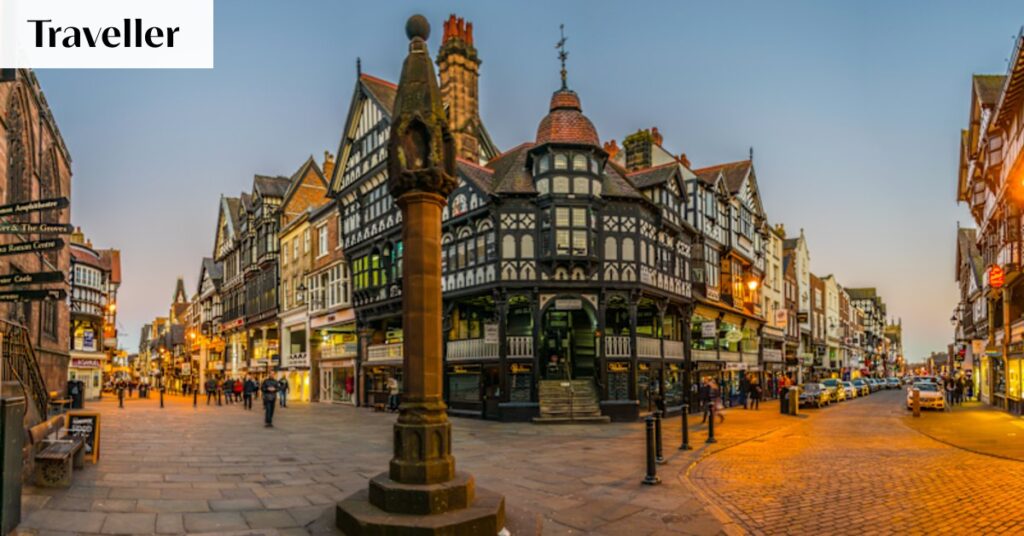
Chester’s charm extends beyond its historical sites. The Rows, a complex of two-tiered, timber-beamed arcades, house a variety of bars, boutiques, and bistros. These galleries, some pre-dating the Tudor period, offer a unique shopping and dining experience, with alfresco restaurants and traditional pubs lining the cobbled streets below.
Behind the Victorian Gothic town hall, Chester’s new indoor market hosts an array of international food vendors, cocktail mixologists, and local artisans. On the first Saturday of each month, the market spills outside, with stalls showcasing local crafts and goods.
Gateway to Adventure
Chester is easily accessible by train, making it a convenient day trip from Liverpool or Manchester, and just over two hours from London. However, the city offers enough attractions to warrant a longer stay. Visitors can try their luck at the Roodee, Chester’s historic riverside racecourse, or explore Chester Zoo, home to over 30,000 animals.
Beyond the city, the Cheshire countryside beckons with picturesque villages and stately homes, while the wonders of Wales, including the breathtaking Pontcysyllte Aqueduct, are just a short journey away.
Chester’s blend of history, culture, and modern amenities makes it a must-visit destination, offering a unique glimpse into England’s storied past and vibrant present.