




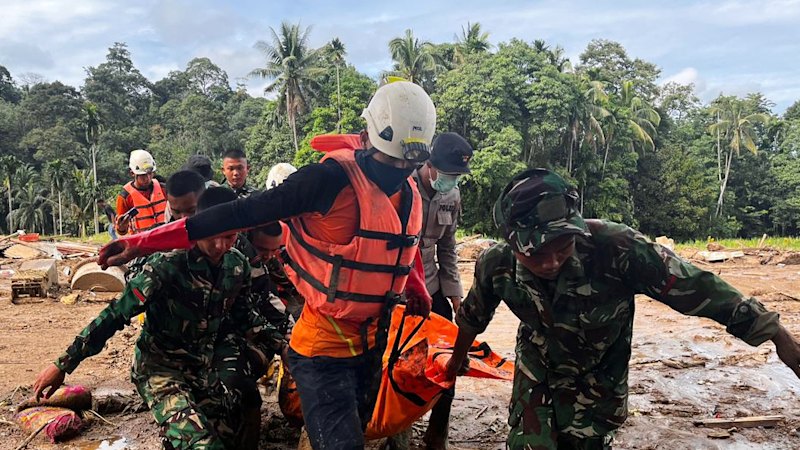
Singapore: In a tragic week marked by extreme weather, nearly 1000 people have lost their lives across Asia. The devastation has been particularly severe in Indonesia and Sri Lanka, where floods, cyclones, and landslides have left hundreds more missing. The latest disasters underscore the region’s vulnerability to increasingly volatile weather patterns.
On the Indonesian island of Sumatra, at least 440 people have died since Tuesday due to Typhoon Senyar. This rare cyclone formed over the Malacca Strait, unleashing torrential rains and triggering deadly landslides in Aceh province. The National Disaster Management Agency reports that another 400 individuals remain unaccounted for across Aceh, West Sumatra, and North Sumatra.
Impact in Sri Lanka
Meanwhile, Sri Lanka has been grappling with the aftermath of Cyclone Ditwah, which made landfall on Thursday. Local media reports indicate that the death toll has surpassed 330. The cyclone has affected nearly a million people, forcing about 200,000 into emergency shelters as heavy rains and floods ravage the country.
The overall death toll from extreme weather across Asia in the past month has exceeded 1000, with expectations that this number will rise as rescue operations continue in devastated areas.
Regional Weather Patterns
The catastrophes in Indonesia and Sri Lanka follow a series of severe weather events in the region. Last month, southern Thailand experienced record-breaking rainfall, resulting in at least 160 deaths. Authorities described it as a one-in-300-year event. Additionally, Typhoon Kalmaegi is believed to have claimed at least 200 lives in the Philippines and contributed to the deaths of 90 people in Vietnam due to flooding.
The north-east monsoon season, typically from November to February, is associated with increased rainfall in the southern parts of South-East Asia. However, the extreme weather in Thailand may also have been influenced by a La Niña event and a negative Indian Ocean Dipole, according to the ASEAN Specialised Meteorological Centre based in Singapore. The interplay of Typhoon Koto in the Philippines and Cyclone Senyar in the Malacca Strait further exacerbated the situation.
Climate Change and Future Implications
Rising sea surface temperatures may be another contributing factor to the extreme weather events across the region. Scientists suggest that while climate change might not increase the frequency of cyclones, it could enhance their intensity. The World Meteorological Organisation noted that Asia’s average temperature in 2024 was about 1.04 degrees above the 1991-2020 average, marking it as potentially the warmest or second-warmest year on record.
“The increasing intensity of these storms is a stark reminder of the urgent need for climate action,” said a spokesperson from the World Meteorological Organisation.
As the region continues to grapple with the immediate aftermath of these disasters, the focus will likely shift towards long-term strategies to mitigate the impact of climate change and improve disaster preparedness. The international community’s support and collaboration will be crucial in addressing these challenges and building resilience against future weather-related catastrophes.