



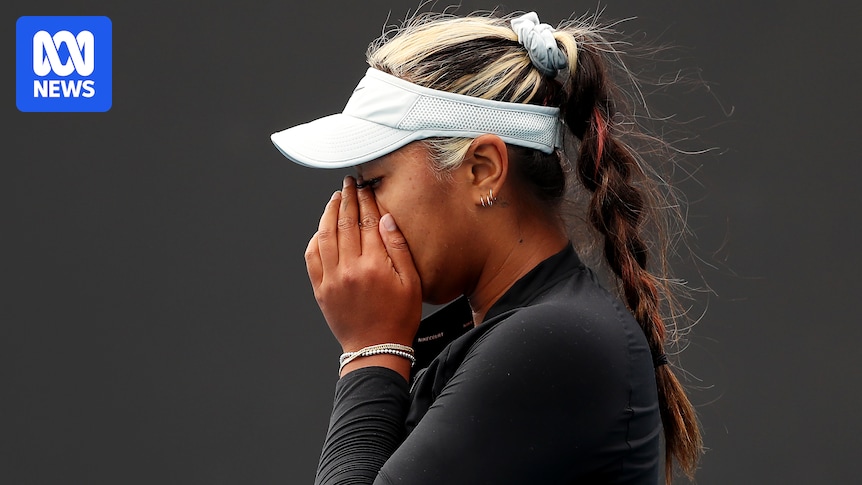
Destanee Aiava, a prominent figure in the world of professional tennis, has announced her retirement from the sport following a harrowing experience with death threats and persistent racism. The 25-year-old athlete revealed her decision on Valentine’s Day through a candid social media post, describing tennis as her “toxic boyfriend.”
Aiava’s decision to step away from the court was not driven by fear of competition or the pressure of performing before global audiences. Instead, it stemmed from the anxiety of facing her phone post-match, where she would often find threatening messages.
“They’re going to find me, kill my family, kill me,” Aiava recounted about the messages she received.
The Dark Side of Professional Sports
Aiava’s recent participation in the Australian Open, where she partnered with Maddison Inglis, marked her final appearance on the professional circuit. Like many athletes, Aiava found herself targeted by disgruntled gamblers who had placed bets on her matches.
“They were all gamblers,” Aiava explained. “Even if I did win, I would still get a lot of messages saying they had lost their home or something.”
The pressure and fear became overwhelming, leading Aiava to a breaking point. She admitted to having contemplated leaving the sport for the past two years, a sentiment that was met with mixed reactions from fans and peers alike.
Isolation and Racism in Tennis
Throughout her career, Aiava faced not only the physical demands of professional tennis but also the emotional toll of racism and isolation. She often felt like an outsider among her peers, receiving little support from fellow Australian players.
“During my career, I was mainly receiving negative comments,” Aiava shared. “Comments about my skin color or calling me a monkey … even the N word.”
These experiences were compounded by the financial struggles common among professional tennis players. Despite achieving a career-high Women’s Tennis Association (WTA) ranking of 147, Aiava often found herself in precarious financial situations, waiting weeks for prize money to cover basic expenses.
Systemic Issues and the Need for Change
Aiava’s story highlights broader systemic issues within the sport, including a culture of racism, misogyny, and homophobia. She recounted the pressure to conform to a certain physical image, which led to personal struggles with eating disorders.
“Most of the people playing this sport are a lot thinner … but Pacific Islanders are just built different,” Aiava noted.
Despite efforts by tennis federations to promote inclusivity, Aiava believes these measures fall short. She emphasized the need for more substantial action to address the negative culture in tennis and support players facing similar challenges.
Looking Ahead
As Aiava steps away from tennis, she is turning her focus to new ventures, including studying interior design and exploring opportunities in reality television. Her decision to retire is not a reflection of her capabilities on the court but rather a choice to prioritize her well-being and pursue other passions.
“I feel like I’ve already been scrutinized a lot,” Aiava concluded. “So why not?”
Aiava’s departure from tennis serves as a poignant reminder of the personal sacrifices and challenges faced by athletes, urging the sports community to foster a more supportive and inclusive environment.