
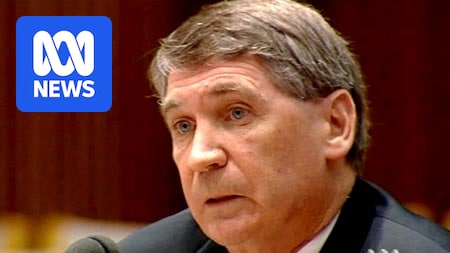
Former head of Australia’s top intelligence agency, Dennis Richardson, has resigned from his role as special advisor to the Royal Commission on Antisemitism and Social Cohesion. This commission was established by the government following the Bondi Beach terror attack. Commissioner Virginia Bell announced Richardson’s departure, expressing gratitude for his contributions.
“Mr. Richardson was uniquely well placed to advise on the material to be sought from our intelligence and security agencies in order to assess the effectiveness of their preparedness for, and response to, a terrorist attack,” Bell stated. “I am grateful to Mr. Richardson for the valuable contribution he has made.”
Despite the announcement, neither Bell nor Richardson provided reasons for his resignation. Richardson has not issued a statement or responded to requests for comment. Two senior members of his team will continue their work with the commission until the interim report is completed by the end of April.
Background on the Richardson Review
Initially, Prime Minister Anthony Albanese appointed Richardson to lead a review into the federal government’s intelligence and security agencies in the aftermath of the Bondi Beach terror attack. The review aimed to evaluate whether key agencies like ASIO and the Australian Federal Police had taken all possible measures to prevent the attack and to understand their knowledge about the alleged gunman.
The government positioned the Richardson review as a faster, more focused alternative to a royal commission, promising it would receive “full cooperation” from government agencies. However, after facing mounting pressure, Prime Minister Albanese decided to integrate the review into a broader royal commission, with Richardson serving as an advisor.
Political and Public Reactions
Attorney-General Michelle Rowland expressed her appreciation for Richardson’s efforts, affirming that the royal commission would persist in its “important work.” She emphasized the independence of the commission from the government and promised further updates in due course.
Richardson is widely regarded as one of Australia’s most esteemed public servants, having previously led ASIO, the Defence Department, and the Department of Foreign Affairs, in addition to serving as Australia’s ambassador to Washington.
Implications and Future Directions
The resignation of such a high-profile figure as Richardson from the royal commission raises questions about the future direction of the inquiry. Given his extensive experience and insider knowledge, his departure could impact the commission’s ability to swiftly and effectively address the issues at hand.
The royal commission now faces the challenge of maintaining momentum and credibility in its investigation into antisemitism and social cohesion. As it moves forward, the commission’s findings and recommendations will be closely scrutinized by both the public and policymakers, eager for solutions to prevent future incidents.
Meanwhile, the broader context of rising antisemitism and social tensions globally underscores the importance of the commission’s work. As Australia grapples with these issues, the royal commission’s outcomes could set a precedent for how similar challenges are addressed in other countries.
With the interim report due soon, all eyes will be on the commission to see how it navigates these complexities and what measures it proposes to enhance national security and social harmony.