


Democratic leaders have expressed outrage following President Donald Trump’s military intervention in Venezuela, denouncing it as an illegal act executed without the necessary congressional approval. They warn that this move could spell disaster for the American public.
The announcement comes as top Democrats took to Sunday political talk shows to voice their dismay over the lack of notification given to lawmakers regarding the audacious military raid conducted 24 hours earlier. They argue that the action to unseat Venezuelan President Nicolás Maduro is unconstitutional and detrimental to the United States’ global standing.
Constitutional Concerns and International Reactions
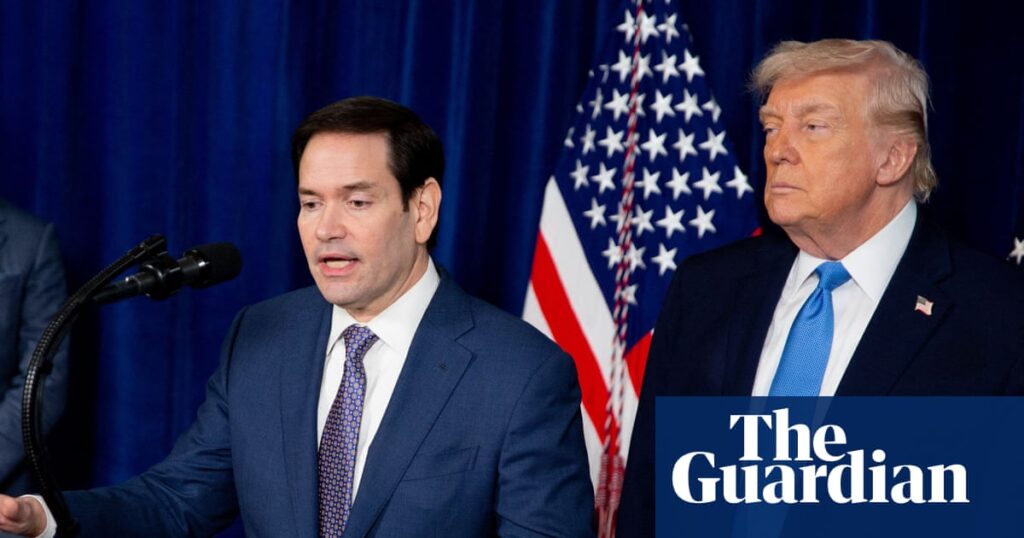
Senator Chris Murphy of Connecticut was among those vocal in their criticism, stating, “They literally lied to our face,” in reference to a briefing on Venezuela by U.S. Secretary of State Marco Rubio. Murphy emphasized that the administration had previously assured lawmakers that their focus was on counter-narcotics operations, not regime change.
In an appearance on CNN’s State of the Union, Murphy labeled the military action as “wildly illegal,” citing the U.S. Constitution, which grants only Congress the power to declare war. The 1973 War Powers Resolution further requires presidential approval from Congress for military engagements, a step that was bypassed in this instance.
“There is no way to trust this administration,” Murphy asserted.
Meanwhile, the United Nations Secretary-General and other international authorities have accused the U.S. of violating the UN’s founding charter, adding to the global condemnation of the intervention.
Political Fallout and Legislative Response
The move represents a significant escalation in U.S. foreign policy, with top Democrats like Jim Himes, the leading Democrat on the House Intelligence Committee, criticizing the operation as an “imperial adventure” and an example of “absolute lawlessness.” Himes further accused Trump of disregarding Congress, stating, “Still haven’t got a phone call.”
Amid the widespread condemnation of Maduro’s regime, Democrats nonetheless decried the Trump administration’s unilateral intervention in Venezuela. Trump and his advisors have attempted to justify their actions by framing them as a law enforcement and counter-narcotics operation, a claim that Democrats dismiss as misleading.
Hakeem Jeffries, leader of the House Democrats, described the intervention as an “act of war,” highlighting the involvement of Delta Force, the army, and numerous military aircraft. Rubio, however, has denied that it constitutes war.
Implications for U.S. Foreign Policy
This development follows Trump’s decision to bypass Congress, dramatically raising the stakes for an upcoming vote in the U.S. Senate on a bipartisan war powers resolution. This measure seeks to prevent the administration from initiating further military actions against Venezuela without explicit congressional approval.
The debate is privileged, meaning it cannot be halted by Republican leadership, requiring only a simple majority to pass. It has the support of Rand Paul, a Republican senator known for challenging the president’s foreign policy.
Senate Democratic Leader Chuck Schumer, a sponsor of the resolution, stated on ABC News’s This Week, “If the measure gains a majority vote in both chambers, then the president can’t do another thing in Venezuela without the OK of Congress.”
Schumer warned, “We have learned through the years, when America tries to do regime change and nation building in this way, the American people pay the price in both blood and in dollars.”
Historical Parallels and Future Outlook
The move represents a stark contrast to Trump’s campaign promises during the 2024 presidential election, where he vowed to avoid “endless wars.” Critics argue that the current trajectory could lead the U.S. into another prolonged conflict.
In his CNN interview, Murphy pointed to Trump’s remarks about seizing control of Venezuela’s oil as indicative of ulterior motives. “Venezuela is all about making money for his friends. Wall Street, the oil industry, they can make a lot of money off of Venezuela if they run it,” he said.
“Once again, you’re seeing that this president’s foreign policy, the invasion of Venezuela, the ouster of Maduro, is about making his crowd filthy rich. It has nothing to do with American national security,” Murphy concluded.
As the Senate prepares to vote on the war powers resolution, the outcome could have significant implications for U.S. foreign policy and the balance of power between the executive and legislative branches. The world watches closely as the United States navigates this contentious and potentially transformative period in its international relations.