



Democratic leaders expressed outrage on Sunday over President Donald Trump’s military intervention in Venezuela, condemning it as an illegal act executed without necessary congressional approval. They warned that the move could spell disaster for the American people and tarnish the nation’s global standing.
The announcement comes as top Democrats took to political talk shows to voice their disapproval of the lack of prior notification to lawmakers regarding the bold military raid conducted just 24 hours earlier. The operation aimed to unseat Venezuelan President Nicolás Maduro, a move Democrats argue is unconstitutional and damaging to U.S. international relations.
Constitutional Concerns and Global Implications
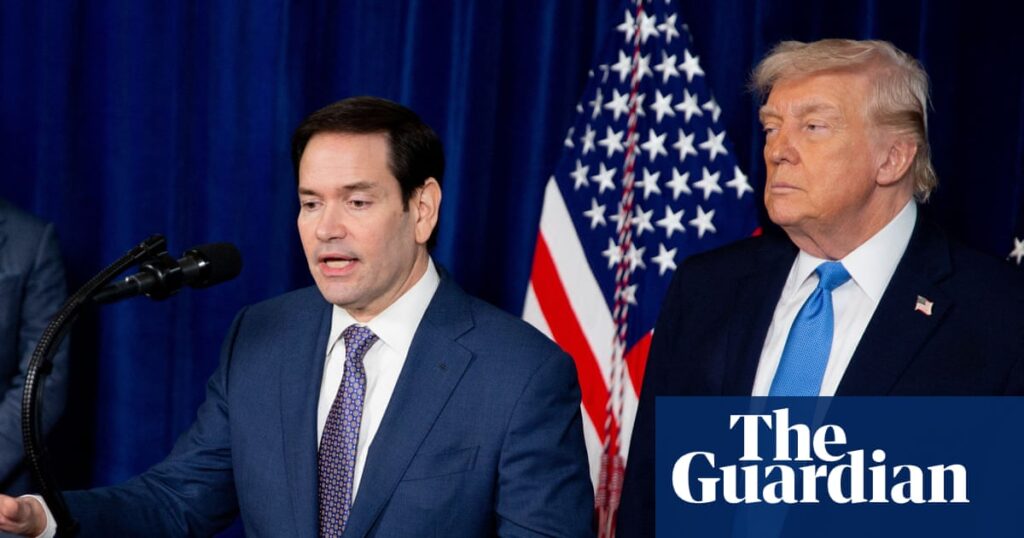
Senator Chris Murphy of Connecticut was vocal in his criticism, stating, “They literally lied to our face,” during a briefing on Venezuela led by U.S. Secretary of State Marco Rubio last month. Murphy emphasized that the administration had misrepresented its intentions, claiming the operation was merely a counter-narcotics mission. On CNN’s State of the Union, Murphy labeled the action “wildly illegal,” adding, “There is no way to trust this administration.”
Under the U.S. Constitution, only Congress holds the power to declare war, a principle reinforced by the 1973 War Powers Resolution, which requires presidents to seek congressional approval for military engagements. Yet, in the case of Saturday’s dawn bombardment and military landing in Venezuela, even the “gang of eight”—the top congressional leaders from both parties typically consulted on national security issues—were left uninformed.
“Still haven’t got a phone call,” said Jim Himes, the top Democrat on the House Intelligence Committee. “I’m a member of the gang of eight, and I have yet to get a phone call from anyone from the administration.”
Democratic Backlash and Legislative Response
Despite widespread condemnation of Maduro’s dictatorship, Democrats criticized the Trump administration’s unilateral intervention in Venezuela. Himes described the military operation as an “imperial adventure” and an example of “absolute lawlessness” by the administration, accusing Trump of paving the way for disaster and disregarding Congress.
Trump’s administration has attempted to justify bypassing Congress by framing the operation as a law enforcement and counter-narcotics mission rather than a military strike, a narrative Democrats have dismissed as misleading. Hakeem Jeffries, leader of the Democrats in the House of Representatives, told NBC News’s Meet the Press that the action in Venezuela “was an act of war,” citing the involvement of Delta Force, the army, thousands of troops, and at least 150 military aircraft. Rubio has denied it was war.
The move represents a significant escalation in the ongoing debate over presidential war powers. Next week, the U.S. Senate will vote on a bipartisan war powers resolution aimed at preventing the administration from launching further military hostilities against Venezuela without congressional approval. The debate is privileged, meaning it cannot be halted by Republican leadership and requires only a simple majority to pass. It has the backing of Senator Rand Paul, a Republican from Kentucky known for his opposition to Trump’s foreign policy.
The Stakes of Congressional Action
Chuck Schumer, the Democratic leader in the Senate, is another sponsor of the war powers resolution. He told ABC News’s This Week that if the measure secures a majority vote in both chambers, “then the president can’t do another thing in Venezuela without the OK of Congress.”
Schumer painted Saturday’s action and Trump’s claim that the U.S. would temporarily govern Venezuela in stark terms. “We have learned through the years, when America tries to do regime change and nation building in this way, the American people pay the price in both blood and in dollars,” he stated, highlighting the potential consequences of such interventions.
He noted that Trump’s actions contradict his campaign promises during the 2024 presidential election to avoid endless wars. “The very thing that Donald Trump campaigned against over and over and over again was no more endless wars, and right now we’re headed right into one with no barriers, with no discussion.”
Underlying Motives and Future Implications
In his CNN interview, Murphy suggested that Trump’s remarks about seizing control of Venezuela’s oil reveal the true motive behind ousting Maduro. “Venezuela is all about making money for his friends. Wall Street, the oil industry, they can make a lot of money off of Venezuela if they run it,” he said.
“Once again, you’re seeing that this president’s foreign policy, the invasion of Venezuela, the ouster of Maduro, is about making his crowd filthy rich. It has nothing to do with American national security,” Murphy concluded.
The debate over Trump’s military action in Venezuela underscores the ongoing struggle over executive power and congressional oversight. As the Senate prepares to vote on the war powers resolution, the outcome could significantly impact future U.S. foreign policy decisions and the balance of power between the presidency and Congress.