




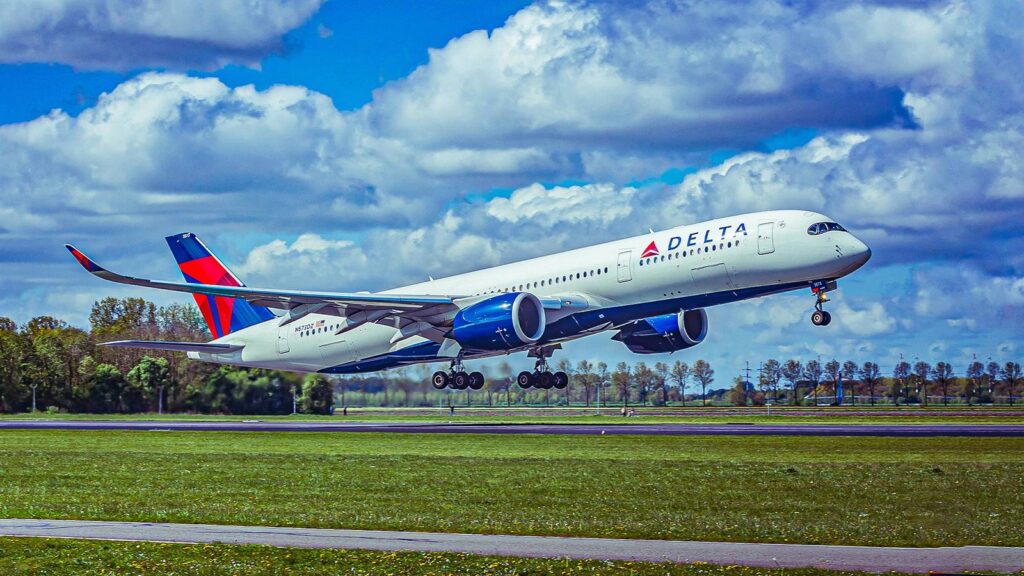
Delta Air Lines is set to expand its presence at Melbourne Airport, Australia, by increasing its flight frequency from Los Angeles International Airport (LAX) to daily services by the end of the year. This move marks a significant enhancement from the current thrice-weekly schedule, which was only launched three months ago. The airline plans a gradual increase, transitioning from three to four flights weekly starting October 13, then to five by October 27, and finally to daily flights from December 22.
The announcement comes as Delta aims to capitalize on the growing demand for travel between California and Melbourne, particularly during the Southern Hemisphere’s summer season. As reported by Executive Traveller, these daily flights will continue until late March 2027, after which the frequency will adjust to five times a week. Delta currently operates the premium-heavy Airbus A350-900 on this route, a unique offering compared to competitors United Airlines and Qantas, which utilize the Boeing 787-9.
Steady Increase to Daily Services for Christmas
Delta’s decision to increase flights aligns with heightened interest in travel between Los Angeles and Melbourne. The airline initially debuted this non-stop route late last year, and the increased frequency reflects both passenger demand and Delta’s strategic growth in the region. Flight schedules, including arrival and departure times, are expected to remain consistent despite the increased capacity.
The Airbus A350-900, known for its spacious and luxurious Delta One Suites, is a key factor in attracting premium travelers. Delta remains the sole airline offering this aircraft on the route, enhancing its competitive edge over United Airlines and Qantas.
While Simple Flying reached out to Delta Air Lines for further comments on the expansion, a response was not received by the time of publication.
Delta’s Commitment to Australian Routes
This development follows Delta’s strategic expansion into the Australian market, with Melbourne becoming the airline’s third non-stop destination in the country after Brisbane and Sydney. Delta’s commitment to “connecting customers with the world’s most exciting destinations” is evident in its growing network, which also includes a seasonal link to Auckland, New Zealand.
Previously, Delta served Papeete, but the route was discontinued due to weak demand. The focus on premium travelers, with the A350-900’s 40 Delta One Suites, underscores Delta’s strategy to enhance customer experience and cater to high-end market segments.
Melbourne’s appeal as a gateway to Australia’s natural wonders, such as the Great Ocean Road and Yarra Valley, as well as its vibrant cultural scene, makes it an attractive destination for travelers. The city’s rapid growth further reinforces the potential for increased tourism and business travel.
Competitive Landscape: All Airline Alliances Represented
Meanwhile, the Los Angeles to Melbourne route is a competitive battleground for major airline alliances. United Airlines, a Star Alliance member, offers multiple weekly flights with its Boeing 787-9, complementing its San Francisco to Melbourne services. Qantas, representing oneworld, is the only Australian carrier on the route, deploying its Boeing 787-9 for daily flights and occasionally utilizing the Airbus A380 during peak seasons.
This competitive dynamic highlights the strategic importance of the route for airlines seeking to capture market share in the transpacific travel sector. Each airline’s unique offerings and alliances play a crucial role in attracting different segments of travelers.
The move represents a significant step for Delta Air Lines as it strengthens its position in the competitive transpacific market. With the increased frequency and premium offerings, Delta is poised to meet the growing demand and enhance its service offerings between the United States and Australia.