
In a dramatic turn of events, U.S. President Donald Trump announced that the United States would collaborate with Venezuelan Vice President Delcy Rodriguez to transition Venezuela towards a democratically elected government. This announcement followed the capture of President Nicolas Maduro on Saturday. However, Rodriguez and other leaders within the regime have so far shown resistance to this plan.
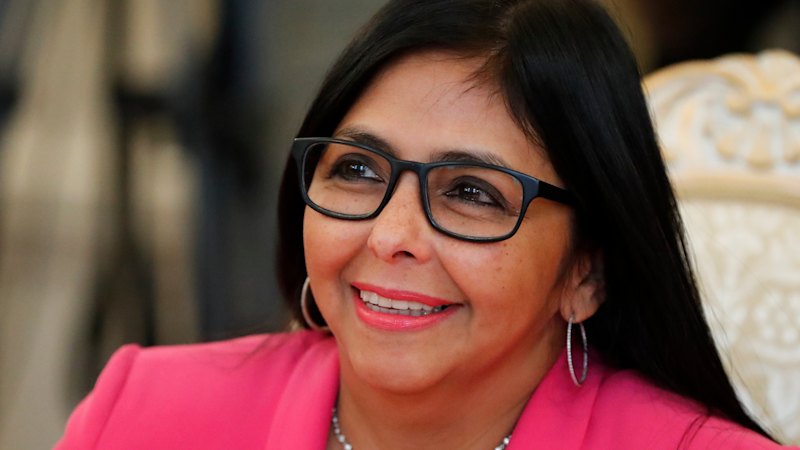
During a news conference in Palm Beach, Florida, Trump stated that U.S. Secretary of State Marco Rubio had engaged in a lengthy conversation with Rodriguez, during which she reportedly agreed to assist in the transition. Trump claimed that Rodriguez had already been sworn in as president to succeed Maduro. “She’s essentially willing to do what we think is necessary to make Venezuela great again, very simple,” Trump declared.
Minutes after Trump’s announcement, Rodriguez appeared on state television, flanked by military officials, and demanded Maduro’s return from U.S. custody, describing his capture as “barbaric” and a “kidnapping.” She asserted that Maduro remained the country’s only legitimate president.
Rodriguez’s Role in the Transition
If Rodriguez cooperates, she could play a crucial role in maintaining stability within Venezuela’s current institutions during the transition. However, her longstanding allegiance to Maduro, who is widely accused of electoral fraud, raises doubts about her willingness to relinquish power. This also casts uncertainty over the U.S.’s commitment to genuine regime change in Venezuela.
Rodriguez did not respond to requests for comment. On television, she mentioned that a congressional chamber was preparing an emergency decree, hinting at how the government might function without Maduro. She also suggested that Venezuela could maintain “respectful relationships” with the U.S., potentially paving the way for détente.
“We think they’re going to have some unique and historic opportunities to do a great service for the country, and we hope that they’ll accept that opportunity,” Rubio told The New York Times.
Opposition and International Reactions
President Trump dismissed the idea of installing opposition leader Maria Corina Machado to guide the transition, describing her as a “nice woman” lacking popular support in Venezuela. Rodriguez is viewed by many as the most powerful figure in the country after Maduro, having served in various high-ranking positions such as information and foreign minister, and later as oil minister following the contested 2024 presidential election.
Some of Trump’s advisers see a transition to Rodriguez as a strategic exit from Maduro’s hard-line regime. They argue that a gradual shift away from Maduro’s leadership would be less disruptive than a transition to Machado or Edmundo Gonzalez, Machado’s preferred candidate for the 2024 election.
According to this perspective, if the democratic opposition were to assume power, it would necessitate U.S. military protection from domestic threats, including former regime officials and paramilitary groups controlling significant portions of Venezuelan territory.
“All political and military figures in Venezuela should understand what happened to Maduro can happen to them, and it will happen to them” if they weren’t “fair” to the Venezuelan people, Trump warned.
Key Figures in Venezuela’s Political Landscape
Jorge Rodriguez: Loyal Ally
Alongside Delcy Rodriguez, key figures in the regime include her brother Jorge Rodriguez, head of the National Assembly, and Defence Minister Vladimir Padrino Lopez. Jorge Rodriguez, a psychiatrist and long-time ally of Chavez and Maduro, has held several significant government roles, including vice president and communications minister. Known for his fiery temperament, he plays a vital role in maintaining political unity within the ruling party.
Vladimir Padrino Lopez: Military Strongman
Defence Minister Vladimir Padrino Lopez, who has served since 2014, is a central figure in Venezuela’s military and political landscape. Amidst rumors of unrest, Padrino appeared on social media urging calm and backing Maduro’s declaration of a state of emergency. His tenure has seen the military expand its role in the economy, tying senior officers closely to the government’s survival.
Padrino has consistently supported Maduro during major crises, including the 2017 protests and the international recognition of Juan Guaido as interim president in 2019. The U.S. has sanctioned Padrino, accusing him of supporting authoritarian rule and human rights abuses.
Historical Context and Future Implications
Delcy Rodriguez’s political career began under former President Hugo Chavez, and her family’s history in Venezuela’s radical left has shaped her political narrative. Her father, Jorge Antonio Rodriguez, was a prominent Marxist figure who died under interrogation in 1976, an event that deeply influenced her political journey.
As Venezuela faces this pivotal moment, the international community watches closely. The potential for a peaceful transition hinges on Rodriguez’s actions and the U.S.’s strategic decisions. The coming weeks will be critical in determining whether Venezuela can navigate this crisis towards a more democratic future.
For now, the world waits to see if Rodriguez can indeed fill Maduro’s shoes and lead Venezuela through this tumultuous period.