



The UK government has initiated a consultation exploring the possibility of implementing an Australian-style ban on social media for individuals under the age of 16. This proposal is presented as a decisive response to escalating concerns about the mental health of young people, alongside issues of online abuse and exposure to harmful content.
At first glance, the idea of a ban seems straightforward: keep children away from platforms that could potentially cause harm. However, as someone who has extensively researched the digital lives, relationships, and well-being of young people, I believe that a blanket ban risks oversimplifying both the problem and the potential solutions.
The Reality of Online Harms
Research consistently indicates that the harms young people encounter online are not isolated from those they experience offline. Issues such as bullying, racism, sexism, coercion, exclusion, and body image pressures have long existed before the advent of social media. While digital platforms can amplify these problems, they do not originate them.
In focus groups conducted with teenagers and studies carried out during the pandemic, participants often described their online lives as extensions of school corridors, peer groups, and local communities. This phenomenon is increasingly referred to by scholars as a “post-digital” reality, where young people perceive online and offline experiences as a single, interconnected continuum.
Technical Restrictions vs. Social Solutions
If the roots of these harms are social, then technical restrictions alone are unlikely to resolve them. A ban frames social media as the core problem, rather than prompting deeper inquiries into why certain behaviors—such as harassment, shaming, misogyny, and exploitation—occur in the first place.
Moreover, we must consider why digital spaces have become the default arenas for meeting so many needs. Years of funding cuts to youth services, reduced community spaces, and intensified academic pressures have created a vacuum that online platforms have filled. They did not simply invade young people’s lives; they were invited into a void left by adult policy decisions. A ban addresses the symptom of these developments while leaving the broader contexts unexamined.
“Young people are resourceful digital citizens. Many will find workarounds, migrate to unregulated platforms, or simply lie about their age.”
Challenges of Enforcing a Ban
There is also a practical issue with enforcing age-based bans. Young people are adept digital citizens and are likely to find ways around restrictions, whether by migrating to unregulated platforms or misrepresenting their age. This could push online activity underground, away from the oversight of parents, teachers, and support services. Instead of engaging with young people where they already are, a ban might make it harder to identify those who are struggling and in need of help.
A recent joint statement signed by over 40 children’s charities, digital safety experts, and bereaved families warns that blanket prohibitions may isolate vulnerable young people from peer support networks and crisis resources.
What Young People and Parents Want
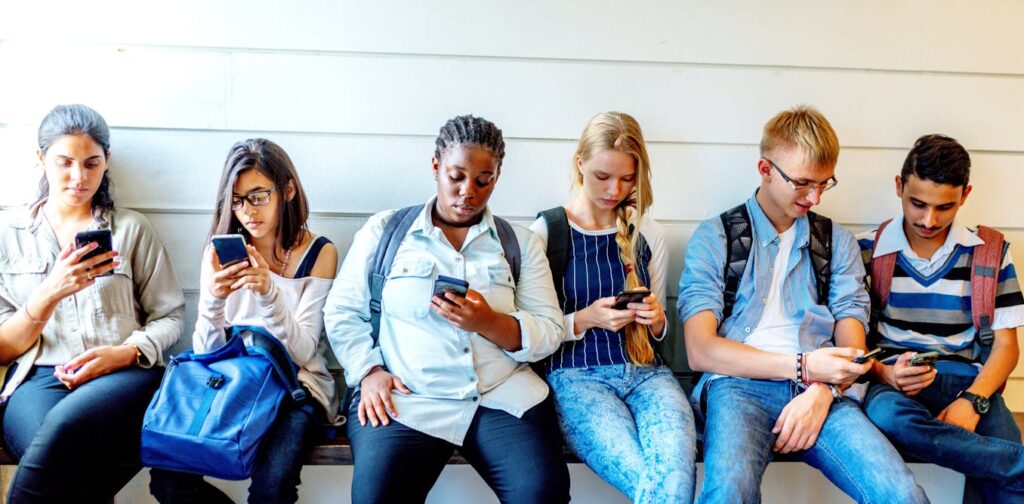
Many young people are critical of social media. In research on online harms and influencer culture, they frequently express feeling exhausted by comparison culture, constant notifications, and the pressure to be “always on.” They often desire more offline time and meaningful face-to-face connections.
This ambivalence indicates that young people are not passive victims of technology but can identify problems and articulate the kind of digital lives they want. They seek better education, more honest conversations, and greater adult understanding. They wish to learn how to set boundaries, recognize coercion and algorithmic manipulation, and manage conflict. Above all, they want to be taken seriously as partners in solving the problems they face.
Parents, on the other hand, often express deep ambivalence about social media. They worry about online harms and sometimes express a nostalgic desire to return to a pre-internet childhood era. However, this nostalgia is rarely about technology alone. It often reflects a sense of losing control as parents, faced with powerful tech companies, complex digital cultures, and broader social changes reshaping their children’s lives.
“Parents describe feeling torn between wanting to protect their children and recognizing that digital communication is central to modern friendship and learning.”
The Illusion of Simple Fixes
The appeal of a ban lies in its simplicity. However, complex social problems rarely yield to simple technological solutions. Real progress will be slower and less headline-grabbing. It involves investing in high-quality relationships and sex education that reflects young people’s digital realities, supporting parents to have informed conversations, regulating platform design to reduce exploitation and harassment, and holding social media companies more accountable. It also requires rebuilding offline services and spaces that provide young people with genuine alternatives.
Social media is not an external danger that young people occasionally visit. It is woven into their everyday social worlds. By cutting young people off from the spaces through which they meet real personal, interpersonal, and social needs, a ban risks leaving them unmoored. A generation growing up in a networked world needs guidance, not exclusion from the spaces where their lives unfold. Policy must start from how young people actually live, not from adult fears about technology. If we want young people to be safer online, the answer is not to ban their digital lives, but to help them navigate them.