
It wasn’t long after touching down in the Northern Territory that Deadloch co-creator Kate McCartney realized the show’s second season needed teeth. “I always had a pretty firm regard for crocodiles,” McCartney says. “But once I got up there and I saw one, I was like, ‘This is gonna become my entire personality.’”
The season one finale of the Emmy-nominated series had already committed McCartney and her longtime collaborator Kate McLennan to swapping the southern gloom of Tasmania for the muggy heat of the territory. The location proved serendipitous: once the pair behind Get Krack!n and the Katering Show landed in Darwin, they found an abundance of big characters and comic set-pieces ripe for their next whodunnit.
From Tasmania to the Top End
The transition from Tasmania to the Northern Territory was not just a change in scenery but a shift in narrative tone. The creators immersed themselves in the local culture, even booking three croc tours in a single day. “It was too many croc tours,” McCartney admits. “Having someone talk to you in those reflective sunglasses … they have this power, they’re part-entertainment, part-safety officer. The things that were coming out of their mouths, you know that they’ve said it 100 times on tours – it was just gold.”
Deadloch’s original pitch was borne from both Kates’ obsession with “really bleak crime noir mystery” while in the throes of early motherhood. “What if we took a performer who’s a bit like that Olivia Colman character,” says McLennan, “but you dialed up the comedy a little bit [and] still made something that was really engaging and took the crime seriously?”
A New Setting, A New Mystery
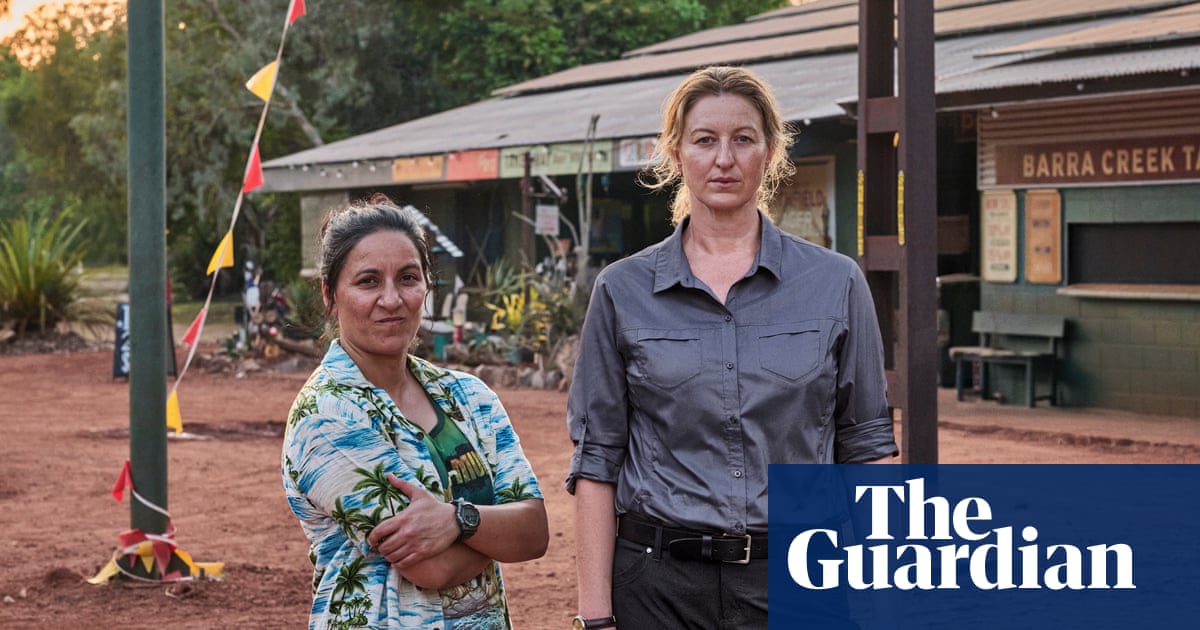
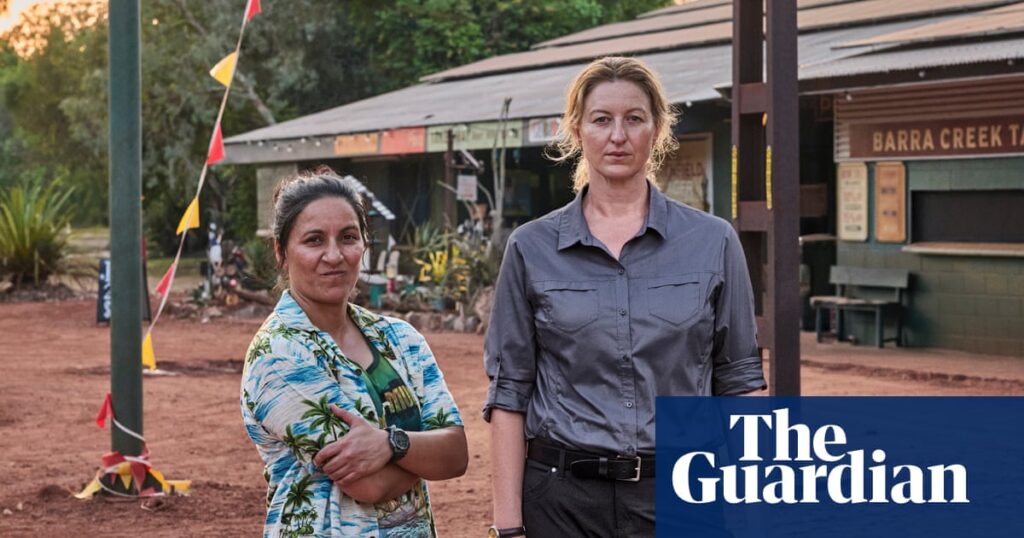
They found their answer in Deadloch’s detective odd couple: the strait-laced Dulcie (Kate Box) and the broad and sweary Eddie (Madeleine Sami) – a territory local haunted by the death of their old wingman “Bushy”. The show’s second season leads them to Barra Creek, a town with “a pub, a police station, and one bin” whose biggest industry – croc tours – is beset by a rivalry between a tired old family business and the slick new operation of a celebrity fisher (Luke Hemsworth). Throw in some missing backpackers, a lot of unresolved baggage, and the game is afoot. Or rather, a severed hand.
To create Barra Creek, the production took over the town of Batchelor, an hour’s drive from Darwin with a population of less than 400. A sign proudly proclaims its status as a three-time winner of the NT’s Tidiest Town but, when visiting the set on a sticky day in September 2024, it’s covered in red dirt – 93 cubic meters of it trucked in to match other shooting locations.
A Unique Cinematic Experience
“I think this season has a different tone; the last season was very dark, a lot of night scenes,” explains the comedian and actor Nina Oyama inside Batchelor’s pub. Oyama is back as the young constable turned aspiring forensics expert Abby. “Tassie noir, they called it. And this one’s sort of like a spaghetti western – maybe not a spaghetti western, it’s a schnitty western.”
The pub has been transformed into the Barra Creek Tavern, festooned with sun-bleached signage for beer, takeaways, and pokies, and populated with extras from around the area – including one sun-kissed, bearded man named Ian who looks like Gandalf in Hard Yakka. He has taken time off from his part-time job sinking bores to try his hand at TV.
Exploring Complex Themes
For all the croc gags and weather jokes, the Kates also leaned into the complexity of the Top End for this season, and the inherent tension of making a police procedural – even a funny one – in a part of the world with a long and troubled history of law enforcement. “These crime shows, they are about truth and secrets,” McLennan says. “We wanted to have a conversation about Australia, and how we don’t have a great relationship with the truth and the past … there is a lot of denial.”
That context quietly simmers in the background: the glossy drone montages of wide rivers are peppered with the occasional youth detention center. We meet a string of macho local detectives in aviators and too-tight chinos whose sketchy group chat inevitably recalls the cop-to-cop text message chains exposed through the Kumanjayi Walker inquest.
“The territory,” says Deadloch star Kate Box, back at the pub, “is such a beautiful place and a terrifying place. And you look at … everything that’s going on politically up here, and it’s wild. It’s a wild, wild place of many contradictions.”
Addressing Social Issues
These contradictions are given voice by Eddie’s old schoolmate Miki, an Indigenous ranger played by Shari Sebbens who is perpetually on hold to welfare services after becoming a carer to her young nephew. She scolds Eddie for “carceral thinking”, while pointing out how the stakes are different for a First Nations character merely suspected of a crime.
“If a blackfella was bumping off every land-stealing whitefella, 80% of this town would be dead,” she tells Eddie in one episode.
McLennan notes that many of the territory’s tough-on-crime laws – and their racially skewed outcomes – have only grown harsher since they began work on the season: “It felt like we’ve got one shot to tell a story. It would be very strange not to address any of that.”
Humor Amidst Tension
True to form, though, the production process also saw plenty of daft humor. After their initial croc tours, the Kates had another encounter at a pub in Bynoe with a cyclone-fenced enclosure out the back. “We looked over and there was a full five-metre croc,” McCartney says of the reptile, ominously named Two Dogs. “The casualness with which they treat one of the most impressive predators in the world’s entire history, I think, is pretty amazing.”
When it came to christening the awol crocodile that forms one of Deadloch’s overlapping mysteries, the Kates stayed true to their original mission of dialing up the comedy. Their croc’s name? Triple-pet.
As Deadloch returns for its second season, it promises to deliver a blend of humor and tension, set against the backdrop of Australia’s complex social landscape. With its unique setting and engaging narrative, the series continues to captivate audiences, offering both entertainment and a reflection on the truths and contradictions of the Northern Territory.