



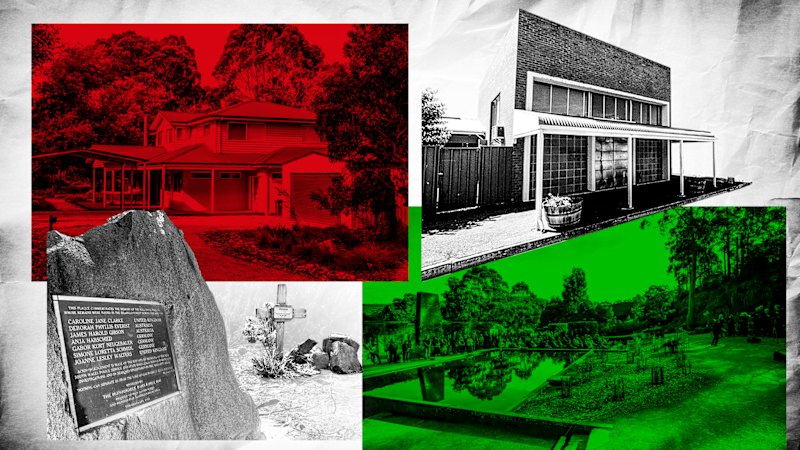
Residents of Leongatha, a town in South Gippsland, have been unsettled by a surge of morbid curiosity seekers. These visitors are drawn to the former home of Erin Patterson, infamously known as the “mushroom murderer,” who poisoned her ex-husband’s parents, Gail and Don Patterson, his aunt Heather Wilkinson, and nearly killed Heather’s husband, Ian. In an attempt to shield the property from prying eyes, friends of Patterson erected plastic sheets around the building.
This local disturbance is a modern manifestation of a longstanding phenomenon known as “dark tourism,” where sites of historical tragedy attract visitors intrigued by their grim pasts. The Institute for Dark Tourism Research, founded at the University of Lancashire in 2012, explores these “trauma-scapes.” According to Dr. Philip Stone, the institute’s executive director, “People think that it would be a modern, contemporary phenomenon, but it’s not.”
The Historical Roots of Dark Tourism
Dark tourism is not a new concept. In the 19th century, the slums of London became a focal point for such activities. Dr. Stone points to the infamous Jack the Ripper case in 1888, where landlords capitalized on the public’s morbid curiosity by renting out rooms overlooking crime scenes. “That is early dark tourism,” he notes.
The media’s role in sensationalizing these events cannot be overstated. The tabloid press dubbed the unidentified killer “Jack,” a name that has endured over a century later. Today, the Jack the Ripper Museum in London offers walking tours, and businesses like The Jack the Ripper Experience continue to profit from the public’s fascination with the macabre.
Modern-Day Dark Tourism in Australia
Australia is no stranger to dark tourism. In Melbourne, Dark Stories True Crime Tours, led by David Dark, offers historical crime tours, though he admits that recent events, like the city’s gang wars, are still too fresh to be included. Meanwhile, the trial of Erin Patterson in Morwell, 58 kilometers from Leongatha, drew a crowd of journalists and influencers, echoing the dark tourism surge seen in Snowtown, South Australia.
Snowtown became infamous after the discovery of eight victims’ remains in acid-filled barrels in 1999. The case inspired a film and a wave of visitors curious about the town’s dark history. Local businesses, like the now-closed Snowtown Crafts and Curios, attempted to profit from this interest by selling macabre souvenirs.
The Ethics and Impact of Dark Tourism
Dark tourism raises ethical questions about the commodification of tragedy. Dr. Stone explains that the memorialization of such sites can take various forms, from sanctification to obliteration. In Gloucester, UK, the home of serial killers Fred and Rosemary West was demolished to erase its memory, a decision Stone questions for its impact on historical education.
Port Arthur in Tasmania, site of a 1996 massacre, offers another perspective. A coach tour from Hobart focuses on the area’s convict heritage, with only a brief mention of the tragedy. Guides avoid discussing the massacre, a decision that Stone argues might allow conspiracy theories to flourish unchecked.
Controversial Tours and Public Reaction
In 2015, Goulburn Ghost Tours in New South Wales faced backlash for their “Extreme Terror Tour” of Belanglo State Forest, where serial killer Ivan Milat buried his victims. The tour, which avoided sensationalist elements, was ultimately canceled due to public outrage. Stone describes such ventures as “milking the macabre,” blurring the line between remembrance and exploitation.
Visiting the backpackers’ memorial in Belanglo, one is struck by the simple tributes left by strangers. The site serves as a poignant reminder of the victims, raising questions about the motivations behind dark tourism and its impact on communities.
As dark tourism continues to attract interest, it challenges us to consider how we remember and learn from past tragedies. The balance between education and exploitation remains a delicate one, as communities grapple with the legacy of their darkest moments.