



In a remarkable scientific achievement, students from Curtin University’s Desert Fireball Network have discovered a fist-sized meteorite in a remote part of Western Australia’s Goldfields. The meteorite was initially detected by the network’s cameras as it streaked across the sky in July. Subsequent modeling pinpointed its likely landing site about 400 kilometers northeast of Kalgoorlie.
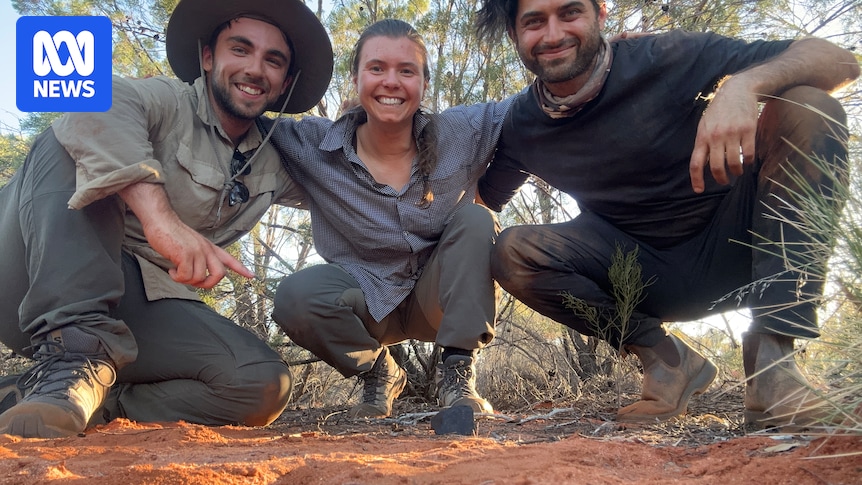
PhD students Michael Frazer, Dale Giancono, and Iona Clemente unearthed the 300-gram rock in November after an exhaustive five-day search. Despite the accuracy of the modeling, Frazer described the task as akin to finding a needle in a haystack. “We were looking for a rock about the size of our fist in a one-and-a-half square kilometer search area, which is about half the size of Kings Park,” he explained.
The Desert Fireball Network: A Sky-Watching Marvel
The Desert Fireball Network is equipped with cameras strategically placed in desert areas and the Nullarbor, covering an impressive 3 million square kilometers of sky. This allows the network to track meteors entering the atmosphere above Western Australia, determining the trajectory of fireballs and their origins within the solar system.
Initially, the team believed the meteorite from July was too small to warrant a search. However, further modeling by international colleagues suggested it might be larger than anticipated, prompting the students to embark on their quest. “We were all sort of running around the room going, ‘We think it’s bigger than we thought it was. Maybe we could go and find this. Let’s plan it. Let’s get out there,'” Frazer recounted.
A High-Tech Search in the Outback
In November, Frazer and his colleagues embarked on a three-day journey to the search area, armed with food, equipment, and a drone equipped with AI technology. The drone played a crucial role in surveying the area for signs of the meteorite. “We sort of used to go out and just walk around and hope we could stumble across the rock, sort of sweeping the area manually,” Frazer said. “This drone survey that we do … spots all sorts of round, small black things on the ground, so a meteorite [could be] one of them.”
The drone identified 728 potential meteorite candidates, which the team manually inspected. After examining over 700 possibilities, the team’s optimism waned. “I had finished looking at mine and I said ‘OK, I’m going to head back to camp, this was a fun trip, but we didn’t find it. Oh well,'” Frazer recalled. However, a breakthrough came when Giancono radioed in with exciting news. “We all ran up and there it was sitting on the ground, not where we expected,” Frazer said, describing the moment of discovery as filled with relief and joy.
Scientific Implications and Future Research
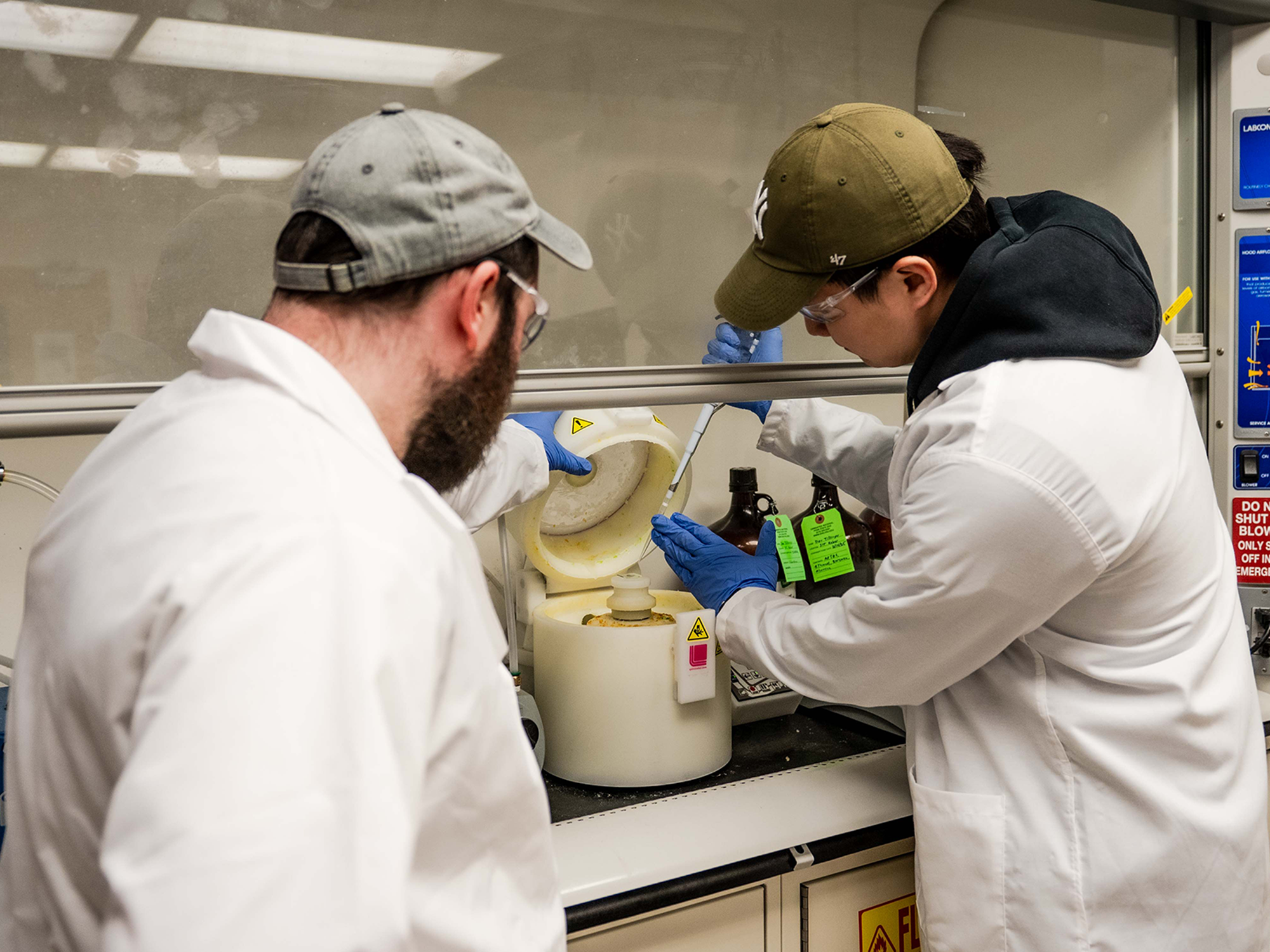
The meteorite is now housed at Curtin University’s Perth campus, where the team plans to analyze its composition and origin. “Meteorites come in sort of a few different species, so we want to figure out which one it is,” Frazer explained. “You can also measure the age, so how long it’s been floating around in space.”
This find marks the 11th meteorite with a known orbit to be recovered by the Desert Fireball Network, highlighting the network’s significant contributions to planetary science. The discovery not only adds to our understanding of meteoritic materials but also underscores the potential for future finds using advanced technology and international collaboration.
As the team prepares to conduct detailed analyses, their work continues to inspire budding scientists and underscores the importance of perseverance and innovation in scientific exploration.