




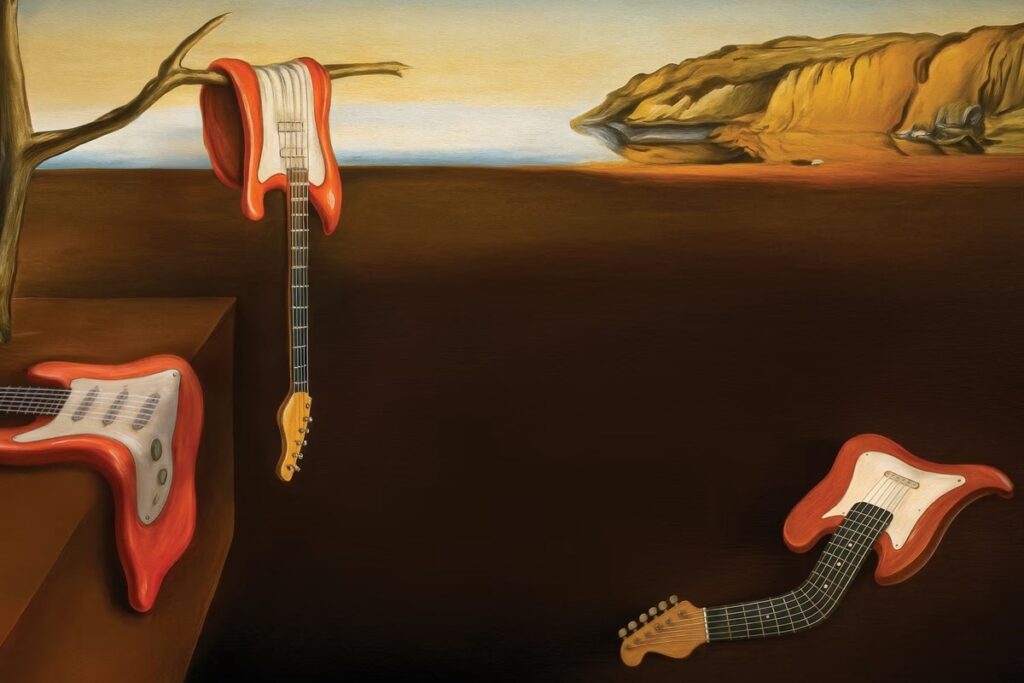
“This is Bach, and it rocks/ It’s a rock block of Bach/ That he learned in the school/ Called the school of hard knocks” — Tenacious D. Has culture stagnated, at least in the United States? A number of prominent writers argue that it has. Among them, Adam Mastroianni attributes cultural stagnation to risk aversion, a byproduct of longer lifespans and reduced background risk.
Meanwhile, Ted Gioia points to risk-averse entertainment companies that monopolize content with intellectual property and use dopamine-hacking algorithms to capture consumers’ attention. Both writers present substantial data to support their claims, examining various domains of cultural production such as books, movies, music, TV, and games. They demonstrate that:
- Old media products, including sequels, remakes, and adaptations, have overshadowed new products.
- Popularity is increasingly concentrated among a limited number of products.
The evidence they provide is compelling. However, counterarguments from voices like Katherine Dee and Spencer Kornhaber suggest that creative efforts have shifted to new formats such as memes, short-form videos, and podcasts. While this holds some truth, it seems insufficient to explain the broader cultural landscape.
Exploring the Roots of Cultural Stagnation
Despite the rise of platforms like TikTok, the declining cost of movie production should have led to a surge in new, quality films. Instead, audiences are inundated with sequels and remakes. This suggests that something deeper is at play, perhaps validating the theories of Mastroianni and Gioia.
David Marx, another insightful thinker on cultural issues, offers a unique perspective. His book, “Blank Space: A Cultural History of the Twenty-First Century,” narrates the significant events in American pop culture since 2000. It covers the New York hipster scene, the influence of Pharrell Williams and the Neptunes, the antics of Terry Richardson, and the savvy marketing of figures like Paris Hilton and Kim Kardashian.
Marx’s narrative paints a picture of 21st-century culture dominated by the internet, leading to bland uniformity and commercialism. His ability to weave a coherent story from disparate cultural elements is remarkable, though it sometimes overshadows his attempts at grand theorizing.
The Challenges of Capturing Cultural Complexity
Marx’s narrative methodology, while compelling, has its limitations. It often overlooks the diversity within cultural production, particularly in film and the impact of foreign imports. The 2000s, for instance, were a golden age for indie films, a fact that Marx’s narrative misses.
Moreover, the explosion of Japanese cultural imports to the US in the 2000s and 2010s is largely absent from his analysis, despite being the subject of his first book. Globalization, while not synonymous with stagnation, plays a crucial role in shaping cultural dynamics.
Marx’s narrative also struggles with the “long tail” of culture. While mainstream bands can define a decade, the vast array of niche bands and artists defy easy categorization. This complexity challenges the notion of a coherent cultural story.
Implications and Future Directions
The evidence presented by Mastroianni and Gioia, indicating a concentration of popularity among a cultural elite, does not negate the existence of a long tail. The best fashion styles, YouTube videos, and graphic novels often emerge from the fringes, created by unknown talents.
However, in domains like books and traditional film, this trend is less apparent. The absence of standout indie films and science fiction books suggests a genuine scarcity, reinforcing concerns about cultural stagnation.
Marx’s observations about the dominance of mainstream culture and the limitations of memes as modern art forms underscore the need for deeper analysis. While Marx’s narrative offers a historical perspective, it lacks concrete solutions for revitalizing cultural creativity.
One potential explanation lies in the relationship between technology and cultural production. Novel technologies often spur bursts of creativity, as seen with the electric guitar’s impact on music. However, once these possibilities are exhausted, cultural progress slows, and a canon is established.
This technological perspective suggests that cultural creativity is inherently cyclical, tied to technological advancements. As such, the ongoing fragmentation of the internet away from mass social media and into smaller, private communities may foster cultural innovation.
Marx’s call for a more fragmented internet culture, allowing subcultures to flourish before being absorbed by the mainstream, aligns with this view. The shift towards smaller, niche communities could rejuvenate cultural output, offering a path forward.
In conclusion, while “Blank Space” provides a captivating historical narrative, it leaves much to be desired in terms of actionable solutions. As we await further insights from thinkers like David Marx, the ongoing dialogue about cultural stagnation remains vital to understanding and shaping the future of creativity.