



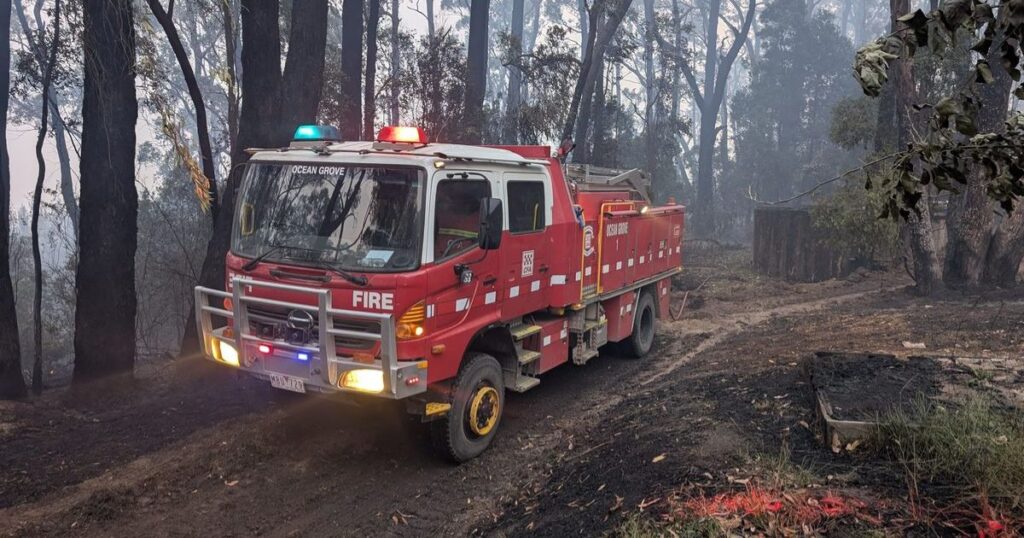
Weeks after thousands of hectares were scorched in the Carlisle River and Gellibrand bushfires, firefighting crews remain on high alert, vigilantly monitoring the fireground to prevent any potential reignition. The ongoing surveillance is an integral component of the broader recovery strategy, especially as the region braces for forecasted high-risk weather conditions.
Wallington Fire Brigade’s Craig Warren emphasized that the declaration of a fire being “stopped” does not mark the end of efforts. “The intention is to declare a fire safe. We don’t want it to start up again,” he stated.
Advanced Technology in Fire Monitoring
To mitigate the risk of residual heat and sparks, the Country Fire Authority (CFA) employs advanced thermal imaging technology both from aircraft and on the ground. “Quite a number of the firefighting aircraft are equipped with thermal imaging cameras and they can fly over the fire and detect any hotspots,” Warren explained. This technology is crucial as “sometimes you get burning roots and wood deep under the earth, and they’ll get away and then get the fire going again.”
The vigilance intensifies with the approach of high-risk weather days. Recently, crews conducted patrols over burn sites in anticipation of an RL3, or readiness level 3, day. “On the first hot and windy days predicted after a big fire, we’ll check the site a day before and in the morning of,” Warren noted.
RL3 means ‘readiness level 3’. Strike teams are formed, sector commanders chosen, and overall CFA members are on a heightened level of readiness in case of fire.
“We can do something about it a day before. If it breaks out on the day, it’s too late,” he added.
Comprehensive Recovery Efforts
The monitoring will persist until a substantial amount of rain has drenched the fireground. However, recovery efforts extend beyond merely containing the flames. Since the fires, the CFA has been actively engaged in welfare checks and providing mental health support to affected residents. “People have different reactions,” Warren said. “Some are confronted… or dealing with property loss. It can have a deep emotional impact.” The CFA offers services and refers individuals to professional support when necessary.
Land rehabilitation is another critical aspect of the recovery process. In collaboration with Forest Fire Management Victoria, efforts are underway to clear sections of burnt bushland and replenish farm water supplies that were depleted during firefighting operations.
Community Vigilance and Support
Warren urged residents to remain vigilant in and around burned areas and to report any concerns by calling Triple Zero. “We don’t mind going to a concern that people have,” he assured. “Part of our job is to try and bring a bit of comfort to them.”
The announcement comes as the region reflects on the lessons learned from past bushfires and prepares for future challenges. The move represents a proactive approach to bushfire management, emphasizing the importance of technology, community support, and comprehensive recovery strategies.
As the community continues to heal and rebuild, the collaborative efforts of firefighting teams and local agencies stand as a testament to resilience and preparedness in the face of natural disasters.