




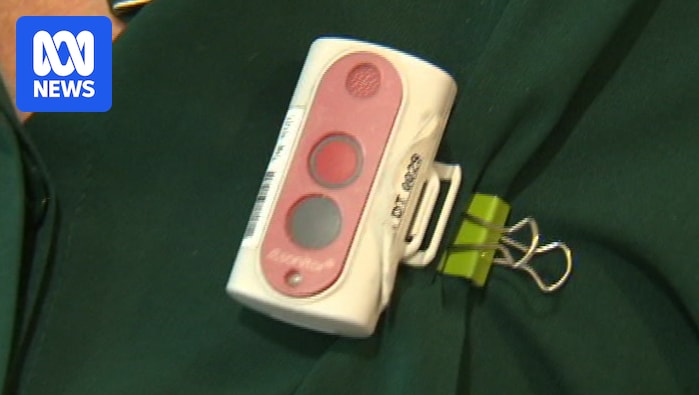
A local council in the City of Greater Bendigo, located north-west of Melbourne, has taken decisive action to protect its elected representatives by equipping them with mobile “panic buttons.” This measure comes in response to escalating threats of violence directed at councillors and staff from the public.
The recent decision to distribute personal duress alarms to the city’s eight councillors follows a comprehensive review of unsociable behavior targeting local government officials. These alarms, which can be worn as a necklace or on the hip, alert a private alarm company when triggered. The company then communicates with the individual through an internal speaker, and if there is no response, the situation can be escalated to emergency contacts and authorities.
Growing Concerns Among Councillors
City of Greater Bendigo Council Mayor Thomas Prince emphasized that while there is a limit to how much can be done to protect councillors, the introduction of duress alarms is becoming a common practice across local governments. “When I was down in Melbourne for a Municipal Association of Victoria conference, I spoke to some other councillors from metropolitan areas that either had them or were in those discussions [to get them],” Cr Prince noted.
Despite the implementation of these alarms, it remains unclear how many councils have adopted similar technology. Several peak bodies, agencies, and the alarm company have been contacted for comment, but no further details have been provided.
Cr Prince expressed uncertainty about the effectiveness of the duress alarms in actual threatening situations, noting that none of Bendigo’s councillors have used the devices since they were distributed last week.
Incidents of Threatening Behavior
A recent survey conducted by the Victorian Local Governance Association revealed that four out of five Victorian councillors have experienced threatening or intimidating behavior between 2020 and 2024. Bendigo councillor Aaron Spong shared his own troubling experience of receiving increasing social media abuse, culminating in a public confrontation with a man who launched a vitriolic tirade against him.
“I was taken aback by the incident [and] very, very disturbed by it all,” Cr Spong said, reflecting on the encounter.
Based in the small town of Heathcote, Cr Spong had never met the man, whose complaints were either personal or beyond the councillor’s control at the local government level. The incident has made Cr Spong more cautious in his interactions around town. “Every time I go out now, you have to evaluate or gauge the feel of the community,” he explained.
Wider Implications and Responses
Councillors across Victoria have raised alarms about the increasing threats of violence, with some expressing concerns that it might take death threats before authorities take significant action. In one alarming instance, a member of the public threatened a councillor online, stating they would shoot them.
“We are in the front line, being local government, [and] we tend to feel the brunt of all government issues, whether it’s state or federal,” Cr Spong observed.
Despite the challenges, Cr Spong supports the introduction of mobile duress alarms, which he refers to as “panic buttons.” He believes they are a positive step towards ensuring the safety of councillors.
The Municipal Association of Victoria and Victoria’s Local Government Minister have been contacted for comment on the situation. As local governments continue to grapple with these challenges, the implementation of duress alarms represents a proactive measure to safeguard elected officials and maintain the integrity of public service.