


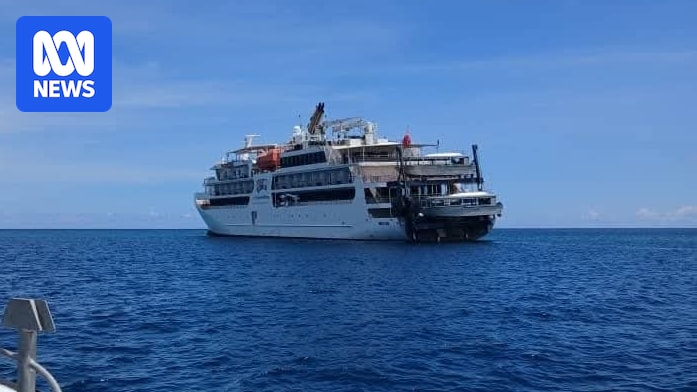
The Coral Adventurer, a cruise ship carrying 80 tourists, found itself in a precarious situation when it ran aground on a coral reef off the coast of Papua New Guinea. The incident occurred approximately 90 kilometers from Lae, PNG’s second-largest city, as the ship encountered strong sea currents. Despite the challenging circumstances, all passengers and the crew of 43 escaped injury. However, efforts to refloat the 93-meter-long vessel have so far been unsuccessful, leaving it stranded for nearly four days.
This unexpected turn of events has left the 120 individuals aboard the Coral Adventurer in remote waters, raising questions about the voyage and the circumstances leading to the grounding.
Details of the Incident
The Coral Adventurer was navigating past Dregerhafen Point at 5:30 am on a Saturday when it ran aground north of PNG’s Nussing Island. Vessel tracking data indicates that the ship first approached the coast of Papua New Guinea on December 20, having departed from Cairns two days prior. It traversed between Normanby Island and Fergusson Island before hugging the coast of Morobe Province, ultimately running aground near Finschhafen, approximately 90 kilometers from Lae.
Morobe’s provincial governor, Rainbo Paita, noted that the Coral Adventurer was taking a route not typically used by local operators. Despite attempts to reach Coral Expeditions for comment, the company has not responded to Governor Paita’s remarks.
Passenger Safety and Repatriation
In the wake of the incident, the passengers began their journey back to Australia on Tuesday. Coral Expeditions arranged a charter flight to facilitate their return. The passengers disembarked the Coral Adventurer in the morning and traveled to Lae aboard the MV Ialibu, arriving in the city by afternoon. They were expected to continue their journey to Cairns.
Earlier, on Sunday, passengers had disembarked for a brief period, participating in community-hosted sightseeing activities in Gingala village while a tugboat attempted to free the vessel.
About the Coral Adventurer
The Coral Adventurer is one of three small cruise ships operated by Cairns-based Coral Expeditions. Built by Norway-based Vard in a Vietnam shipyard in 2019, the vessel cost $119 million. It can accommodate 120 passengers with its 60 staterooms and boasts over 1,000 square meters of open deck space. Weighing 5,500 gross tons, the ship was on a 60-day cruise around Australia in October when a passenger, left behind, tragically died on a Great Barrier Reef island.
The grounding incident in PNG occurred about two months after the death of 80-year-old tourist Suzanne Rees on Lizard Island, part of the Great Barrier Reef.
Coral Expeditions: A Closer Look
Coral Expeditions, headquartered in Cairns, is a Queensland-based company specializing in small ship expedition-style cruises to remote areas, including the Kimberley and the Pacific Islands. It is recognized as Australia’s largest local passenger cruise line. The company offers multi-day cruises around Australia and internationally through Indonesian islands.
Owned by the NRMA since 2023, Coral Expeditions reported taking 6,700 passengers for 77,600 nights at sea, with an 11.4% revenue growth in 2025, partly due to expanded itineraries. The NRMA’s annual report highlighted a “deep dive on safety” in international waters, resulting in specific recommendations.
Besides the Coral Adventurer, the company operates the “sister-ship” Coral Geographer and the smaller Coral Discoverer, built in 2005, for exploring Australia’s remote coastlines.
Next Steps for the Coral Adventurer
Professional divers have inspected the vessel underwater and found no evidence of critical external damage. Despite this, the Coral Adventurer remains stranded on the reef. Initial attempts to refloat the ship were hampered when the engine of a tugboat from PNG company Pacific Towing overheated, necessitating a return to Lae. A larger tugboat from Lae was expected to make further attempts to free the vessel on Tuesday.
The Australian Transport Safety Bureau has initiated a safety investigation into the incident, gathering evidence, while the Australian Maritime Safety Authority has detained the vessel, citing “reasonable suspicion” of it being “not seaworthy due to potential damage sustained during the grounding.”
As efforts continue to free the Coral Adventurer, the incident serves as a stark reminder of the challenges and risks inherent in navigating the remote and often unpredictable waters of the Pacific.