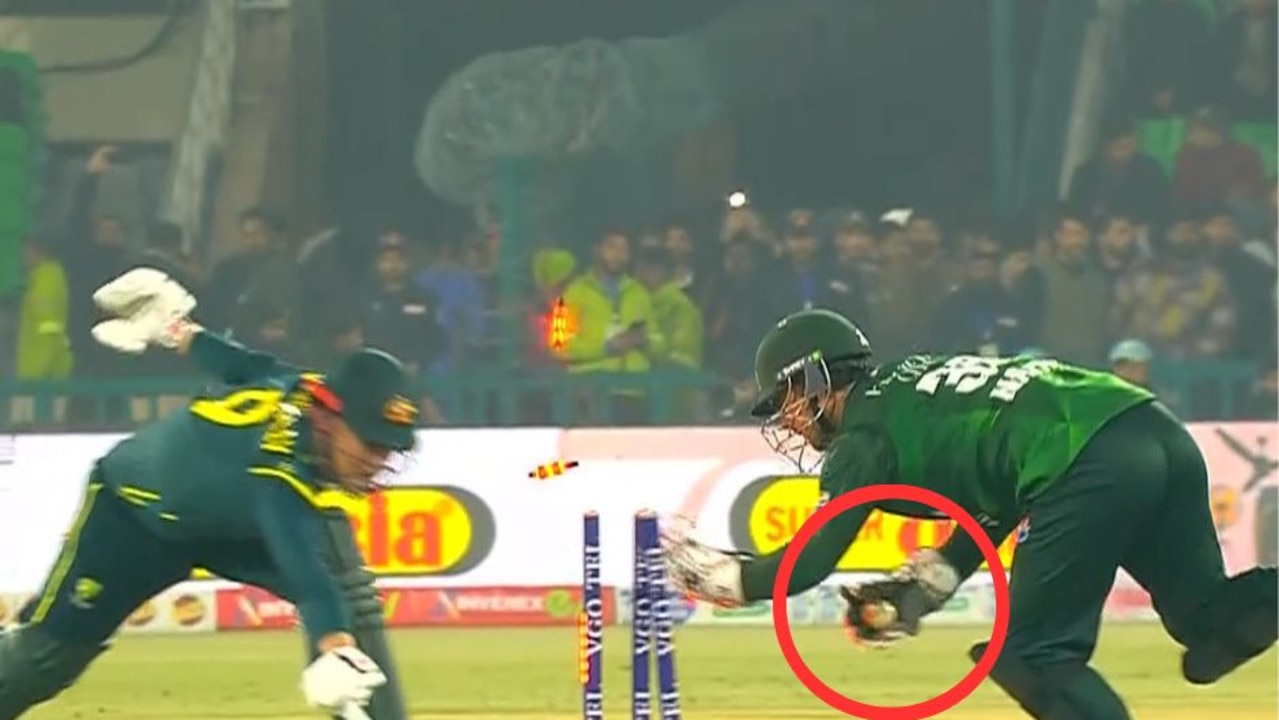




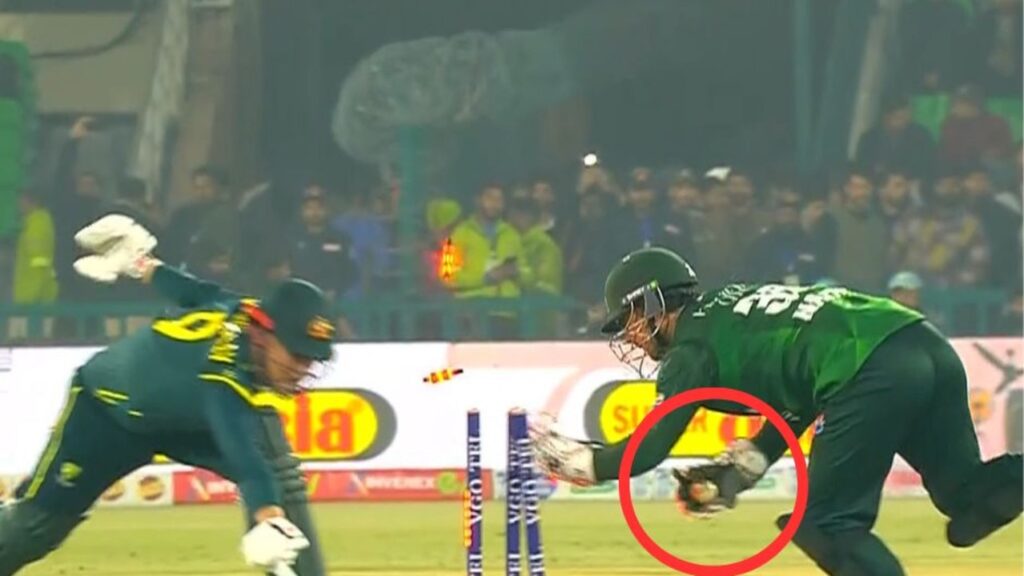
Eagle-eyed viewers have identified a significant umpiring error during the third T20 match in Lahore, where Australian all-rounder Cooper Connolly was wrongly given out stumped by Pakistan’s wicketkeeper Khawaja Nafay. This incident occurred during the 14th over of Sunday’s run chase at Gaddafi Stadium, when Connolly advanced towards spinner Mohammad Nawaz, only for the ball to sharply turn and slide down the leg side.
The West Australian was declared out for a second-ball duck after Nafay removed the bails. However, replays revealed that Nafay did not have the ball in his left glove, which he used to dislodge the bails. This oversight went unnoticed by both the umpires and commentators at the time, but footage of the incident began circulating on social media channels by Monday.
ICC Rules and Umpiring Oversight
According to Clause 29.2.1 of the ICC men’s T20 playing conditions, “The wicket is broken fairly if a bail is completely removed from the top of the stumps or a stump is struck out of the ground – by a fielder with his hand or arm, providing that the ball is held in the hand or hands so used, or in the hand of the arm so used.” This rule clearly indicates that Nafay’s action did not meet the criteria for a legitimate dismissal.
Mohammad Nawaz, who delivered the contentious ball, concluded the match with career-best figures of 5-18 from four overs, leading Pakistan to a commanding 111-run victory. This result marked Australia’s heaviest defeat in men’s T20 internationals.
Impact on Series and Broader Implications
Pakistan’s triumph in Lahore secured a 3-0 series whitewash against Australia. However, the controversy surrounding Connolly’s dismissal has sparked discussions about the quality of umpiring in international cricket. Experts suggest that such errors could be mitigated by increased reliance on technology, such as the Decision Review System (DRS), to ensure fair play.
In a broader context, the incident raises questions about the consistency of umpiring standards across different cricketing nations. Former international umpire Simon Taufel commented,
“Umpiring is a challenging task, but it’s crucial for the integrity of the game that we minimize human error through available technology.”
Political Tensions and Upcoming T20 World Cup
In a separate development, Pakistan announced its decision to boycott its T20 World Cup match against India, a move sanctioned by the Pakistani government. This decision follows Bangladesh’s removal from the ICC tournament due to its refusal to travel to India over security concerns, with Scotland taking its place.
The T20 World Cup is set to commence on Saturday, amidst a backdrop of political tensions and security concerns. The tournament promises to be a spectacle, with cricketing giants vying for the prestigious title, yet the shadow of geopolitical issues looms large.
As the cricketing world turns its attention to the T20 World Cup, the incident in Lahore serves as a reminder of the need for vigilance and fairness in the sport. The cricketing community will be keenly observing how the ICC addresses this umpiring blunder and whether any measures will be implemented to prevent similar occurrences in the future.