



In a shocking incident that has drawn national attention, Alex Pretti, a 37-year-old intensive care nurse, was killed in broad daylight during an encounter with ICE agents in Minneapolis. His last words, spoken to a woman who had been tackled and pepper-sprayed by nearby agents, were, “Are you OK?” Pretti was known for his dedication to his patients and his community, as well as his elderly dog, Joule, who passed away a year ago.
Video footage captured by bystanders shows Pretti filming the actions of ICE agents, a constitutionally protected activity, and attempting to assist fellow onlookers who were being targeted. Despite his peaceful demeanor, Pretti was forcibly restrained and beaten by a group of ICE officers. Within moments, at least 10 shots were fired, leaving Pretti motionless on the ground. The graphic videos have sparked outrage, with one bystander exclaiming, “What the fuck, they killed him.”
Government Response and Public Outcry
The Trump administration and border patrol officials quickly labeled Pretti as a “domestic terrorist,” a claim made without evidence. Stephen Miller, a senior White House official, responded to criticism by stating, “A domestic terrorist tried to assassinate federal law enforcement and this is your response?” Similarly, Kristi Noem, Secretary of the Department of Homeland Security, echoed this sentiment, further inflaming public anger.
These statements have been met with skepticism, as video evidence contradicts the narrative of Pretti attacking officers. Instead, it shows him documenting the agents’ actions and shielding himself from pepper spray. The incident has drawn comparisons to other recent cases, including the death of Renee Good, another Minneapolis resident killed by ICE this month.
Historical Parallels and Community Resistance
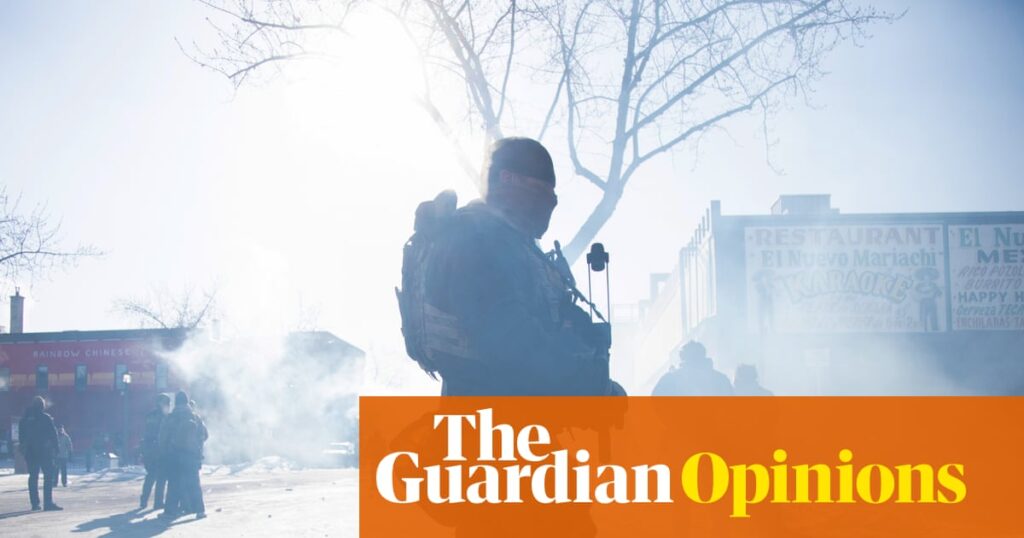
Pretti’s death has become a rallying point for Minneapolis residents resisting what they perceive as a militarized occupation by ICE. Local citizens have organized to protect immigrant families, delivering groceries and medicine, and monitoring ICE activities. This grassroots movement has drawn parallels to historical instances of racial terror in America, such as the actions of the Ku Klux Klan.
Tom Nolan, a former Boston police commander and criminology professor, described Pretti’s death as “stone cold murder.” He argues that ICE’s actions reflect a refusal to be witnessed or held accountable, a sentiment echoed by many in the community.
Implications for the Future
The deaths of Pretti and Good have intensified calls for accountability and reform. Many argue that any path to political stability in the United States must involve a reckoning with the actions of ICE and the Trump administration. Investigations, prosecutions, and tribunals are seen as necessary steps to address these incidents and prevent future abuses.
As the nation grapples with these events, the words of Alex Pretti, captured in a video tribute, resonate deeply: “Today, we remember that freedom is not free. We have to work at it, nurture it, protect it and even sacrifice for it.” His sacrifice has inspired many to continue the fight for justice and accountability, ensuring that his death will not be in vain.
In the wake of this tragedy, the community of Minneapolis remains vigilant, determined to document and resist the actions of ICE. The legacy of Alex Pretti serves as a powerful reminder of the courage required to stand up for one’s beliefs, even in the face of overwhelming odds.