



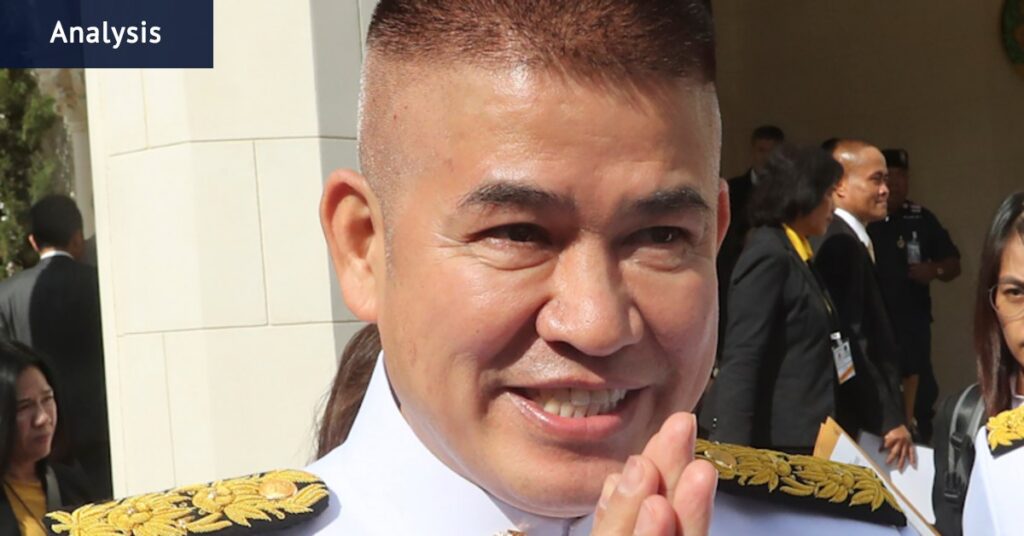
In an era where political careers seem impervious to scandal, Thammanat Prompao’s journey from a Sydney jail cell to a potential prime ministerial candidate in Thailand exemplifies this trend. Despite a past conviction for drug-related charges in Australia, Thammanat has steadily climbed the political ladder in his home country.
The former convict’s political ascent began in earnest in 2019 when he joined Thailand’s cabinet. At the time, Thammanat attempted to dismiss rumors of his past legal troubles in Sydney by claiming he had been a victim of circumstance. He even challenged journalists to verify the court records, which they did, uncovering a complex history of criminal activity.
From Conviction to Political Power
Thammanat’s criminal record dates back to the 1990s when he was implicated in a heroin smuggling operation. While serving in the Thai army, he became entangled with criminal elements and played a role in planning the shipment of 3.2 kilograms of heroin from Bangkok to Sydney. Although he denied direct involvement in drug trafficking, he pleaded guilty to conspiracy to import a commercial quantity of heroin, resulting in a four-year prison sentence in Australia.
After serving his time, Thammanat returned to Thailand, where he reinvented himself multiple times, changing his name and amassing wealth while building a political stronghold. His criminal past resurfaced when he entered politics, but he managed to weather the storm, even threatening numerous lawsuits against those who exposed his history. Despite the controversy, Thammanat’s political career continued to flourish.
Legal and Political Maneuvering
Thammanat’s ability to navigate legal and political challenges has been nothing short of remarkable. When his opponents brought his case to Thailand’s highest court, it ruled that his international conviction posed no barrier to holding high political office. This decision underscored the complex interplay between legal systems and political power in Thailand.
His political resilience was further demonstrated when he was ousted from the cabinet, not due to his criminal past, but because of a falling out with a coup leader. Yet, Thammanat’s fortunes reversed once more when he was appointed deputy prime minister following a parliamentary shake-up and the appointment of Anutin Charnvirakul as Prime Minister.
The Road Ahead
While Thammanat’s chances of becoming Thailand’s prime minister remain slim, they are not entirely out of reach. His candidacy positions him as a potential leader should political circumstances shift, such as the dissolution of parties or the removal of other candidates. This scenario mirrors the path taken by the current Prime Minister, highlighting the unpredictable nature of Thai politics.
“The chances of Thammanat taking the top job are not high, and no one thinks he will get there via the ballot box: more likely, he will wield influence in a future coalition government.”
As Thammanat continues to navigate the political landscape, his story serves as a testament to the resilience and adaptability required to thrive in a world where past transgressions do not necessarily preclude future success. His journey from a Sydney jail to the upper echelons of Thai politics is a reflection of the complex dynamics that define contemporary political careers.
Looking forward, Thammanat’s influence in Thailand’s political arena will likely persist, whether as a potential prime minister or a key figure in coalition governments. His story raises questions about the intersection of legality, morality, and political power, offering a unique perspective on the nature of leadership in today’s world.
