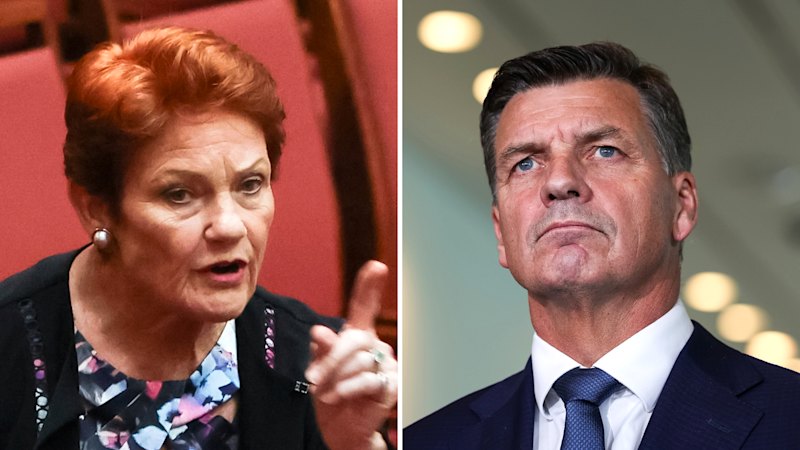


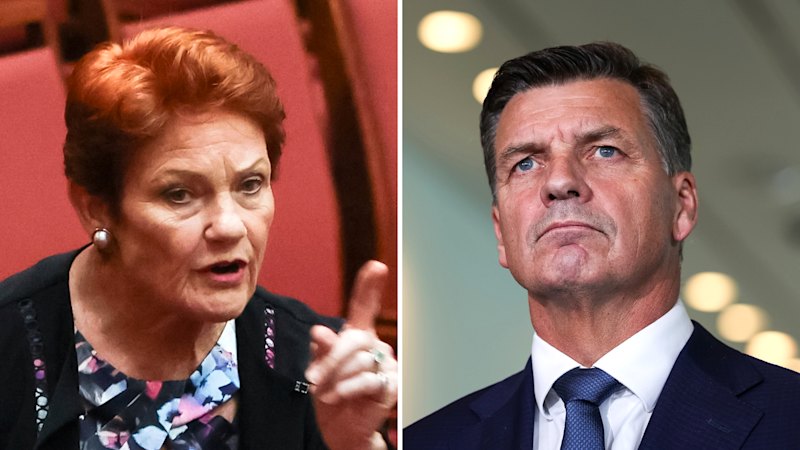
March 22, 2026 — In a strategic move to avert a potential electoral setback reminiscent of recent losses in South Australia, Opposition Leader Angus Taylor is set to challenge One Nation’s credibility. The Coalition’s new plan aims to counter Pauline Hanson’s ambitions to form a government, focusing on economic reform and immigration policies ahead of a crucial federal byelection in May.
Prime Minister Anthony Albanese, speaking in Melbourne, cautioned against divisive politics, emphasizing the importance of multiculturalism. Meanwhile, the Coalition plans to highlight the economic repercussions of Hanson’s zero-immigration policy, stressing its potential impact on sectors like construction.
Political Landscape Shifts
In South Australia, Labor Premier Peter Malinauskas recently secured a commanding victory, leaving the Liberal Party with only a handful of seats. Notably, One Nation’s primary vote surpassed that of the Liberals, signaling a shift in voter sentiment. This development has prompted the federal Coalition to reassess its strategy, with senior shadow cabinet members meeting to formulate a response.
According to sources within the opposition, there is a consensus on the need to confront Hanson directly, rather than forming a coalition with her party. The meeting, attended by Liberal and Nationals directors Andrew Hirst and Lincoln Folo, focused on voter attitudes and the use of social media to counter One Nation’s influence.
Strategic Focus on Economic Vision
As the Farrer byelection approaches, Angus Taylor is expected to unveil the Coalition’s plan to reduce migration intake. However, the opposition aims to differentiate its stance from Hanson’s by illustrating the adverse effects of a zero net migration policy. The building sector, in particular, could face significant challenges under such a policy.
Opposition MPs are also keen to expose what they perceive as Hanson’s overconfidence in her political ambitions. Nationals senator Matt Canavan recently faced backlash for criticizing Hanson’s divisive politics, highlighting the delicate balance the Coalition must maintain in its critique.
One Nation’s Political Dynamics
Despite Hanson’s claims of aiming for electoral victory, Coalition MPs are skeptical about her prospects. A Liberal MP noted that even some of Hanson’s supporters find the idea of her leading the country unrealistic. Furthermore, the opposition plans to emphasize the instability within One Nation, noting that 70% of MPs elected under its banner have left the party.
Anne Ruston, the opposition health spokeswoman, attributed the state election loss to the Coalition’s failure to clearly articulate its values. Speaking on Sky News, she expressed doubts about One Nation’s ability to maintain its current level of support, citing historical patterns of the party’s fluctuating popularity.
Future Implications and Strategies
The Coalition’s strategy involves offering voters a compelling economic vision, with plans to release major policies midterm. This approach contrasts with their previous tactic of unveiling policies closer to elections. By focusing on tax reforms and material living standards, the opposition hopes to distinguish itself from One Nation and regain voter confidence.
As the political landscape continues to evolve, the Coalition’s efforts to counter One Nation will be closely watched. The upcoming Farrer byelection will serve as a critical test of the opposition’s strategy and its ability to reclaim lost ground.
For more insights on political dynamics and leadership, follow Chief Political Correspondent Paul Sakkal, a Walkley award-winning journalist, on Signal @paulsakkal.14 or connect via X or email.