


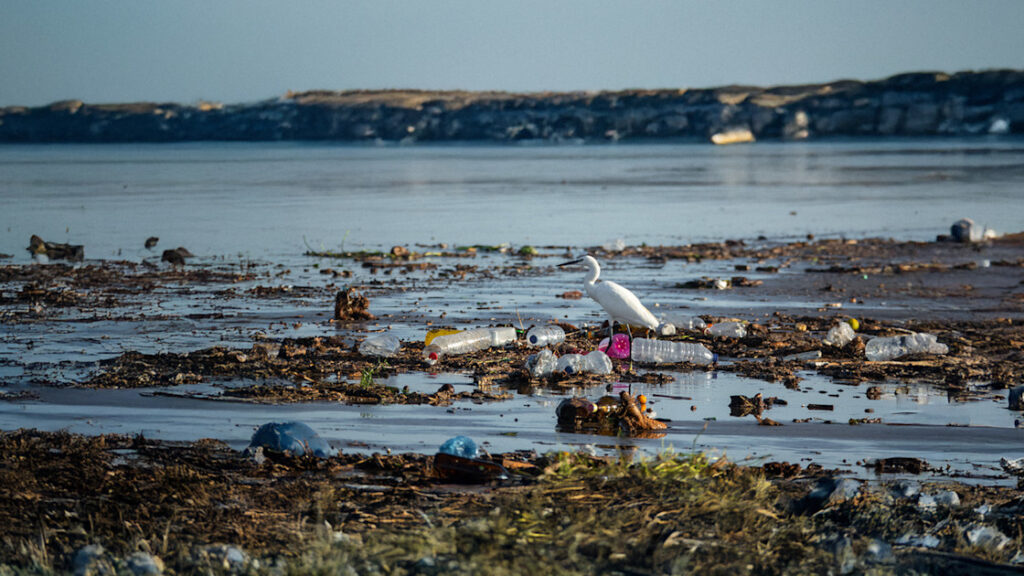
Increased toxicity from plastic pollution in a warming climate is highly likely to be affecting entire ecosystems, with potentially disproportionate impacts on apex predators such as orcas. A new review published in Frontiers in Science calls for urgent action to avoid irreversible ecological damage by stemming the tide of microplastics entering the environment.
Climate change conditions transform plastics into more mobile, persistent, and hazardous pollutants by accelerating their breakdown into microplastics—microscopic fragments of plastic. This process spreads them over considerable distances, increasing exposure and impact within the environment. The situation is expected to worsen as both plastic manufacturing and climate effects intensify. Global annual plastic production rose 200-fold between 1950 and 2023.
The authors, from Imperial College London, urge the elimination of non-essential single-use plastics, which account for 35% of production, limiting virgin plastic production, and creating international standards for making plastics reusable and recyclable. “Plastic pollution and the climate are co-crises that intensify each other. They also have origins—and solutions—in common,” said lead author Prof Frank Kelly from Imperial’s School of Public Health. “We urgently need a coordinated international approach to stop end-of-life plastics from building up in the environment.”
Joint Crises: Climate and Plastic Pollution
The researchers conducted a comprehensive review of existing evidence highlighting how the climate crisis exacerbates the impact of plastic pollution. Rising temperatures, humidity, and UV exposure all contribute to the accelerated breakdown of plastics. Furthermore, extreme weather events such as storms, floods, and winds can increase the fragmentation and dispersal of plastic waste into landfills, aquatic and terrestrial ecosystems, atmospheric environments, and food webs.
Concerns are mounting about the persistence, spread, and accumulation of microplastics that can disrupt nutrient cycles in aquatic ecosystems, reduce soil health, and crop yields. They also adversely affect the feeding, reproduction, and behavior of organisms capable of ingesting them, should levels exceed safe thresholds. Microplastics can also act as ‘Trojan horses’ to transfer other contaminants like metals, pesticides, and PFAS ‘forever chemicals’.
Climatic conditions may enhance the adherence and transfer of these contaminants, as well as the leaching of hazardous chemicals such as flame retardants or plasticizers. Historical plastic is also a concern. When ice forms in the sea, it takes up microplastics and concentrates them, removing them from the water. However, as sea ice melts under warming conditions, this process could reverse, becoming a major additional source of plastic release.
“There’s a chance that microplastics—already in every corner of the planet—will have a greater impact on certain species over time. Both the climate crisis and plastic pollution, which come from society’s over-reliance on fossil fuels, could combine to worsen an already stressed environment in the near future,” said co-author Dr Stephanie Wright from Imperial’s School of Public Health.
Apex Predators Particularly Vulnerable
The combined impacts of both stressors are particularly apparent across many marine organisms. Research into corals, sea snails, sea urchins, mussels, and fish shows that microplastics can make them less able to cope with rising temperatures and ocean acidification. Filter-feeding mussels can concentrate microplastics extracted from the water, transferring this pollution to predators, which can increase levels of microplastics higher in the food chain.
Species at these higher trophic levels are often already vulnerable to a host of other stressors, whose effects may be amplified by plastics. For instance, a recent study found that microplastic-induced mortality in fish quadrupled with a rise in water temperature. Another study showed that increased ocean hypoxia, also driven by warming, caused cod to double their microplastic intake.
Apex predators such as orcas may be particularly susceptible to the double hit of microplastics and climate change. These long-lived mammals are likely to experience significant microplastic exposure over their lifetime. The potential loss of keystone species that shape the functioning of the wider ecosystem could have far-reaching implications.
“Apex predators such as orcas could be the canaries in the coal mine, as they may be especially vulnerable to the combined impact of climate change and plastic pollution,” said co-author Prof Guy Woodward from Imperial’s Department of Life Sciences.
Urgent Action Required on Microplastics
The evidence showing increased amounts, spread, and harm of microplastics adds further impetus to calls for urgent action on plastic pollution. The researchers say we must rethink our entire approach towards using plastics. “A circular plastics economy is ideal. It must go beyond reduce, reuse, and recycle to include redesign, rethink, refuse, eliminate, innovate, and circulate—shifting away from the current linear take–make–waste model,” said co-author Dr Julia Fussell from Imperial’s School of Public Health.
This review also demonstrates that integrating interactive effects of plastic pollution and climate stressors offers a way to steer, coordinate, and prioritize research and monitoring, along with policy and action. According to Wright, “The future will not be free of plastic, but we can try to limit further microplastic pollution. We need to act now, as the plastic discarded today threatens future global-scale disruption to ecosystems.”
“Solutions require systemic change: cutting plastic at source, coordinated global policy such as the UN Global Plastics Treaty, and responsible, evidence-based innovation in materials and waste management,” said Kelly.
The article is part of the Frontiers in Science multimedia article hub ‘Plastic pollution in a changing climate.’ The hub features an explainer, editorial, viewpoint, policy outlook, and a version of the article for kids, from other eminent experts: Dr Jennifer Provencher (Environment and Climate Change Canada, Canada) and Dr Anja M. Brandon (Ocean Conservancy, USA).
About
Frontiers in Science is Frontiers’ multidisciplinary, open-access journal focused on transformational science to accelerate solutions for healthy lives on a healthy planet. The journal publishes a select number of exceptional peer-reviewed lead articles invited from internationally renowned researchers, whose work addresses key global challenges in human and planetary health. Each lead article is enriched by a diverse hub of content that extends its reach and impact across society—from researchers and policymakers to lay audiences and kids.
For more information, visit www.frontiersin.org/science and follow @FrontScience on X, Frontiers in Science on LinkedIn, and @Frontiers on Bluesky.