


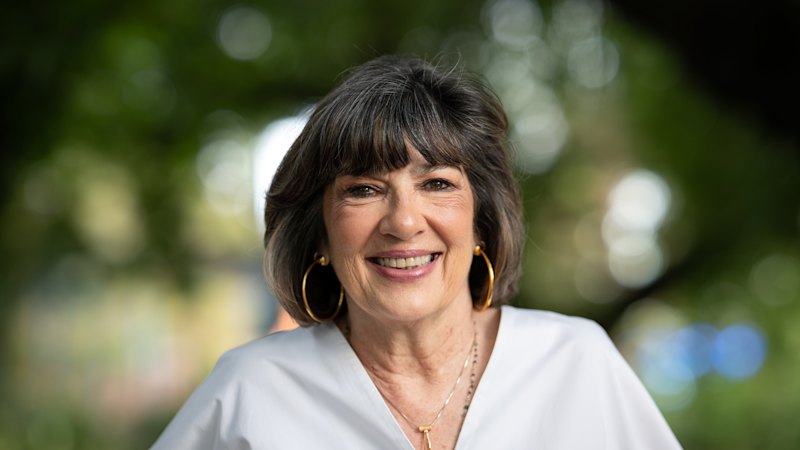
Fizzing with intelligence, warmth, and moral clarity, renowned war correspondent Christiane Amanpour isn’t merely participating in this interview; she’s executive producing it. We meet, incongruously, in an interview room at the Australian Open, Melbourne’s tennis center—a far cry from the front lines where she made her name. Amanpour first reported on the genocidal Bosnian war of the 1990s and later faced strongmen like Robert Mugabe, Muammar Gaddafi, and Nicolas Maduro.
“You try your best to hold them accountable despite the fear,” she says of her famous news-making interviews. “In our democracy, the function of journalism is a key function that upholds a healthy society.” Her commitment to asking tough questions and pushing back against insults, bullying, and lies is unwavering.
The Interviewer’s Perspective
How does one interview a legendary interviewer? In nervous preparation, I scribble five topics on a paper serviette: power, authority, women, tennis, death. But Amanpour is not one for preambles. “Don’t tell me, just ask the questions!” she urges, her tone warm and encouraging.
Our small interview room near Rod Laver Arena is more accustomed to hosting the dreams of grand slam tennis hopefuls. Today, however, the topics are Trump, Gaza, democracy, dictatorship, world affairs, and Amanpour’s new podcast. The Australian Open has invited the British-Iranian journalist, CNN’s chief international anchor, to headline its Inspirations lecture, following figures like former Prime Minister Julia Gillard.
Amanpour’s Journey and Insights
In 1983, Amanpour was a lowly graphics creator at a small NBC channel before joining the fledgling CNN on the international desk. Her break came with the Gulf War in 1990, and her Bosnian War reports brought her global fame. Yet, she has not interviewed US President Donald Trump, apart from a few questions during his New York socialite phase in the 1980s.
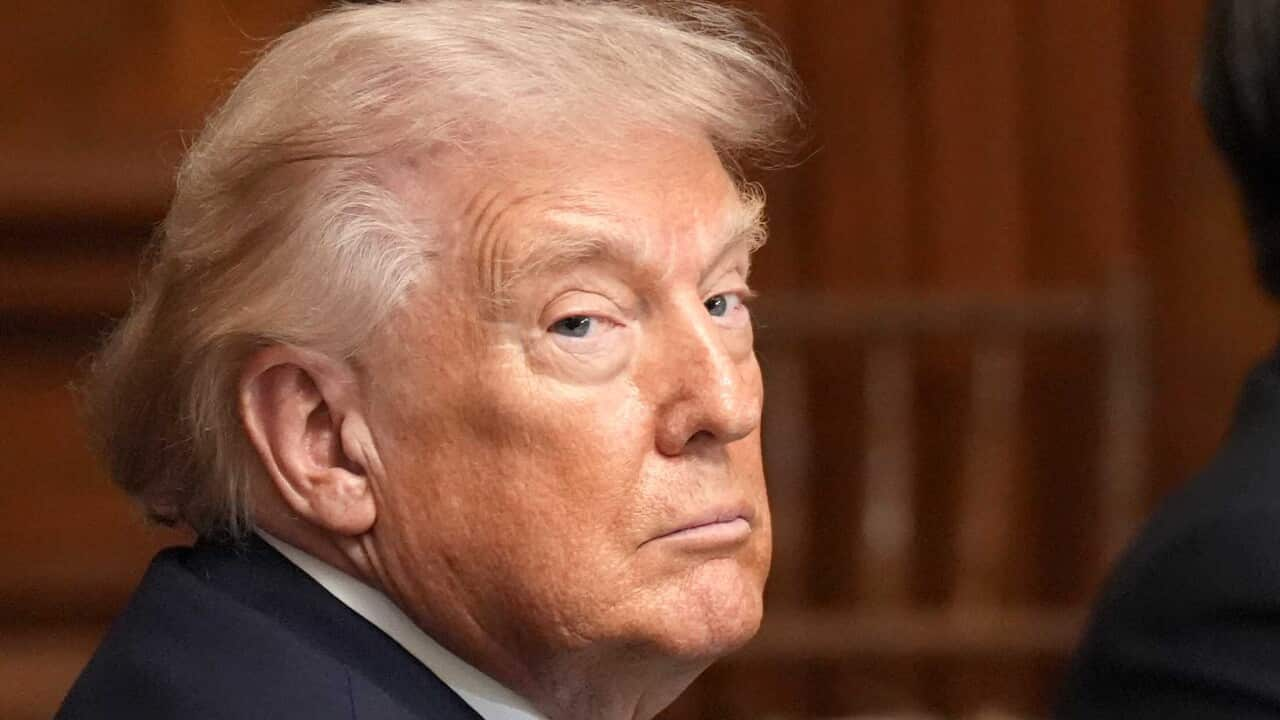
“He’s still the same person … acquisitive,” she says drily. “President Trump is a yacht person. He’s a very rich guy. The idea that he’s appealing to the forgotten is just unbelievable because he’s the elite.”
Amanpour describes Trump’s presidency as an exercise of power, “exhibiting brute force, might makes right,” and pushing the guardrails of a coherent world order. “It’s a new thing for our order,” she notes, comparing it to dictators and authoritarians she has covered.
Facing Dictators and Holding Authority Accountable
Amanpour has interviewed Zimbabwean dictator Mugabe, Libyan strongman Gaddafi, and Slobodan Milosevic, the Yugoslav leader charged with war crimes. Her advice for holding authority to account: try your hardest and be fully prepared. “The big issue is not to be afraid,” she emphasizes, noting Trump’s use of fear and bullying against journalists.
Personal Reflections and Professional Challenges
Amanpour was born in England, moved to Iran soon after, and returned to England for schooling. The 1979 Iranian Revolution, which deposed the shah and cost her family everything, prompted her to become a journalist. “Right now, I am in a pretty terrible situation because I am part Iranian and I’m not allowed back in Iran,” she says, referencing the repression of anti-regime protesters.
The Bosnian War was pivotal for Amanpour. “I understood that my role was to tell the story, but to not use any kind of factual or moral equivalence,” she says firmly. Critics accused her of taking sides, to which she responded, “Yeah, I’m taking a side for truth.”
Covering Conflict Zones and Moral Clarity
When asked about Israel and Gaza, Amanpour insists on truth-telling. “What happened on October 7th was an unexpected, unacceptable heinous crime,” she states, condemning attacks on civilians. She criticizes restrictions on journalists in Gaza, asserting, “Our job is to tell the news from every single side, whether it’s popular or not.”
“My slogan is truthful not neutral. I had to learn it myself, nobody taught me that, and I had to learn it under fire.”
Amanpour’s Legacy and Future
Amanpour’s career has been shaped by her experiences covering conflicts like Bosnia and Rwanda. “I grew up in the world of ‘never again,’” she reflects, recalling her disbelief at the world’s inaction during the Bosnian genocide. Her commitment to confronting forces of oppression remains steadfast.
Despite carrying a certain amount of PTSD, Amanpour’s moral clarity and dedication to truth continue to guide her work. “Life trained me. I didn’t have a tutor,” she says, likening her journalistic training to athletes’ rigorous preparation.
As our interview concludes, Amanpour expresses admiration for the Australian Open and its acknowledgment of First Nations. “How people push themselves … to excel and succeed, it’s just so exhilarating to watch,” she remarks, appreciating the tournament’s infrastructure and atmosphere.
We leave our interview bubble as soaring temperatures make parts of Australia the hottest place in the world. But as I walk back into the wider world, the record temperatures are not the reason I feel warmer inside.