



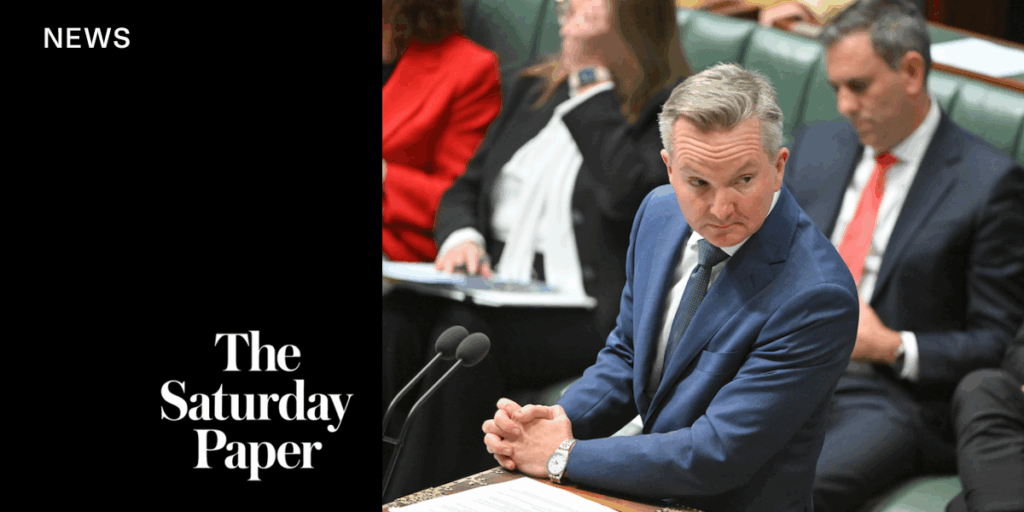
Chris Bowen, Australia’s Climate Change and Energy Minister, has dismissed criticism regarding his dual role as both minister and president of negotiations for the upcoming United Nations climate summit. Despite the Coalition’s persistent jibes labeling him a “part-time minister,” Bowen remains unfazed by the additional responsibilities he will undertake.
In a recent interview with The Saturday Paper, Bowen addressed the opposition’s remarks, which stem from his acceptance of a compromise that allowed Türkiye to host COP31 after Australia conceded its bid. “I find the part-time stuff just hilarious,” Bowen stated. “Anyone who knows me knows that actually the opposite is the case.”
Australia’s Climate Leadership and Domestic Challenges
Bowen’s new role as the world’s top climate negotiator will involve managing the commitments of nearly 200 nations while overseeing Australia’s energy transition. This comes at a time when emissions projections reveal that Australia is on track for a 48% reduction on 2005 levels by 2035, falling short of its 62-70% target.
The decision to host COP31 in Antalya, Türkiye, follows a unique arrangement to resolve a deadlock. A Pacific nation will host a significant pre-COP event with Australia’s support. This move represents a significant concession after years of campaigning for Adelaide to host the summit.
“There will be no such thing as a quiet or insignificant COP,” a senior government source told The Saturday Paper.
Political Tensions and Opposition Criticism
The Coalition has seized on Bowen’s dual role to distract from its recent decision to abandon its net-zero commitment. Shadow Minister for Energy and Emissions Reduction, Dan Tehan, criticized the unfulfilled 2022 Labor election promise of reducing power bills by $275, calling it a “betrayal.”
Opposition Leader Sussan Ley questioned the cost to taxpayers of Bowen’s presidential duties, suggesting his focus is divided. “Clearly, he has got his focus elsewhere,” Ley remarked in a Sky News interview.
The Coalition also seeks to deflect from a recent deal to overhaul the Environment Protection and Biodiversity Conservation Act, which the government struck with the Greens after months of negotiations.
Bowen’s Response and Future Prospects
Bowen has rejected the notion that his presidency is a full-time role, emphasizing that the UNFCCC’s Executive Secretary, Simon Stiell, handles international climate negotiations full-time. “The presidency is designed to be held by a cabinet minister of a country,” Bowen clarified.
This development follows a pattern where past COP presidents, including British minister Alok Sharma, have managed dual roles. Bowen sees his duties as a “remarkable opportunity” for Australia, despite the opposition’s concerns about costs.
“How unpatriotic can you be?” Bowen challenged the opposition in parliament, defending Australia’s increased role in international negotiations.
Implications for Australia’s Energy Transition
As Australia works towards its 2030 net-zero goal, Bowen highlighted the importance of maintaining momentum in the energy transition. The updated emissions data shows a 28.5% reduction below 2005 levels, driven by renewable energy and industrial decarbonization.
However, challenges remain, particularly in reducing transport emissions. The Climate Change Authority has indicated that “increased effort” is necessary to meet future targets.
Bowen remains optimistic about the progress, stating, “Policies are starting to work,” but acknowledges the need for continued effort to meet the 2035 target of a 62-70% reduction.
Domestically, the energy transition faces hurdles, including regulatory burdens and community opposition. While solar adoption has led to lower power prices for many, Bowen admits that prices remain higher than desired for others.
As Bowen navigates his dual roles, he will rely on a team of public servants and international collaboration to manage the demands of COP31. The minister remains committed to Australia’s leadership in climate negotiations, confident in the path the government has chosen.