


As of now, and for the foreseeable future, the United States maintains a commanding lead in undersea submarine warfare. The quietness, performance, and reliability of American submarines during military operations remain unmatched globally. Despite assertions in some Western quarters that China is poised to overtake the US in submarine technology, particularly in quietening and reliability, such views do not align with the current reality.
China’s strategic nuclear ballistic-missile-firing submarines (SSBNs) and tactical nuclear submarines (SSNs) face their most demanding tests during distant operations in potential enemy territories. Although there are signs of improvement, the development pace of China’s SSBNs and their ballistic missiles has been notably slow by Western standards. Nevertheless, the US Department of Defense has described China’s latest SSBN as its “first credible sea-based nuclear deterrent.”
Comparative Fleet Strengths
China currently operates six SSBNs and six SSNs, alongside 48 diesel-electric tactical submarines. The latest Chinese SSBN class, the Type 094, commenced nuclear deterrence patrols in December 2015. However, to ensure a continuous at-sea presence, China would need at least three or four SSBNs operational at all times. Building and maintaining such a fleet is costly and demands extensive crew training.
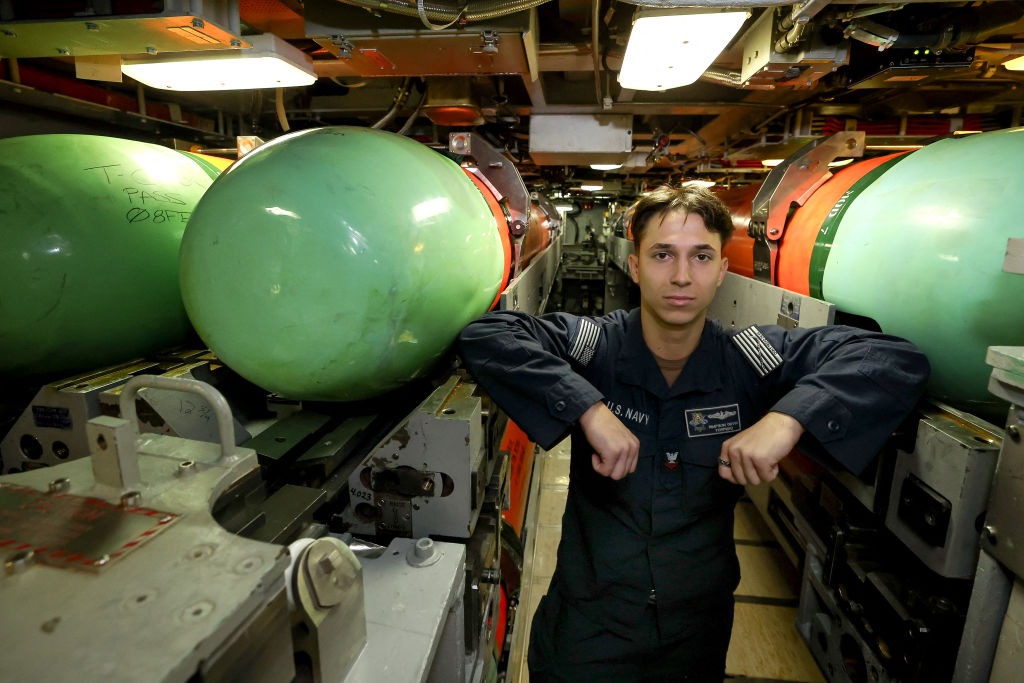
In contrast, the US Navy boasts 14 SSBNs, each displacing 18,750 tons when submerged. These submarines, the largest ever built for the US Navy, can carry 24 Trident II ballistic missiles, each equipped with 12 independently retargetable nuclear warheads. This fleet accounts for half of America’s total strategic nuclear warheads, ensuring the US can conduct a destructive nuclear war even if all its land-based intercontinental ballistic missiles were destroyed in a pre-emptive strike.
Historical Context and Strategic Implications
During the Cold War, US SSNs consistently operated undisturbed in Soviet waters, with Soviet SSBNs at risk of being sunk by US SSNs. A similar vulnerability is believed to exist for China’s relatively noisy and less reliable SSBN fleet, should a nuclear conflict with the US arise. China’s submarines are considered inferior to US submarines, particularly in acoustics stealth, even when deployed in perceived secure bastions near Chinese territory.
China’s interest in these bastions is reminiscent of the USSR’s strategy in the Sea of Okhotsk and the Barents Sea. However, the US and Britain successfully penetrated these so-called secure areas, thanks to superior submarine technology and antisubmarine warfare capabilities. Unlike the Soviet Union, China lacks geographic advantages, surrounded by potential adversaries and US allies to its east and south.
Geographic and Technological Challenges
China’s eastern approaches are characterized by shallow waters, unlike the deeper approaches the US enjoys on both its Atlantic and Pacific coasts. The Yellow Sea, South China Sea, and Sea of Japan are relatively constrained, patrolled by the US and allies such as Japan and South Korea. Additionally, Southeast Asian waters are shallow and constricted by narrow straits and waterways.
The successful 1988 launch of a JL-1 submarine-launched ballistic missile from China’s first SSBN was initially seen as a sign of China’s sea-based retaliatory capability. However, this assessment underestimated the challenges of training, doctrine, and maintenance required for a fully operational strategic nuclear submarine fleet. It also overlooked survivability issues against the advanced anti-submarine capabilities of the US and Japan.
Future Prospects and Strategic Considerations
Despite these challenges, there is consensus that China’s new SSBNs extend the strategic reach of its navy, reflecting Beijing’s naval ambitions. Some agreement exists in Washington that China possesses the resources and technological capacity to develop a credible SSBN force. However, achieving a secure nuclear second-strike capability immune to US countermeasures appears distant.
“US attack submarines are simply too capable for the Chinese armed forces to detect,” noted a senior analyst from the US Naval War College.
China lacks effective counters to modern submarine forces, a capability the US and Japan both possess. The anti-submarine challenge will likely remain insurmountable for China for many years, if not indefinitely. The US holds a significant asymmetric advantage with its nuclear submarine force, allowing it to threaten any Chinese naval vessel.
The US Navy’s ability to detect Chinese nuclear submarines while remaining undetected ensures America maintains a significant advantage over China’s nuclear deterrent submarine force. This strategic edge underscores the potential benefits for allies, such as Australia, in acquiring US submarines with superior acoustics and stealth capabilities.
In conclusion, while China is determined to compete with the US Navy, the complexities of undersea warfare present formidable challenges. China’s lack of deep operational experience, compared to the US Navy’s extensive history since World War II, suggests that bridging this gap may take decades. Until then, the US is likely to retain its dominant position in submarine warfare.