




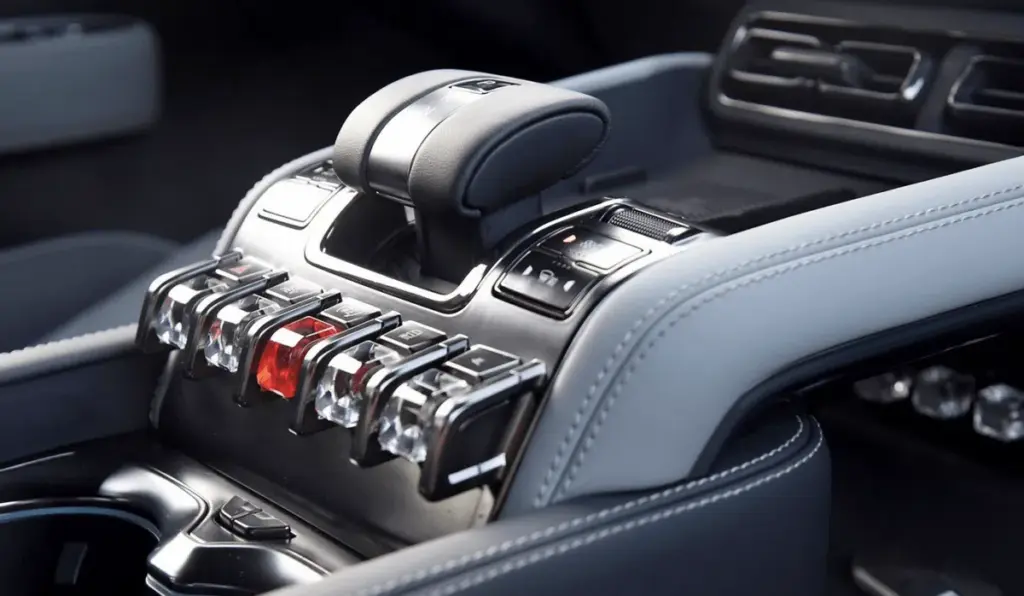
The Chinese Ministry of Industry and Information Technology (MIIT) has announced a significant shift in automotive design, mandating physical control mechanisms for essential vehicle functions. Starting July 1, 2026, newly manufactured vehicles in China will be required to include physical controls for operations such as turn signals, window adjustments, and advanced driving assistance systems.
This regulatory change aims to address the growing trend in new energy vehicles towards minimalistic cockpit designs that heavily rely on central control screens. Geely’s Vice President recently criticized this trend, stating that the Chinese automotive industry is “plagued by a trend of blindly following trends.” The new requirement seeks to ensure that drivers have accessible, usable, and largely blind-operable control components, reducing the distractions caused by display screens.
Background and Industry Response
The move to require physical controls is part of a revision to the national standard GB4094—2016, which governs the “Marking of Automotive Control Components, Indicators, and Signaling Devices.” This update introduces new types and technical requirements for physical control components. The revision process began in 2023 and involved collaboration with major automotive manufacturers and testing institutions, including the China Automotive Technology and Research Center, Geely, FAW-Volkswagen, BYD, and Great Wall Motor.
A draft of the updated standards has been completed and is set for public release soon. It outlines specific functions that must have physical controls, including lighting, gear shifting, driver assistance, and safety/emergency features.
Key Requirements and Specifications
The new standards specify that physical controls must be implemented for:
- Lighting: Turn signals and hazard warning lights
- Gear Shifting: Prohibiting screen-only shifting for P/R/N/D
- Driver Assistance: Activation switch for advanced driver assistance systems
- Safety/Emergency: Windshield wipers, defroster/defogger, power windows, Child/Accident Emergency Call System (AECS), and electric vehicle power-off switch
Furthermore, the requirements detail specifications for physical controls, such as dimensions (effective operating area of at least 10 mm x 10 mm), usability (fixed position, blind operation capabilities, and haptic/auditory feedback), and reliability (ensuring basic functions remain available during system crashes or power loss).
Implications for the Automotive Industry
The announcement represents a pivotal moment for the automotive industry, particularly in China, where the push towards digital interfaces has been strong. This shift towards physical controls is expected to influence vehicle design and manufacturing processes significantly. Automotive companies will need to adapt their designs to comply with the new standards, potentially leading to increased production costs and changes in supply chain logistics.
Experts suggest that this move could enhance driver safety by reducing reliance on visual inputs, thus minimizing distractions. According to industry analysts, the integration of physical controls could also improve the driving experience by providing more intuitive and reliable interaction with vehicle systems.
“The introduction of mandatory physical controls is a step towards prioritizing driver safety and usability,” said an industry expert. “It addresses the growing concern over screen-related distractions in modern vehicles.”
Looking Ahead
As the automotive industry prepares for this transition, manufacturers are expected to innovate in designing physical controls that meet regulatory requirements while maintaining aesthetic appeal. The public comment period for the draft standards will allow stakeholders to provide feedback, potentially influencing the final implementation of the regulations.
Meanwhile, global automotive markets will be watching China’s regulatory changes closely, as similar trends towards digital minimalism are emerging worldwide. The success of China’s approach could set a precedent for other countries considering similar measures to enhance road safety.
The next steps involve finalizing the standards based on public feedback and preparing for the regulatory enforcement in 2026. As the deadline approaches, the automotive industry will need to balance innovation with compliance to meet the evolving demands of both regulators and consumers.