



Keeping his family healthy and hydrated is one of Samuel Little’s greatest challenges. The father-of-five spends about $20 a week on bottled water, but his children are still regularly forced to miss school due to sickness caused by the town water in Cherbourg, an Aboriginal community three hours northwest of Brisbane. The afflictions include skin rashes and diarrhoea.
“Every six months or so, there’s a bug going around the house,” Mr. Little said. “Even getting to school to have that basic education becomes a struggle due to their health concerns.”
For much of the past month, Cherbourg residents had to boil water before being able to drink it or use it for baby formula. Torrential rain carrying bacteria-laden topsoil from surrounding farms and septic tanks washed into the narrow creek that serves as the community’s water supply. Cherbourg’s 65-year-old water treatment plant was overwhelmed, causing dirty, unfiltered water to flow directly into the kitchen sinks and bathtubs of the town’s 1,500 residents.
Cherbourg’s Water Woes: A Longstanding Issue
Most Australians would be unfamiliar with having to boil water, but in Cherbourg, it has been a regular occurrence for at least three years. The water treatment plant was built when the community was still a government-controlled Aboriginal reserve. Construction on a replacement still has not begun, despite the state and federal governments having announced $26 million for it 18 months ago.
Mark Nuttall from the Cherbourg Regional Aboriginal & Islander Community Controlled Health Service said it was not only bacteria in the water supply making residents sick. Locals have also been drinking too much soft drink to avoid consuming town water, he said. Dr. Nuttall mentioned treating patients of all ages each day for gastrointestinal problems and diabetes linked to poor water quality, including babies fed with formula made from contaminated water.
“We should not [have to] go to this kind of extreme level when we ask for something,” said Chatur Zala, CEO of Cherbourg Aboriginal Shire Council.
A spokesperson for Water Minister Ann Leahy stated that the design of the new water treatment plant was nearly complete and would soon go to tender. Construction is expected to begin early this year, with the plant due to be operational by the end of the year.
Innovative Solutions: Atmospheric Water Generation
The situation is so desperate that Cherbourg has turned to emerging technology capable of extracting clean water from air. Atmospheric water generation (AWG) uses a dehumidifier to capture moisture. That vapour is then cooled into a liquid state, filtered, and dispensed as drinking water from a cooler. More than 20 coolers have been installed in Cherbourg, including at the health clinic, daycare centre, high school, aged care home, and council office.
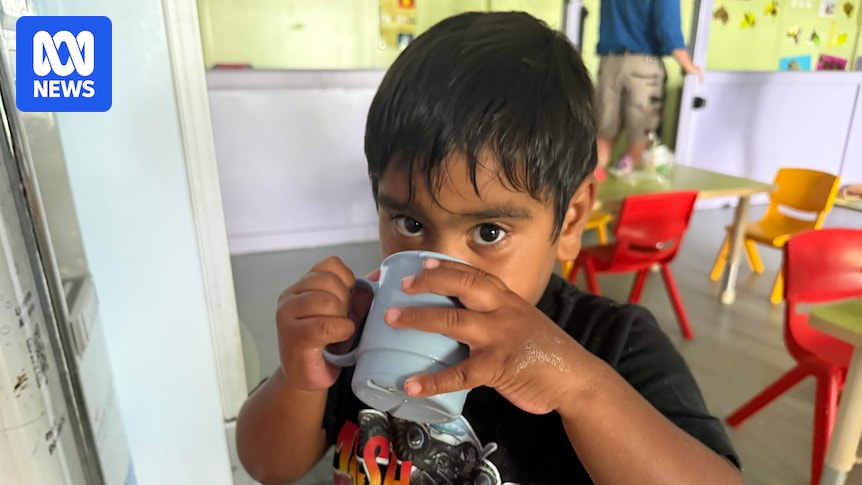
Gundoo Daycare chair Elvie Sandow and director Rhianon Insch-Watkins reported that children were experiencing significantly fewer gastro and flu-like symptoms since the new AWG coolers arrived.
Globally, 2.2 billion people lack access to safely managed drinking water, according to the World Health Organisation.
Technological Advancements and Their Limitations
Australian researchers are at the forefront of efforts to adopt AWG technology to tackle global water challenges. University of New South Wales (UNSW) researchers have developed a new material for atmospheric water generation. The new material—a combination of graphene oxide and calcium—absorbs about eight times more water than silica gel, commonly used in clothing desiccants.
Professor Rakesh Joshi said he and his team were in discussions with companies seeking to use it in remote communities in Australia and overseas. However, AWG has limitations, and Professor Joshi noted it could not completely replace a conventional water supply. Heating moisture into vapour requires a significant amount of power, with the cost of powering AWG systems typically reduced using solar energy.
Despite these challenges, research assistant Xiaojun Ren expressed optimism about the future of AWG technology. “I think it will be a really, really helpful technology with these efforts from all around the world,” he said.
As Cherbourg awaits the completion of its new water treatment plant, the community’s reliance on innovative solutions like AWG highlights the urgent need for sustainable water management in remote areas. The move represents a crucial step towards addressing the long-standing water issues that have plagued this Aboriginal community, offering hope for a healthier future.