



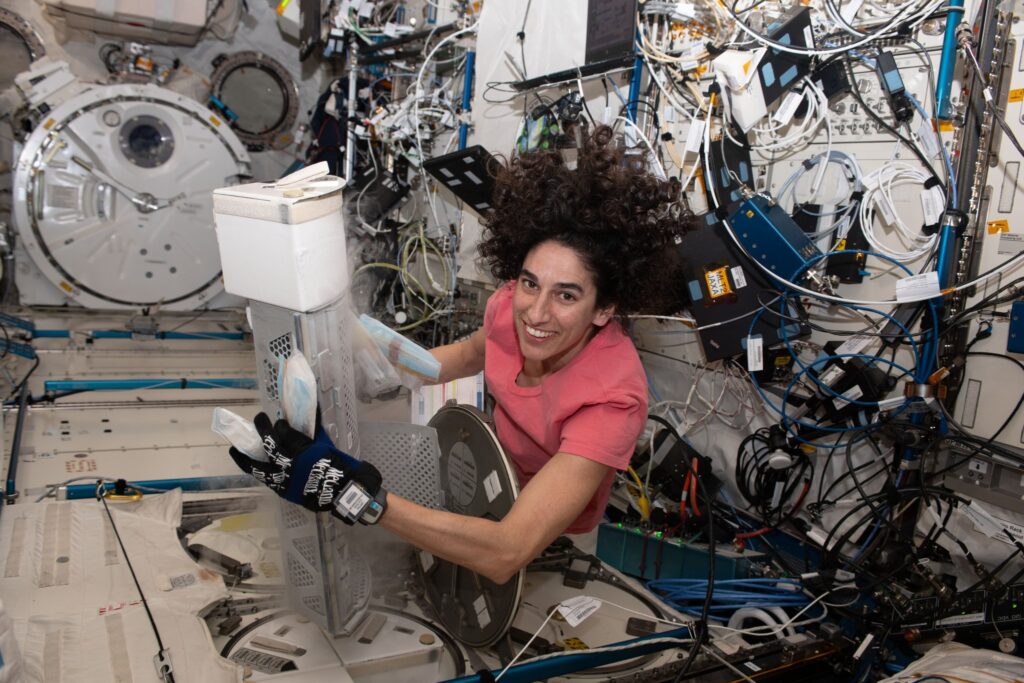
NASA and its international partners have marked a significant milestone: 25 years of continuous human presence in space. Since November 2000, the International Space Station (ISS) has served as a beacon of global cooperation and scientific innovation. With over 290 astronauts from 26 countries having visited the station, it stands as a testament to what humanity can achieve when united by a common goal.
The ISS, a unique microgravity laboratory, has hosted more than 4,000 experiments conducted by over 5,000 researchers from 110 countries. This collaborative effort has not only advanced our understanding of space but has also facilitated the growth of a commercial market in low Earth orbit, paving the way for research, technology development, and crew and cargo transportation.
International Cooperation and Scientific Endeavors
The space station remains a symbol of international cooperation and a proving ground for humanity’s next giant leaps, including missions to the Moon and Mars. The microgravity environment aboard the ISS allows for discoveries that benefit life on Earth and prepare humans for deep space missions. NASA’s Human Research Program (HRP) is at the forefront of understanding the physiological changes astronauts experience in space and developing interventions to maintain crew health.
Astronauts aboard the ISS engage in rigorous exercise routines, approximately two hours daily, to protect their bone density, muscle strength, and cardiovascular health. However, the challenges of readapting to Earth’s gravity after extended periods in space remain significant. Many astronauts describe their return to Earth as confronting a world that feels heavy, loud, and strangely still. While some reacclimate quickly, others require more time to fully recover.
Research and Innovation in Microgravity
Through HRP-led studies, scientists track these changes and test solutions, ranging from improved exercise regimens to advanced medical monitoring and nutritional strategies. The insights gained inspire new medical technologies and enhance our understanding of how the human body adapts to long-duration spaceflights. This knowledge is crucial for keeping astronauts healthy on future missions.
The ISS continues to be an essential platform for honing skills, technology, and understanding, all of which are vital for NASA’s Artemis campaign to return humans to the Moon and eventually journey to Mars and beyond. The unique environment of space presents distinct challenges, making the ISS an ideal setting for research and preparations not possible on Earth.
Preparing for the Next Giant Leap
As humanity sets its sights on deeper space exploration, the ISS plays a critical role in mastering techniques for basic tasks such as drinking water, sleeping, exercising, and handling various materials in microgravity. The station also facilitates the development of solutions to microgravity-induced changes and challenges for the human body.
Moreover, the ISS serves as a testing ground for reliable technologies and self-sustaining ecosystems necessary for deep space travel. This includes life support systems, in-orbit agriculture, and 3D printing of materials, all of which are crucial for long-duration missions far from Earth. The station also helps refine techniques and procedures for data and imagery collection and analysis, enhancing our ability to conduct scientific research in space.
Looking Ahead: The Future of Space Exploration
The achievements of the ISS over the past 25 years have laid a solid foundation for future space exploration. As NASA and its partners continue to push the boundaries of what is possible, the lessons learned from the space station will be instrumental in ensuring the success of missions to the Moon, Mars, and beyond.
As we celebrate this milestone, the ISS stands as a beacon of what can be achieved through international cooperation and scientific ingenuity. The next chapter of space exploration promises to be as exciting and groundbreaking as the last, with the ISS continuing to play a pivotal role in humanity’s journey to the stars.