



In a move that has sent shockwaves through the public health community, the Centers for Disease Control and Prevention (CDC), under the Trump administration, has voted to delay the Hepatitis B vaccine for newborns. This decision marks a significant departure from the long-standing policy of administering the first dose within 24 hours of birth, a strategy that has been pivotal in protecting millions of infants from Hepatitis B, a potentially lifelong and incurable viral infection.
The CDC’s Advisory Committee on Immunization Practices (ACIP) voted for this delay, which experts argue dismantles a cornerstone of universal immunization policy. The “birth dose” of the Hepatitis B vaccine is crucial because maternal infections can be asymptomatic, and screening does not always identify infectious mothers. Since its introduction in 1991, this vaccination strategy has reduced pediatric Hepatitis B infections by over 95%.
Public Health Under Siege
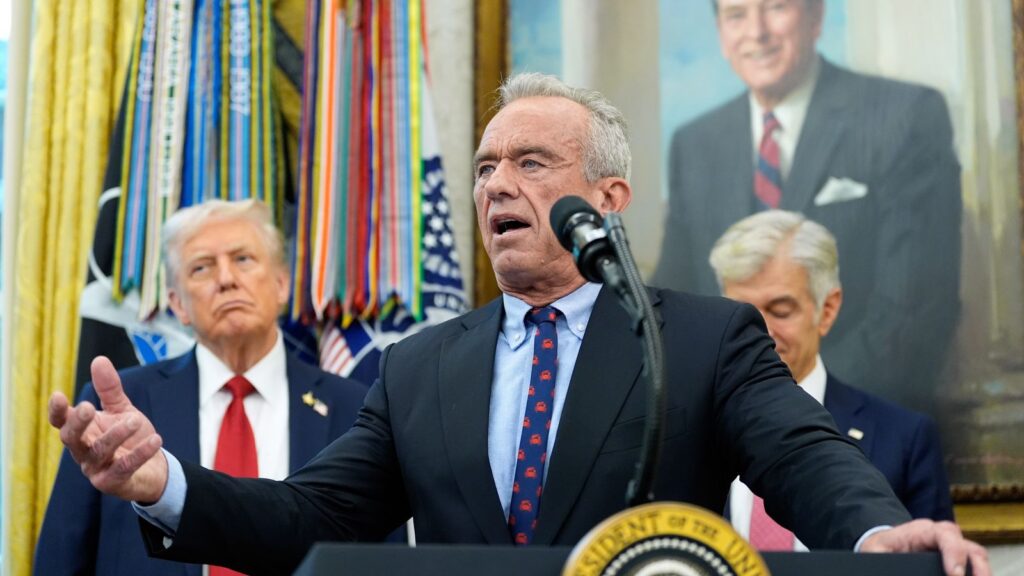
This decision comes amid a broader campaign by the Trump administration, led by Health and Human Services Secretary Robert F. Kennedy Jr., to overhaul public health policies in the United States. Critics argue that the guise of “health freedom” is being used to dismantle critical public health institutions and structures that have safeguarded millions from infectious diseases.
The path to this controversial decision involved significant changes to the public health advisory structure. Earlier this year, Kennedy dismissed all 17 members of the existing ACIP panel, traditionally composed of experts in vaccinology, infectious diseases, epidemiology, and immunology, replacing them with individuals known for their anti-vaccination stance.
Expert Analysis and Historical Context
The decision to delay the birth dose contradicts decades of safety and efficacy data. Anticipating such a move, the Vaccine Integrity Project at the University of Minnesota’s Center for Infectious Disease Research and Policy (CIDRAP) conducted an independent review of over 400 studies spanning four decades. Dr. Angela K. Ulrich and Dr. Michael T. Osterholm led the analysis, concluding unequivocally,
“There is no new evidence to suggest that delaying the birth dose would be safer or more efficacious.”
Their review reaffirmed that the birth dose reduces perinatal transmission by about 70% on its own and up to 97% when paired with hepatitis B immune globulin.
Building on this historical record, a 2024 CDC analysis led by Dr. Fangjun Zhou estimated that routine immunizations for children born between 1994 and 2023 prevented approximately 508 million illnesses and 1.1 million deaths, saving nearly $2.7 trillion in societal costs.
Scientific Concerns and Economic Implications
To justify the delay, the committee cited theoretical concerns about the “cumulative effect” of vaccines and specific ingredients like aluminum adjuvants. However, these concerns have been thoroughly tested. A landmark nationwide cohort study published in the Annals of Internal Medicine in July 2025, led by Dr. Niklas Worm Andersson from Denmark’s Statens Serum Institut, examined 1.2 million children and found no association between aluminum-adsorbed vaccines and autoimmune, allergic, or neurodevelopmental disorders, including autism and asthma.
The consequences of this policy shift are profound. A preprint study titled “Economic Evaluation of Delaying the Infant Hepatitis B Vaccination Schedule” by Eric W. Hall of Oregon Health & Science University assessed the lifetime clinical and economic impact of delaying the birth dose for the 2024 US birth cohort. Hall’s model predicted that even a brief delay could result in 1,437 additional preventable acute Hepatitis B infections in children, 304 additional cases of liver cancer, 482 additional HBV-related deaths, and $222 million in excess healthcare costs annually.
Widespread Alarm and Future Implications
The medical and public health communities have reacted with alarm. The American Academy of Pediatrics (AAP) described the delay as “a direct threat to infant safety,” and the Infectious Diseases Society of America (IDSA) condemned it as “an abandonment of the standards that protect children from preventable disease.” The Association of Immunization Managers warned that this shift could “undermine the integrity of vaccination schedules nationwide.”
Members of the CDC Alumni Association labeled the vote as “a grave departure from evidence-based practice,” cautioning that abandoning the birth dose “will result in unnecessary and irreversible harm.” Former leaders of the Immunization Safety Office noted that the decision “makes no scientific sense and violates the precautionary principle that has guided immunization policy for decades.”
This decision is seen as part of a broader restructuring of American public health by the Trump-Kennedy administration, with far-right anti-vaccination activists now holding positions across Health and Human Services (HHS), CDC, and ACIP. The administration appears poised to revise and potentially dismantle the entire childhood immunization schedule and the scientific norms that have governed it.
However, the roots of this transformation extend beyond the current administration. Critics argue that the Biden administration contributed to the current collapse of public health by prematurely declaring the pandemic over in 2022 and dismantling mitigation measures. This bipartisan “forever COVID” policy normalized mass infection, sickness, and death, creating a political environment where evidence-based policy is under threat.
The rollback of the Hepatitis B birth dose is part of a sweeping campaign to eliminate public health gains achieved over more than a century, including vaccines, clean air standards, workplace safety regulations, reproductive rights, and public education. Defending public health is now seen as inseparable from defending democratic and social rights, requiring the independent political mobilization of the working class to halt this descent into authoritarianism.