




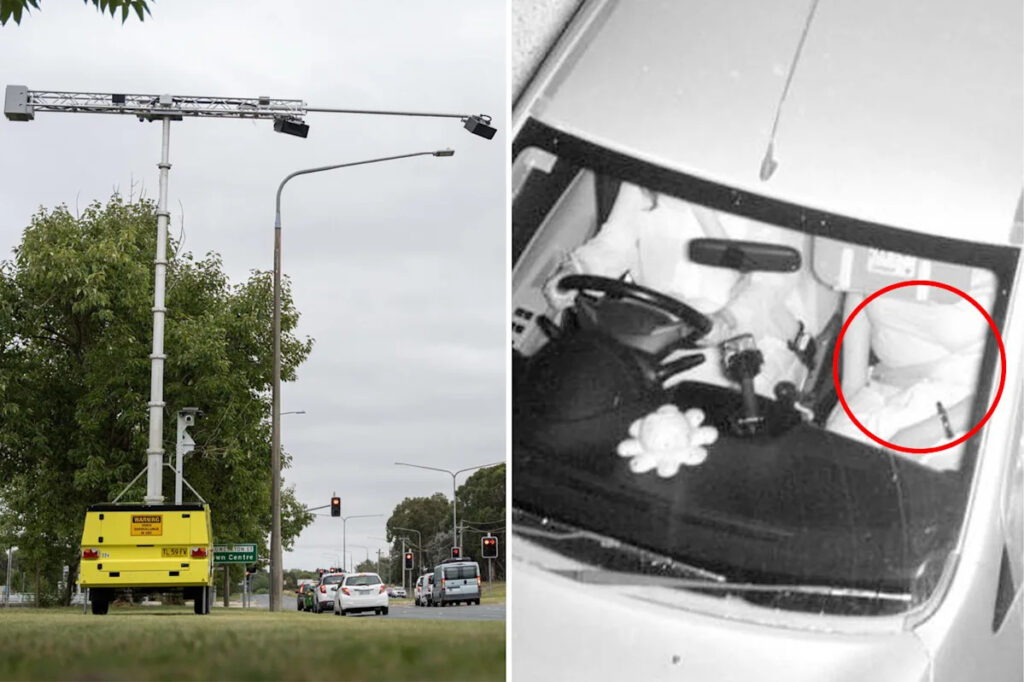
The daughter of an Australian woman is feeling “terrible” after a simple mistake resulted in her mother receiving a $574 fine and three demerit points. This incident is part of a broader enforcement effort that has seen a staggering $3.19 million in fines issued in Australia’s capital city over just 36 days, as new traffic cameras target road rule violations.
Canberra resident Rosey Collins was driving through the suburb of Mitchell on November 8, shortly after mobile and seatbelt detection cameras began enforcing seatbelt regulations. Her daughter, a passenger in the vehicle, was allegedly caught wearing her seatbelt incorrectly. “She thinks she may have just been adjusting the belt for a second when the camera triggered,” Rosey told the Canberra Times. Rosey has since disputed the fine.
New Enforcement Measures in the ACT
The introduction of mobile phone detection cameras targeting seatbelt offences for both drivers and passengers began in the Australian Capital Territory (ACT) on November 3. Fines of $574 are now applicable for failing to wear a seatbelt properly fastened and adjusted, with drivers also liable if their passengers are not properly restrained.
This enforcement follows the unanimous passage of the Road Transport (Safety and Traffic Management) Amendment Bill 2025 by the ACT Legislative Assembly in September, which expanded the detection capabilities of the territory’s cameras. The initiative is part of the ACT Government’s commitment to reducing road deaths and serious injuries.
“Seatbelts save lives,” ACT Attorney-General Tara Cheyne previously emphasized.
Impact of New Camera Technology
In 2025, over 1,300 people were killed in road incidents across Australia, with state and territory figures painting a grim picture of preventable tragedies. The ACT’s new camera system aims to address this issue by holding road users accountable and raising awareness about road safety.
In Canberra, two fixed cameras are located on Hindmarsh Drive and Gungahlin Drive, complemented by three transportable cameras positioned unpredictably across the city’s road network. Between November 3 and December 9, these cameras recorded 3,601 seatbelt offences, according to the ACT government.
However, the deployment of these cameras has not been without controversy. Some drivers argue that the Artificial Intelligence (AI) software used may be flawed. The Canberra Times reports that 26 fines have been withdrawn following internal reviews, and 180 disputes have been escalated to the ACT Magistrates Court.
Prominent Australian lawyer Hayder Shkara noted, “These cameras give people a shock when they realise that they have not been wearing their seatbelts correctly.”
Understanding Proper Seatbelt Use
Shkara, director at the Collective Family Law Group, emphasized the importance of understanding correct seatbelt usage. “People find [that] extremely unfair, so you need to watch out and maybe do a quick refresher on how to wear a seat belt properly,” he advised.
A seatbelt is considered “properly adjusted and fastened” when the clasp is buckled, the lap belt sits low and firmly on a person’s hips, and the sash sits over a person’s shoulder. Road safety experts highlight that cameras serve as both a deterrent and an enforcement tool, effectively targeting behaviors that are challenging for police to monitor in real time.
The integration of artificial intelligence allows these cameras to scan for multiple offences simultaneously, ranging from seatbelt violations to speeding. This technological advancement represents a significant shift in road safety enforcement, aiming to reduce the incidence of preventable road accidents.
As these measures continue to unfold, the debate over their fairness and effectiveness is likely to persist. Meanwhile, drivers in Canberra and across Australia are urged to remain vigilant and informed about road safety regulations to avoid unexpected fines and contribute to safer roads.