



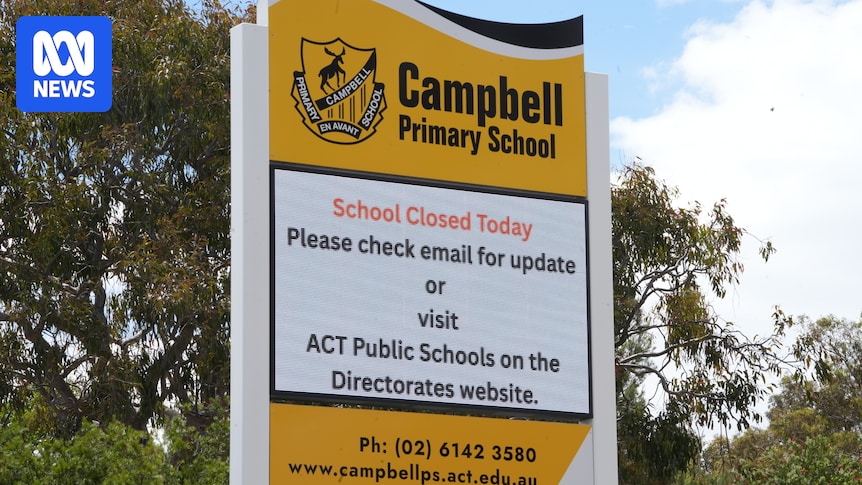
Fifteen public schools in Canberra have been closed today, with several others partially shut down, following the discovery of asbestos in decorative coloured sand used in educational settings. The closures stem from a recent recall issued by the Australian Competition and Consumer Commission (ACCC) after laboratory testing revealed traces of chrysotile, a type of asbestos, in the sand products.
The affected products, Kadink Sand, Educational Colours Rainbow Sand, and Creatistics Coloured Sand, were identified earlier this week. ACT Education Minister Yvette Berry addressed the media this morning to explain the situation and the government’s response.
Immediate Response and Safety Measures
Minister Berry confirmed that Kadink Decorative Sand had been used in some Canberra schools for sensory play and arts and crafts. She emphasized that the decision to close the schools was made late last night after a meeting with the ACT Work Safety Commissioner and the Education Directorate.
“It is a type of asbestos fibre or dust, and we need to take it seriously and remediate it appropriately,” Berry stated. Testing has already commenced on the affected sites to assess the extent of contamination.
WorkSafe’s Involvement
ACT Work Health and Safety Commissioner Jacqueline Agius revealed that WorkSafe ACT became aware of the potential asbestos risk late last week. “That was an unverified test,” Agius explained. “WorkSafe ACT seized some of the product from a premises in the ACT and conducted our own testing.”
“As soon as we were aware that the test showed a positive for chrysotile asbestos, we provided that information to the community,” Agius added.
The Education Directorate is acting with caution, as asbestos in sand is a naturally occurring substance, derived from quartz. “When asbestos is heavy, it’s difficult to breathe it in,” Agius noted, providing some reassurance to concerned parents and staff.
Impact on Schools and Community
Angela Spence, the Education Directorate’s deputy director-general, explained that the sand was used in various settings across schools, including trays, desks, and open-plan areas. The decision to close schools was not made lightly, requiring significant operational efforts to isolate sites and maintain safety.
“We know that this is a disruption to the community, and so when we do need to make those decisions, it is based on the information through our risk assessments,” Spence stated.
List of Affected Schools
- Whole school closures: Black Mountain School, Campbell Primary School, Charles Weston School, Charnwood-Dunlop Primary School, Evatt Primary School, Florey Primary School, Latham Primary School, Lyons Early Childhood School, Malkara School, Namadgi School, Chapman Primary School, Cranleigh School, Miles Franklin Primary School, Fraser Primary School, Wanniassa Hills Primary School.
- Partial school closures: Charles Conder Primary School — Preschool and Small Group Program, North Ainslie Primary School — Preschool and Year 1, Torrens Primary School — Preschool, Kindergarten and Year 1, Wanniassa School — Preschool to Year 6, Yarralumla Primary School — Montessori, Kindergarten, Year 1, Small Group Program, Throsby School – Kindergarten, Year 1 and Year 2, Amaroo School – Small Group Program.
- Preschool closures only: Curtin Primary School — Preschool, Kingsford Smith School — Preschool including Koori Preschool, Narrabundah Early Childhood School — Preschool including Koori Preschool, Mount Rogers Preschool, Monash Preschool, Duffy Preschool, Teddybears Childcare Centre.
Parents have been informed of the closures through email and text messages, and are advised to check the ACT’s education website for ongoing updates. The Education Directorate plans to communicate further details on Sunday afternoon regarding the reopening of schools on Monday.
Broader Implications and Future Steps
When questioned about the extensive closures in the ACT compared to other regions, Minister Berry suggested that the proactive approach by the local WorkSafe Commission might be a factor. “The information on WorkSafe equivalent sites across the country is very similar,” she said. “I think it was just that our WorkSafe Commission took the next step to do their own testing.”
Elsewhere in Australia, one school in Brisbane has been closed, and a Queensland school has alerted parents about the sand, though it remains open. The situation underscores the importance of vigilance and swift action in ensuring the safety of school environments.
As Canberra navigates this challenge, the focus remains on thorough testing and remediation efforts to ensure the safety of students and staff. The community awaits further updates as the Education Directorate continues to assess the situation and determine the next steps.