



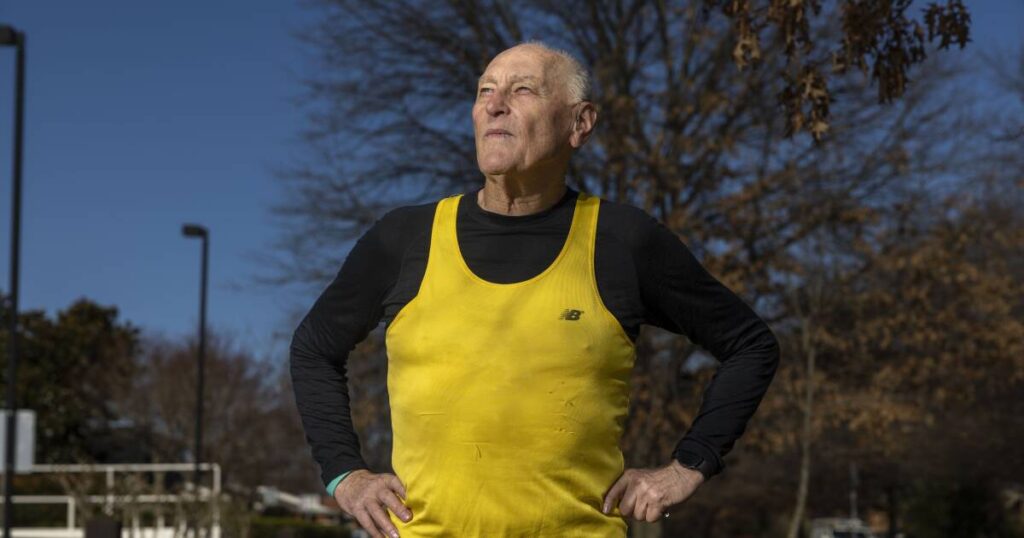
A retired corrections officer from Canberra, Paul Maggs, 83, continues to defy age-related expectations by running 33 kilometers each week without the accompaniment of music. Instead, he prefers the solitude of his own thoughts during his jogs.
“I see so many people running with earphones, but I’ve never needed that,” Maggs shared with The Senior. “I just listen to my body and I don’t need to have music going in my ears. I remember my mother and father, and I think of them a bit. But I just listen to my body as I run.”
The Journey of a Lifetime Runner
Paul Maggs’s love for running dates back to his childhood. He recalls an incident at the tender age of four when his passion for running led him astray, resulting in him getting lost several kilometers from home. “I got lost when I was about four years of age, and was about four or five kilometers away,” he laughed. “I must have wandered from home.”
In his younger years, Maggs traveled the world to compete in marathons. However, in recent times, he has shifted his focus to shorter races, such as the Canberra Times 10K and the 14-kilometer City2Surf.
A Rigorous Fitness Regimen
Maggs adheres to a strict weekly fitness schedule, running 18 kilometers every Monday, 10 kilometers on Wednesdays, and participating in a five-kilometer parkrun on Saturdays. He complements his running with Body Pump classes and allows himself a rest day on Fridays, where he might opt for a leisurely walk.
“Friday is my rest day. I might only just go for a walk or something like that,” he said, emphasizing the importance of balance in his routine.
His wife, June Maggs, supports his disciplined approach, noting, “He’s very sensible with his running. He won’t go out in the heat of the day. He’ll go early.”
Expert Insights on Running Over 60
According to Maggs, his general practitioner is pleased with his fitness levels, stating that he has the “health of a 50-year-old.” This is a testament to his lifelong commitment to exercise, which has built his capacity and tolerance for long-distance running.
Paul likely had “exceptional” fitness from exercising throughout his life, building up a capacity and tolerance for long-distance running, Newcastle-based physiotherapist Laith Cunneen told The Senior.
Cunneen advises that newcomers to running, particularly those over 50, should pace themselves and increase their activity gradually. “For somebody who’s just getting into walking and running, it’s really important that they do it in a gradual manner. Start at a low, tolerable level, and then build up week by week,” he said.
“As a general rule, we try to not increase the distance by more than 10 percent any given week,” Cunneen added.
Alternative Fitness Approaches
While running is beneficial, Cunneen acknowledges that it may not be suitable for everyone, especially older individuals with joint issues. “Running is great if you can do it and you’re comfortable with that, but everyone’s different, especially when they’re a little bit older,” he remarked.
For those with arthritis or other joint concerns, Cunneen suggests lower-impact exercises such as swimming and cycling, which provide cardiovascular benefits without the strain of running.
“Swimming and cycling are good ways to introduce high-intensity cardio where you can avoid jolting your body weight with each step,” he said.
Looking Ahead: The Future of Fitness for Seniors
Paul Maggs’s story serves as an inspiring example of how maintaining an active lifestyle can contribute to longevity and well-being. His dedication to running, coupled with expert advice on gradual progression and alternative exercises, highlights the potential for seniors to engage in fitness activities safely and effectively.
As the population ages, stories like Maggs’s will become increasingly relevant, encouraging more seniors to embrace physical activity as a means to enhance their quality of life. The key takeaway is that with the right approach, exercise can be a lifelong pursuit, offering health benefits at any age.