




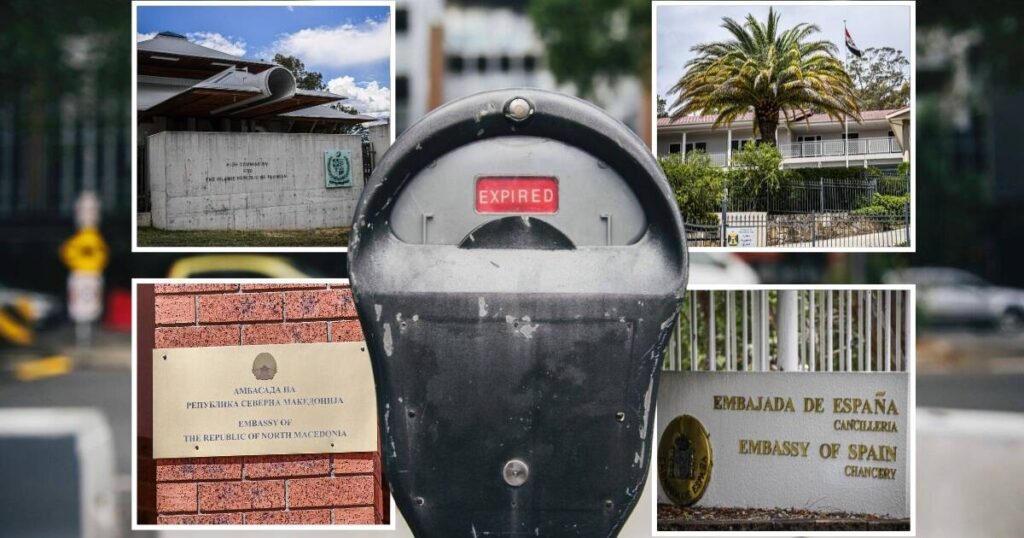
Foreign embassies and diplomats in Canberra owe the Australian Capital Territory (ACT) more than $63,000 in unpaid traffic fines, according to the latest records. The data, which spans from 1996 to August 2025, highlights a persistent issue of diplomatic traffic infringements that remain unsettled.
Government records reveal that 66 fines have been issued to international officials in the ACT, with more than half attributed to individual diplomats who have yet to pay a total of $30,699. These fines are owed to the ACT’s Chief Minister, Treasury and Economic Development Directorate.
Breakdown of Unpaid Fines
Among the unpaid fines, 13 infringements were issued to foreign missions with fewer than three employees, amounting to $8,915. These smaller missions have been de-identified in government data to protect staff identities. A territory spokeswoman confirmed that the fines, last updated in October 2025, were issued by Access Canberra and ACT Policing.
Types of Traffic Offences
Speeding is the most common traffic offence committed by foreign officials, accounting for 46% of the unpaid fines. Notably, five fines were issued for speeding by 15 km/h or less in school zones. The Nepali embassy, for instance, has an outstanding fine of $1,609 for a speeding incident in a school zone in July 2025.
Red-light cameras contributed to about 30% of the recorded traffic offences, while 24% of the unpaid fines were issued for mobile phone use while driving. Additionally, more than 10 parking fines were issued for parking on nature strips, in disabled spots, or in areas reserved for medical practitioners and loading vehicles.
Embassies with Outstanding Fines
The Embassy of Spain has an outstanding parking ticket dating back nearly 30 years, incurred for parking next to an expired meter in December 1996. The Iraqi embassy owes nearly $3,000 for speeding in both school and non-school zones, while the Nigerian High Commission owes about $720 for similar offences.
Meanwhile, an individual diplomat and the High Commission of Pakistan hold the highest individual outstanding traffic fine at $2,534, issued by mobile-detecting traffic cameras in mid-2025.
Diplomatic Immunity and Traffic Laws
Diplomatic immunity does not extend to traffic offences. A territory spokeswoman emphasized that the process for paying a traffic fine is the same for embassies and diplomats. Diplomatic and consular staff are expected to abide by Australia’s road rules and pay all fines promptly unless contesting the infringement.
“The immunity of consular officials is limited to acts performed in the exercise of their consular functions. In Australia’s view, driving a motor vehicle is outside the scope of consular functions and so consular immunity does not apply,” stated the Department of Foreign Affairs and Trade (DFAT) policy.
Dependents of consular officials have no immunity and can be arrested or detained, while consular employees have less immunity than consular officers and may also face arrest or detention.
Implications and Future Steps
The accumulation of unpaid fines by diplomats raises concerns about accountability and adherence to local laws. The ACT government may need to explore diplomatic channels to address these outstanding fines and ensure compliance with traffic regulations.
As Canberra continues to host a significant number of foreign missions, the issue of unpaid traffic fines by diplomats remains a challenge. Future discussions between the ACT government and foreign embassies may focus on finding effective solutions to prevent the recurrence of such issues.
In the meantime, the ACT government is likely to continue monitoring the situation, seeking to balance diplomatic relations with the enforcement of local laws.