



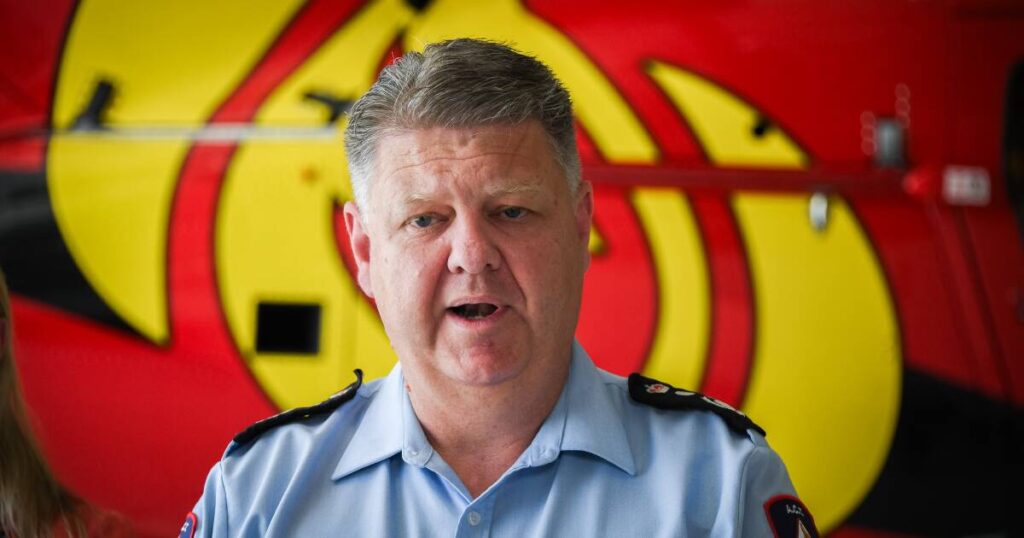
As a heatwave approaches Canberra, Rohan Scott, the chief officer of the ACT Rural Fire Service, remains unfazed. However, he cautions that the absence of such extreme weather in recent wet summers might have led residents to neglect revisiting their fire safety plans. Scott’s perspective is informed by personal experience; he was on the front lines during the catastrophic fires of January 18, 2003, which resulted in the destruction of 500 homes and the loss of four lives.
“For me, it is a very distinct memory – I was on trucks that day,” Scott recalls. He emphasizes that while the memories of that tragic week linger, significant advancements have been made in the territory since then. “If you look at what we’ve achieved as a territory since ’03, there have been a lot of improvements, and they all combine together to reduce that risk,” he notes.
Lessons Learned and Improvements Made
Scott highlights several key changes that have reduced fire risks in Canberra. The removal of large pine plantations, improved urban planning, increased resources, and the adoption of advanced technology have all contributed to enhanced fire safety. “We don’t have those big pine plantations that we had previously. We’ve got better design in our planning, increased resources, better use of technology,” he explains.
Recent fires in Namadgi National Park, although challenging to access, have not posed a threat to Canberra’s suburbs. “They’re in incredibly remote areas, which have been incredibly difficult to access, and the crews have had a hard slog getting around them,” Scott reports. His latest update indicates that these fires are “pretty much done and dusted,” providing some relief as the weekend approaches.
Preparedness and Community Awareness
Despite the current containment of fires, Scott stresses the importance of preparedness. “It’s a real timely reminder that we live in the bush capital,” he remarks, urging residents to prepare survival plans, maintain a grab bag, and understand fire danger ratings. “Know what you’re going to do with the rest of your family, your pets, and just be prepared to act immediately … Don’t second guess yourself,” he advises.
Scott also emphasizes the need for campers to be vigilant, as all campgrounds in and around Canberra remain open. “We’ve got means to contact them via ground-based crews who can drive in and warn them, or the aviation assets have got the ability to broadcast messages as well,” he assures. The campgrounds are well-maintained with robust asset protection zones.
Reflecting on 2003 and Looking Forward
A sixth-generation Canberran, Scott’s firefighting career began as a volunteer while running a dental business. The 2003 fires, during which he and his colleagues saved two lives, remain a pivotal moment in his life. “It’s one thing I’ll never forget, and their names are embedded in my head forever,” he reflects.
Scott’s recent visit to California, where he observed the aftermath of devastating fires, provided valuable insights. “We brought a few things back, but if you look at it holistically, we’re doing pretty well here,” he says, noting that Canberra’s strategies, particularly in messaging, survival plans, and building standards, are advanced.
“We’ve definitely progressed, but there’s always that risk, and we shouldn’t be complacent as Canberrans,” Scott warns.
As Canberra braces for the heatwave, the lessons from 2003 serve as a stark reminder of the potential dangers. The community’s resilience and the improvements made over the years offer hope, but vigilance remains crucial in the face of nature’s unpredictability.