



Police have decided to drop their investigation into the Dissent bar in Canberra, which they raided last week over controversial anti-fascism posters. The decision was announced after a week of public debate and legal scrutiny.
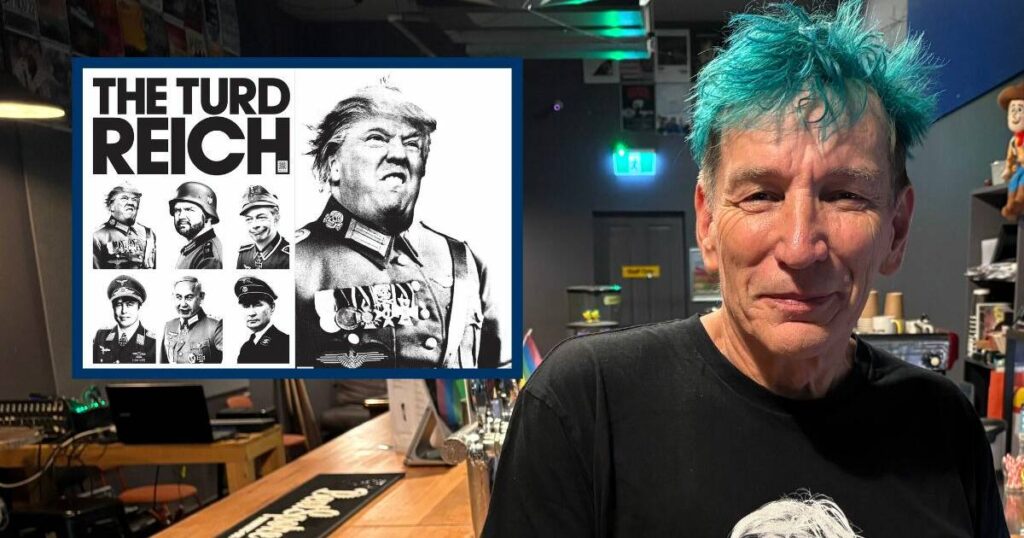
The raid occurred on February 18, when three officers entered the Dissent bar and confiscated posters depicting prominent right-wing politicians, including Donald Trump, in Nazi uniforms. The bar owner, David Howe, had refused to remove the posters, prompting police to declare the venue a crime scene and cancel an event scheduled for the evening.
Legal and Public Reactions
ACT Policing stated, “Following assessment, it has been determined that while the posters satisfied certain aspects of the legislation, other aspects were not met. As such, criminal proceedings will not occur.” The police initially cited the display of Nazi symbols, such as swastikas, as potential offenses under Commonwealth law.
In response to the raid, Howe quickly reposted similar images, this time with the swastikas blacked out and the word “CENSORED” emblazoned across them. “The posters will be returned to the owner in due course and this matter finalised,” police confirmed.
Community and Expert Opinions
The police action sparked diverse reactions within the community. Athol Morris, president of the Canberra Jewish community, commented, “Do I agree with them? No. But when did we get so glass-jawed that we can’t talk about the politics of people?” He noted that the posters seemed to critique political figures rather than target Jewish identity.
Legal experts have also weighed in on the controversy. Anne Twomey, a law professor at the University of Sydney, highlighted the complexities of the legislation. “There is a defense for artistic works, but not for satire. There is also a defense for conduct engaged in for the purpose of opposing Nazi ideology, fascism or a related ideology,” she explained.
“How can a person who puts up satirical posters know that? There should be greater certainty in the application of the criminal law,” Professor Twomey said.
Implications of the Raid
The raid has reignited debates over free speech and the interpretation of laws concerning hate symbols. John Steenhof, principal lawyer at the Human Rights Law Alliance, criticized the law as a “word salad,” arguing that it poses challenges for both law enforcement and citizens to understand its provisions.
Following the incident, independent MLA Thomas Emerson labeled the police action as “Orwellian,” suggesting that the exemptions for artistic purposes or opposition to fascism were applicable in this case. The ACT Greens expressed concern over what they termed “rushed and harmful hate speech legislation.”
Looking Forward
The case has underscored the need for clearer legal guidelines and sparked a broader conversation about the balance between free expression and the prohibition of hate symbols. As the posters are returned to Howe, the incident serves as a reminder of the ongoing tensions between artistic expression and legal boundaries.
For now, the Dissent bar will resume its regular activities, with Howe expressing relief that the legal ordeal has concluded. “Life goes on,” he remarked, as the community continues to grapple with the implications of this high-profile case.