



Posters seized by police at a Canberra venue last week under newly introduced Commonwealth hate laws will be returned without criminal proceedings. The decision comes after ACT Policing assessed the controversial images, which were taken from Dissent Cafe and Bar in Canberra’s CBD on February 4, following a complaint to Crime Stoppers.
ACT Policing stated that the images, which depicted figures such as Donald Trump, J.D. Vance, Elon Musk, Benjamin Netanyahu, and Vladimir Putin in Nazi-like uniforms, “satisfied certain aspects of the legislation” but did not meet all criteria necessary for prosecution. The issue primarily revolved around the inclusion of Nazi swastikas, a symbol prohibited under the Combatting Antisemitism, Hate and Extremism Act 2026.
Understanding the Legislation
The Combatting Antisemitism, Hate and Extremism Act 2026 is part of a broader initiative to address rising hate crimes and antisemitic incidents across Australia. The Act prohibits the display of Nazi symbols, but includes exceptions for “religious, academic, educational, artistic, literary, scientific or journalistic” purposes. This clause played a crucial role in the decision not to prosecute the bar owner.
Dissent’s owner, David Howe, argued that the posters were a form of artistic expression with an anti-fascist message. On the night of the incident, Howe refused to comply with police requests to remove the images, leading to their seizure. Following a week of uncertainty, Howe received confirmation that he would not face charges, and the posters would be returned “in due course.”
Community Reaction and Legal Perspectives
The incident has sparked a debate within the Canberra community about the balance between free expression and the need to curb hate speech. Legal experts have weighed in, noting the complexity of applying hate laws to artistic works. According to Professor Jane Smith, a legal scholar specializing in freedom of expression, “The case highlights the ongoing tension between protecting communities from hate and preserving the right to free speech.”
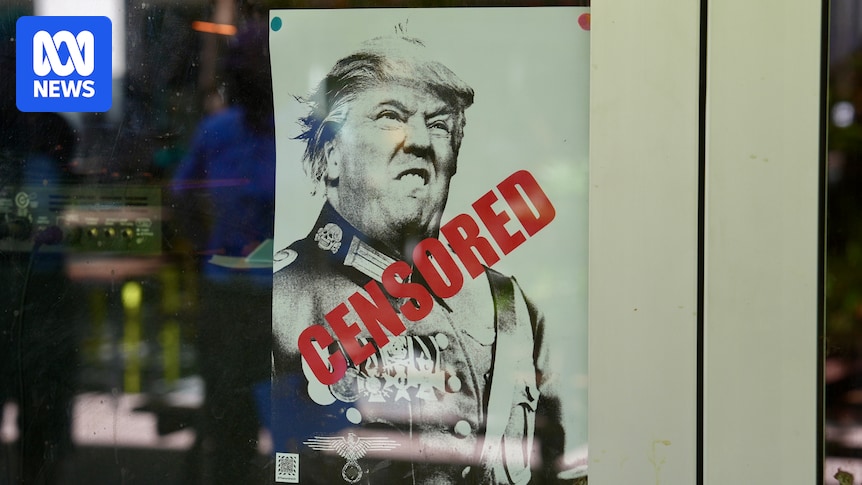
Meanwhile, the bar has continued its operations, with Howe reopening the day after the posters were seized. In a symbolic gesture, he placed one of the images back in the window, this time with the Nazi symbol blurred and the word “censored” added in red text.
Police and Public Safety
ACT Policing has reiterated its commitment to addressing alleged antisemitic, racist, and hate incidents promptly and thoroughly. A police spokesperson stated, “ACT Policing remains committed to ensuring that alleged antisemitic, racist, and hate incidents are addressed promptly and thoroughly and when possible criminality is identified.”
“ACT Policing will not hesitate to take appropriate action.”
The spokesperson emphasized that while no charges were filed in this case, the police force remains vigilant in its efforts to combat hate crimes and ensure public safety.
Looking Forward
The incident at Dissent Cafe and Bar underscores the challenges law enforcement and communities face in navigating the fine line between free expression and hate speech. As Australia continues to grapple with these issues, the outcome of this case may serve as a precedent for future incidents involving artistic expression and hate laws.
For now, David Howe and his patrons can breathe a sigh of relief, knowing that the legal ordeal has concluded without further repercussions. However, the broader conversation about hate laws and artistic freedom is likely to continue, as society seeks to balance these competing values in an increasingly polarized world.