


Can and should we resurrect animal species that have been extinct for thousands of years? Such weighty, existential questions were once the preserve of science fiction but are now being played out within an unassuming brick building in a Dallas business park. Colossal Biosciences, valued at $10.2 billion after raising hundreds of millions of dollars in funding from investors including celebrities like Tiger Woods and Paris Hilton, has sparked both acclaim and controversy after announcing it had made the dire wolf, a species lost for more than 10,000 years, “de-extinct” via the birth of three new pups.
The company has ambitious plans to bring back the woolly mammoth within the next two years, followed by the dodo. Colossal is achieving this by sourcing ancient DNA from fossils and using gene editing, drawing comparisons to the fictional “Jurassic Park.” This is a comparison that Colossal’s chief executive, Ben Lamm, embraces.
The Science Behind De-Extinction
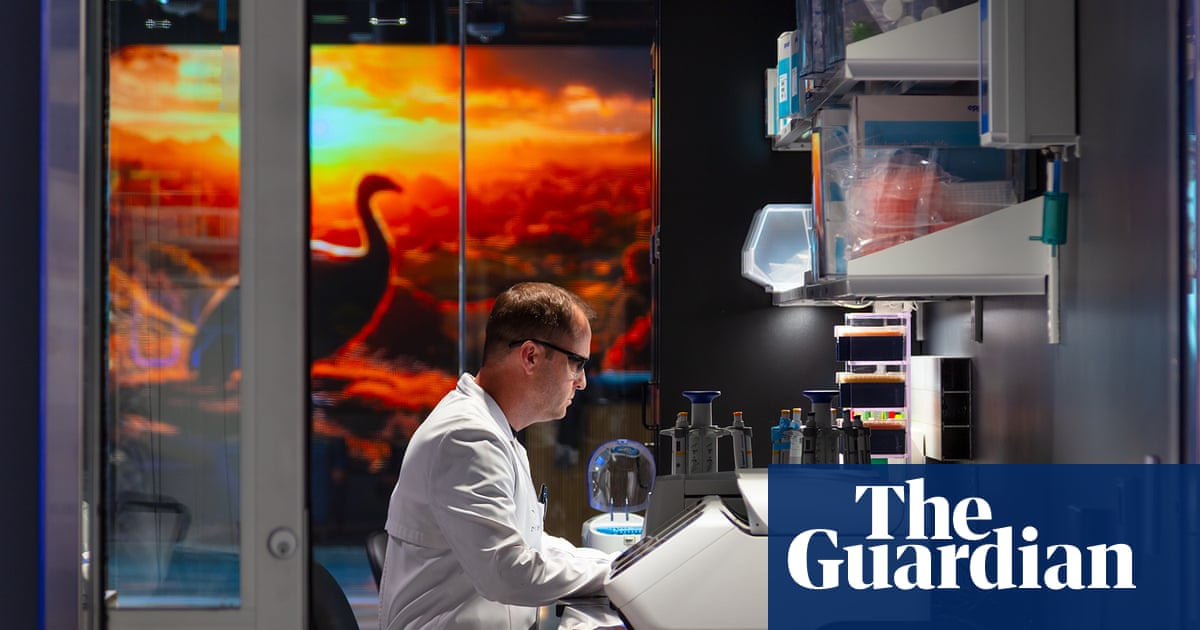
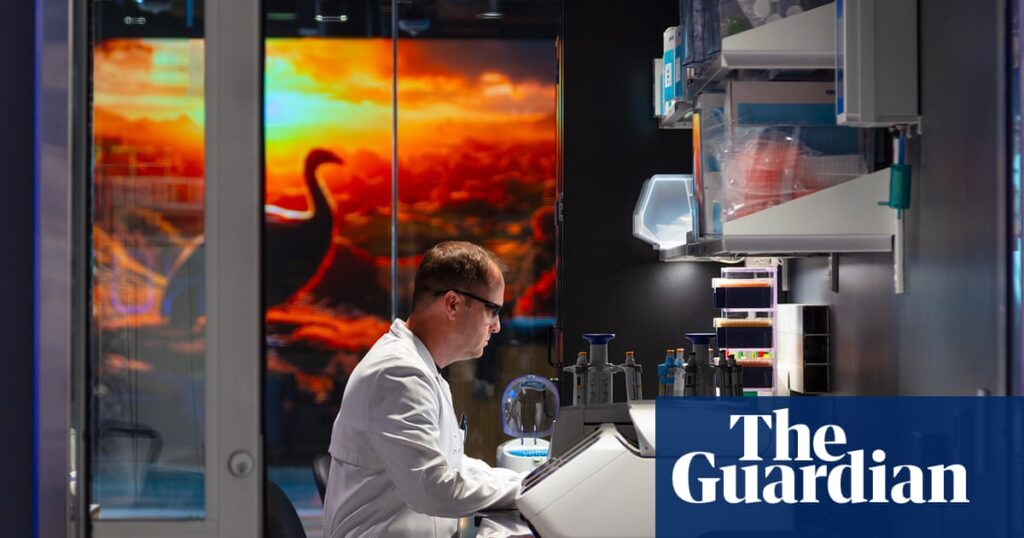
Colossal’s work is rooted in advanced genetic technology. In their 55,000-square-foot facility in Dallas, scientists clad in white lab coats are isolating ancient DNA of extinct species and using CRISPR technology to edit the genomes of closely related animals. For instance, to recreate dire wolves, 14 out of 19,000 gray wolf genes were edited to produce hybrid offspring that are snow-colored, larger, and more cold-resistant than standard gray wolves.
While some animals, like the dire wolf, are more straightforward to recreate, others present significant challenges. The thylacine, or Tasmanian tiger, last seen in 1936, is being resurrected using its closest living relative, the fat-tailed dunnart. This process could involve over a million gene edits and several years of research.
Challenges in Avian De-Extinction
Birds pose a unique challenge as they cannot be cloned from skin or hair samples like mammals. Colossal is attempting to revive the dodo, extinct for nearly 400 years, and the moa, a 12-foot-tall flightless bird from New Zealand. The company has cultivated primordial germ cells from pigeons, the dodo’s closest relative, and is working with emus for the moa.
Debate and Criticism
Colossal’s groundbreaking work has not been without its detractors. Some scientists question whether this is true de-extinction, accusing the company of generating hype. Vincent Lynch, an expert in evolutionary developmental biology, criticized Colossal’s claims, stating, “They made genetically modified gray wolves, not dire wolves.”
“You can’t put a mutation into a related species and call that thing the extinct thing. You can’t bring things back in the way Colossal are doing it.” — Vincent Lynch
Others worry about the ecological implications of reintroducing extinct species. Julie Meachen, a paleontologist, expressed concerns about the potential chaos mammoths could cause if reintroduced near human settlements.
Ethical and Ecological Considerations
While modifying a species’ appearance is possible, the behavior of extinct animals remains unpredictable. Colossal plans to release dodos, thylacines, and woolly mammoths into the wild, hoping they will fulfill their ecological roles. However, ecosystems have evolved since these species disappeared, raising questions about their potential impact.
Victoria Herridge, a paleontologist, voiced her shock at Colossal’s plans to use elephants as surrogates for mammoths. She emphasized the complexity of understanding extinct species’ traits and their environmental interactions.
The Future of Conservation and Technology
Despite the controversy, Colossal’s work could have significant implications for conservation. Their gene editing technology may enhance genetic diversity in endangered species, such as red wolves, and develop vaccines for deadly viruses affecting species like Asian elephants.
“Colossal at its core is a species preservation company. We interpret ‘de-extinction’ as a practical gateway to develop next-generation conservation tools.” — Colossal Biosciences
Colossal is also exploring other applications of its technology, including combating plastic pollution and addressing national security concerns. The company’s approach to conservation could redefine how we protect and preserve biodiversity.
For now, much of the attention remains on the spectacle of resurrected species. Footage of the three “dire wolf” pups, named Romulus, Remus, and Khaleesi, frolicking in the snow captivates audiences. Yet, the true impact of Colossal’s work may lie in its less glamorous efforts to prevent extinction in existing species.
As the debate continues, Colossal’s mission challenges us to reconsider our relationship with nature and the role technology can play in conservation. Whether their efforts will lead to a new era of biodiversity or unintended consequences remains to be seen.