


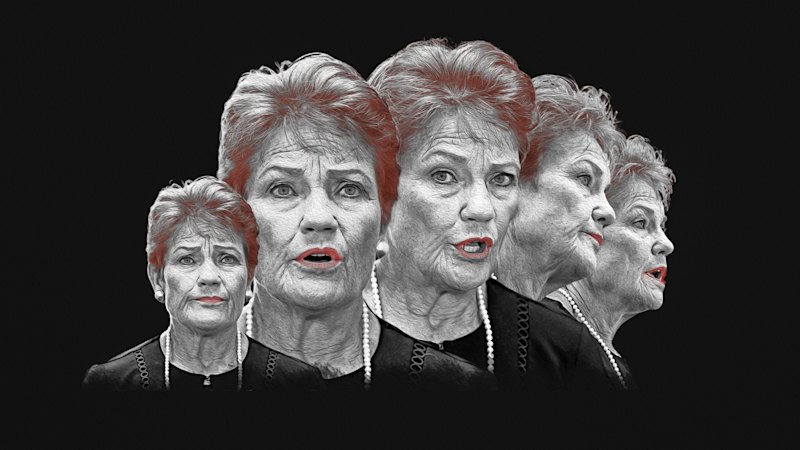
On election night in May, as Labor celebrated a sweeping victory, another narrative quietly unfolded, potentially reshaping Australia’s political landscape. Pauline Hanson’s One Nation achieved its most significant national success in nearly three decades, doubling its Senate representation and increasing its vote share to 6.2 percent. For a party often dismissed as a relic of the past, this outcome was unexpected. For Hanson, it was a moment of validation.
The 71-year-old leader attributed the resurgence to the Coalition’s “fence-sitting,” a sentiment she has long championed, asserting that mainstream parties cannot be trusted. Hanson capitalized on a global wave of right-wing populism, positioning herself back into political relevance. Whether she can maintain this momentum is a critical question in Australian politics today. Barnaby Joyce, a prominent figure in conservative politics, seems to believe she can.
Joyce’s recent departure from the Nationals after two decades in parliament underscores the shifting political landscape. He remarked that politics is “changing everywhere,” citing right-wing populist figures such as Nigel Farage in the UK, Marine Le Pen in France, and the “MAGA movement within the Republican Party.”
“The world is changing, and I think Australia is actually last to it. It’s just that with compulsory voting it’s a little more sticky here,” Joyce said. “And it’s changing because how people get their information is changing.”
One Nation’s Rising Popularity
Since the election, One Nation claims its membership has doubled, although exact numbers remain undisclosed. However, voter intention shifts are evident. The party reached a record 18 percent in a Redbridge and Accent Research poll for The Australian Financial Review, while Newspoll recorded a four-point rise to 15 percent. The Essential poll mirrored this with a 15 percent vote share.
In the Resolve Political Monitor, One Nation has consistently held a 12 percent primary vote, marking a record high. According to Resolve director Jim Reed, One Nation has eroded the Coalition’s right flank, similar to how the Greens impacted Labor’s left. Hanson taps into widespread disenchantment with major parties over issues like living costs and housing.
“Immigration and emissions reduction are often blamed as root causes, so her stances on those points are quite appealing,” Reed explains.
The Hanson Phenomenon
Hanson’s political journey is one of reinvention, marked by comebacks, internal conflicts, and a loyal voter base. She entered Canberra in 1996 as a disruptive force and was initially dismissed as an anomaly. Yet, her brand—unapologetic and emotive—has proven resilient. Even during her political wilderness years, Hanson remained a persistent presence, leveraging her outsider status to her advantage.
Anna Broinowski, a documentary filmmaker and academic, notes that Hanson’s populist grievances resonate across the political spectrum. She suggests Hanson could have been a figure akin to Bernie Sanders, driven by grievances against neoliberalism and globalism.
“She’s very responsive and instinctive in the way she processes thoughts and then puts them out there,” Broinowski says. “Her grievances are populist grievances that could swing either left or right.”
Strategic Adaptation and Future Prospects
Hanson’s return to the Senate after 18 years was a sign of populism’s growing relevance in Australia. Like Donald Trump, she was often criticized but turned every slight into a recruitment tool. Her 2025 campaign embraced digital strategies, using animations and social media to engage audiences, drawing parallels to Trump’s approach.
Hanson’s movement first gained traction in the 1998 Queensland state election, capturing 22.7 percent of the vote and 11 seats. However, internal contradictions led to fragmentation. The 2025 federal election marked a turning point, with One Nation winning seats outside Queensland for the first time.
Despite her Senate success, Hanson remains politically isolated, with major parties reluctant to align with her. Former Queensland premier Rob Borbidge warns against associating with One Nation, citing its toxicity in urban areas.
“When times are tough and people are unhappy, that’s always a time when you get a drift to the protest parties,” Borbidge says. “One Nation is always a party of protest.”
As Joyce considers joining One Nation, the implications for a future Coalition government are significant. Hanson’s appeal could lead to more fragmented contests and reliance on Labor preferences. Her potential alliance with Joyce might signal a deeper shift in Australia’s conservative movement.
While Hanson did not grant an interview before the deadline, she expressed enthusiasm for Joyce joining One Nation, stating they would be a “great team.” However, Joyce’s move could also signify the collapse of a unified conservative front in Australia, with One Nation poised to fill the emerging void.