




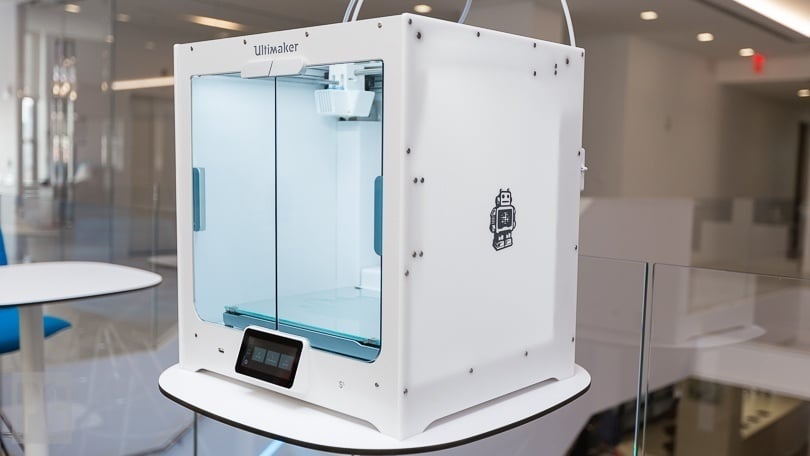
A California state lawmaker has introduced groundbreaking legislation aimed at curbing the production of untraceable firearms using 3D printers. On Thursday, Assemblymember Rebecca Bauer-Kahan announced a bill that would require 3D printers sold in the state to include “firearm detection algorithms” designed to prevent the creation of guns.
The proposed legislation comes in response to the increasing prevalence of 3D-printed guns, which can be manufactured without serial numbers and outside of regulated channels. Bauer-Kahan, a Democrat, highlighted a recent case in Sonoma County where law enforcement arrested a man suspected of manufacturing illegal firearms. The police seized three 3D printers and 157 handguns, many of which appeared to feature 3D-printed components.
Legislative Details and Industry Response
“This legislation takes a proactive approach to public safety by ensuring that 3D printers sold in California include the technology to block the production of illegal firearms,” Bauer-Kahan stated. The bill, known as AB-2047, also proposes a verification process to ensure compliance with the new regulations.
However, the bill has faced criticism from industry stakeholders such as Adafruit, a company specializing in DIY computer parts. They argue that the legislation could lead to a “state-maintained roster of approved makes and models” of 3D printers. Adafruit expressed concerns in a blog post, stating, “If your printer isn’t on the list by March 1, 2029, it can’t be sold. In addition, knowingly disabling or circumventing the blocking software is a misdemeanor.”
The proposed law would also allow for civil lawsuits against vendors selling non-compliant 3D printers. Additionally, the “Department of Justice or other relevant state agency” would be tasked with overseeing the implementation of these regulations, including the certification of firearm-blocking algorithms.
Technical Challenges and Expert Opinions
The technology required to detect firearm-related blueprints in 3D printers could include “hardware, firmware, or other integrated technological measures.” However, the bill acknowledges that the success rate of these measures does not need to be perfect.
Critics like Adafruit have raised concerns about the feasibility of such technology. “Accurately identifying gun parts from geometry alone is incredibly hard,” they noted. “Desktop printers lack the processing power to run this kind of analysis, and the open-source firmware that runs most machines makes any blocking requirement trivially easy to bypass.”
Adafruit further argued, “The state should prosecute people who make illegal things, not add useless surveillance software on every tool in every classroom, library, and garage in the state.”
Implications and Future Considerations
The introduction of AB-2047 highlights a significant tension between public safety concerns and technological innovation. While the intent is to prevent the proliferation of so-called “ghost guns,” the implementation of such regulations could have broader implications for the 3D printing industry and its users.
As the debate unfolds, stakeholders will likely continue to weigh the potential benefits of increased regulation against the challenges of enforcing such measures. The bill’s progress through the legislative process will be closely watched, both by those advocating for stricter gun control measures and by those concerned about technological freedoms.
Looking ahead, the success of this legislation could set a precedent for other states grappling with similar issues. As technology continues to evolve, lawmakers and industry leaders will need to collaborate to find balanced solutions that address safety concerns without stifling innovation.