

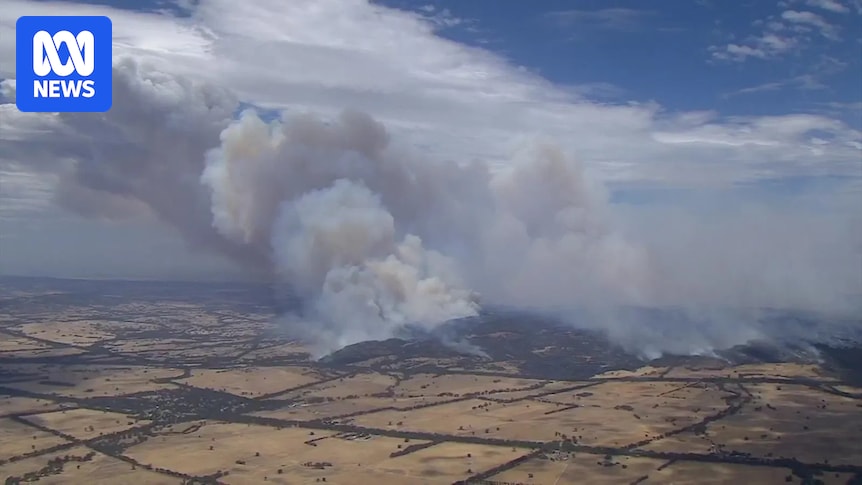
Residents in the northern regions of Victoria and New South Wales are being urged to limit outdoor activities as bushfire smoke continues to drift northward, severely impacting air quality. The Environment Protection Authority (EPA) of Victoria has issued an air quality warning, highlighting the potential health risks posed by the smoke.
On Sunday, air quality was rated as poor across various areas in both Victoria and New South Wales, as a prevailing weather system carried smoke from ongoing bushfires. Victorian Premier Jacinta Allan emphasized the seriousness of the situation, advising vulnerable individuals and those with respiratory conditions to remain indoors. She noted that the air quality notice could change with shifting wind conditions.
Smoke Spreads Across Regions
The smoke has spread to parts of New South Wales, including the Riverina and the Australian Capital Territory (ACT), with emergency services warning that it could linger for several days. Sydney residents reported smoke on Sunday morning, believed to be from Victorian bushfires and several fires burning in southern New South Wales.
Emergency services received numerous calls about smoke and poor air quality in Greater Sydney, with similar reports from the Central Coast and Newcastle. The NSW Rural Fire Service (RFS) attributed the smoke to the Brassknocker Fire on the state’s south coast and bushfires in Victoria. A southerly change was expected to clear the smoke throughout the day.
Weather Patterns and Air Quality
Senior meteorologist Miriam Bradbury from the Bureau of Meteorology explained that the NSW Riverina was experiencing particularly smoky conditions, with the region’s air quality rated as “very poor.” Residents were advised to avoid outdoor physical activities if they experienced symptoms like coughing or shortness of breath.
Bradbury noted that a weather system over the Great Australian Bight was pushing a high-pressure ridge over Victoria, Tasmania, and southern NSW. She anticipated that easing winds over the next few days could help dissipate the smoke. However, she cautioned that winds might strengthen again by Wednesday, potentially exacerbating the smoky conditions depending on the extent of the bushfires.
“With those winds expected to ease back in strength through this evening going into early tomorrow, hopefully we should see that smoke start to dissipate a little bit,” said Bradbury.
Health Implications and Precautions
Jen Martin, the chief environmental scientist at Victoria’s EPA, advised residents to monitor air quality through the EPA website, citing areas like Bendigo, Castlemaine, and Beechworth as having poor air quality. Health experts and advocacy groups are urging the public to take necessary precautions to protect themselves from smoke exposure.
Brian Oliver, a professor at the University of Technology Sydney specializing in environmental health, highlighted the dangers of bushfire smoke particles entering the body. He warned that these particles could affect not only the lungs but also other parts of the body, leading to adverse health effects.
“If you imagine, they’re like little toxic packages. What’s happening is that we’re breathing them in and then that’s affecting not only our lungs, but the rest of our body and causing adverse health effects,” Oliver stated.
Asthma Australia has also raised concerns, noting that poor air quality from bushfires increases the risk of asthma attacks. The organization advises individuals with asthma to follow their Asthma Action Plan and minimize exposure to smoke.
“Even at low levels, bushfire smoke can have serious health implications for anyone with asthma — the fine particle pollutants in smoke get deep into the lungs and inflame and narrow the airways, making it difficult to breathe,” said Asthma Australia CEO Kate Miranda.
Looking Ahead
As the situation develops, authorities continue to monitor air quality and provide updates to the public. Residents are encouraged to stay informed through official channels and take proactive measures to safeguard their health. With the potential for weather changes to influence smoke dispersion, the coming days will be critical in determining air quality across the affected regions.
The ongoing bushfire crisis underscores the need for robust emergency response strategies and increased awareness of environmental health impacts. As communities brace for further challenges, the importance of preparedness and resilience becomes ever more evident.