




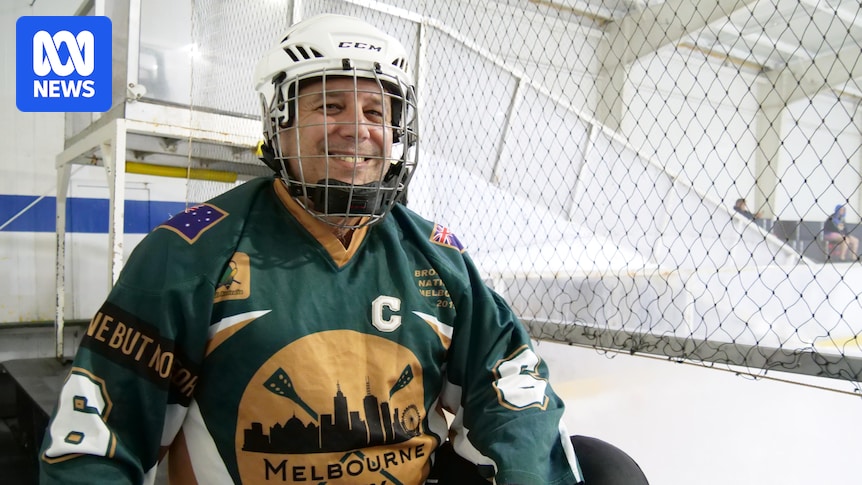
When North Queenslander Steve Pilchowski shares that he has represented Australia in sports, few expect it to be in an ice sport. Yet, he is one of the few Townsville broomball enthusiasts who have trained at the state’s only dedicated ice rink north of Brisbane for decades. For these players, engaging in an ice sport in a tropical city seemed logical.
“You get very hot, but it’s cold … so it just makes sense to get hot and sweaty in the fridge,” Mr. Pilchowski explained. “It’s 35 degrees outside, and I think it’s 5 degrees in the rink.”
Despite offering a cool escape from the sun, Queensland’s sole broomball club faces an uncertain future due to dwindling player numbers. This trend, according to the sport’s national body, is reflected nationwide, with only four active competitions.
The Rise and Fall of Broomball in Australia
Originating in Canada, broomball is played on an ice rink and bears similarities to ice hockey. However, players wear special shoes instead of skates and use a modified broom to hit a ball rather than a puck. The sport gained traction in Australia during the 1980s, with Townsville among the first clubs established.
Steve Pilchowski recalls joining the club over 30 years ago when the competition boasted 24 teams. “I’d just finished uni, and one of my friends said you have to try this crazy sport where you run around on ice in shoes,” he reminisced. “It was enormous.”
Many club members, including Pilchowski, went on to represent Queensland in national championships and even played for Australia at the 2008 World Championships in Canada. “The standard of play was just out of this world, it was so good,” he said.
Challenges and Declining Participation
According to Broomball Australia, participation across the country peaked around 2015, with the North Queensland association having multiple divisions across age groups. However, the club has struggled since the COVID-19 pandemic, now fielding only two teams of five for weekly games.
“People found other things to do, moved on in life and just got old and chose not to play broomball again, and we’ve been really struggling since then,” said Mark McLennan, president of the North Queensland Broomball Association. He noted that low participation has made costs such as insurance and rink hire unaffordable.
“If we don’t get a big influx in the next six months, we’re not going to have enough numbers to cover the costs,” McLennan warned.
Broomball’s National Struggle
Broomball Australia president Jeff Ferrara highlighted that there are only 300 regular broomball players across the country. Townsville, Sydney, Canberra, and Adelaide are the only cities with regular competitions. Ferrara pointed to a lack of ice rinks as a major factor in the sport’s decline.
After the New South Wales association’s home ice rink in Penrith permanently closed in 2022, the nearest available rink was an hour and a half away on the Central Coast. “Player count is down mainly because of a lack of ice time in general,” Ferrara said. “All the people we once had playing for us, it’s so difficult for them to go and play.”
Ferrara believes government funding for ice rinks could provide a solution, making venues financially viable and offering a space for ice sports. “They almost need to be viewed in the same way an indoor stadium would be viewed, where it’s owned by the local government or state government and funded like another facility would be,” he suggested. “Without these things, you don’t have anywhere for the community to do their thing.”
Looking Forward
Despite the challenges, Ferrara remains hopeful that the passion for broomball will sustain the sport. The national championships continue to be a popular event, drawing players from across the country. The next National Broomball Championships are scheduled for April 2026, offering a glimmer of hope for enthusiasts.
The future of broomball in Australia hangs in the balance, with the need for increased participation and support more pressing than ever. As the sport faces these hurdles, its community remains committed to keeping the ice alive.