

4ZZZ, Brisbane’s pioneering FM stereo station, is marking a remarkable milestone: 50 years on the air. Launched on December 8, 1975, by a group of passionate students at the University of Queensland, 4ZZZ has defied expectations and remained a bastion of alternative music, politics, and free speech.
The station’s inaugural broadcast featured DJ John Woods, a former Channel 9 presenter, who emphasized the importance of free speech before playing The Who’s “Won’t Get Fooled Again.” This set the tone for 4ZZZ’s mission: to offer a radical alternative to mainstream media and to “agitate, educate, and organize.”
Despite predictions of a short-lived existence, 4ZZZ has endured, staying true to its founding principles. “It’s just passion, people power, and belief in what we do and how we do it that keeps Triple Zed going,” says outgoing station manager Jack McDonnell.
A Legacy of Resilience
Brisbane in the 1970s was under the conservative rule of Premier Joh Bjelke-Petersen, whose government was notorious for suppressing dissent. Amidst this backdrop, 4ZZZ emerged as a voice of resistance, securing an FM license just before the dismissal of the Whitlam government. The station became a platform for challenging the status quo and amplifying marginalized voices.
4ZZZ’s programming included pioneering shows like Dykes On Mykes, Murri Hour, and Locked In, which gave a voice to LGBTQI+ communities, Indigenous Australians, and prisoners, respectively. The station’s irreverent tone and commitment to social justice resonated with listeners and helped shape Brisbane’s cultural landscape.
Challenges and Triumphs
The station faced significant challenges, particularly in the late 1980s. The Young Nationals-led student union cut funding and attempted to evict 4ZZZ from its campus home. However, the community rallied, and the station continued broadcasting by connecting directly to its transmitter on Mount Coot-tha.
Dr. Heather Anderson, a Griffith University academic and long-term Triple Zed volunteer, recalls the resilience of the station during this period. “There was a mass exodus from Brisbane of pretty much all the Triple Zed-minded people,” she says. “But people rallied, and the station survived.”
Financial Struggles and Creative Solutions
After relocating to Toowong in 1989, 4ZZZ faced financial difficulties. The station had to reconsider its stance on sponsorship and explored unconventional revenue streams, including renting signal bandwidth and broadcasting music to Pizza Huts.
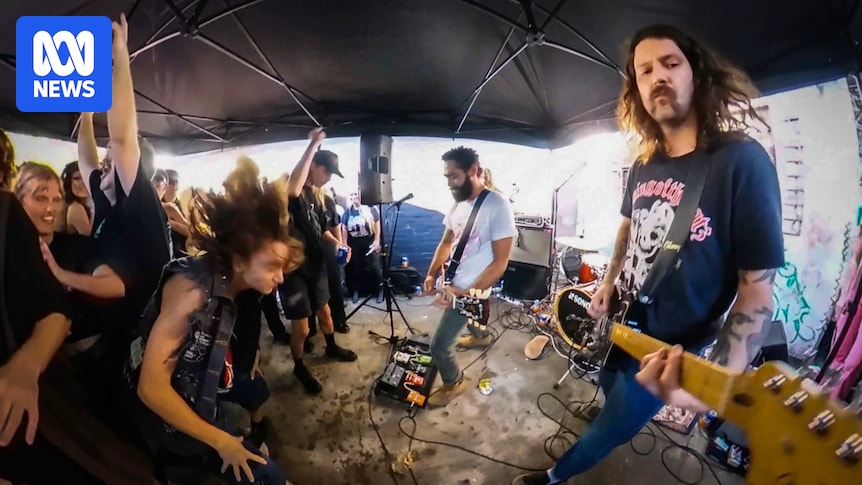
Market Days, which began in 1982, became a crucial fundraising event. The 1992 revamp of Market Days, featuring bands like Custard and the Dreamkillers, attracted thousands and generated much-needed funds. These events, along with Beerstock festivals, became integral to the station’s survival.
“Every six months we’d put on these big festivals, completely volunteer-run, all the bands playing for free,” recalls Anderson. “They were a lifeline for the station.”
Championing Local Music
4ZZZ has been instrumental in promoting Brisbane’s music scene, supporting bands like The Saints, The Go-Betweens, and Powderfinger. McDonnell notes, “Each era has its own idea of what the ideal 4ZZZ band is. That’s what makes the place really special.”
The station’s 50th anniversary celebrations have included concerts and events that highlight its rich musical history, with performances by Regurgitator, The Saints, and more.
Looking to the Future
As 4ZZZ celebrates its 50th anniversary, it remains committed to its founding principles. The station continues to support alternative music and journalism while advocating for marginalized communities. McDonnell emphasizes the importance of intergenerational dialogue and adapting to contemporary issues.
“It’s nice being able to have the nostalgia while marrying it with ‘Where are we now? Where are we going?'” McDonnell says.
The 4ZZZ Board has developed a Rights Framework to guide future strategy, focusing on sustainability, inclusivity, and accessibility. Anderson highlights the need for improved accessibility at the station’s Fortitude Valley location.
With nearly 3,600 subscribers, 4ZZZ is thriving. Anderson notes that many subscribers support the station because of its values. “Triple Zed really is powered by people inside and subscribers outside that keep us going,” McDonnell reflects.
As 4ZZZ looks to the future, it remains a testament to the power of community-driven media and the enduring spirit of resistance. The station’s legacy is one of passion, perseverance, and a commitment to amplifying diverse voices.

