




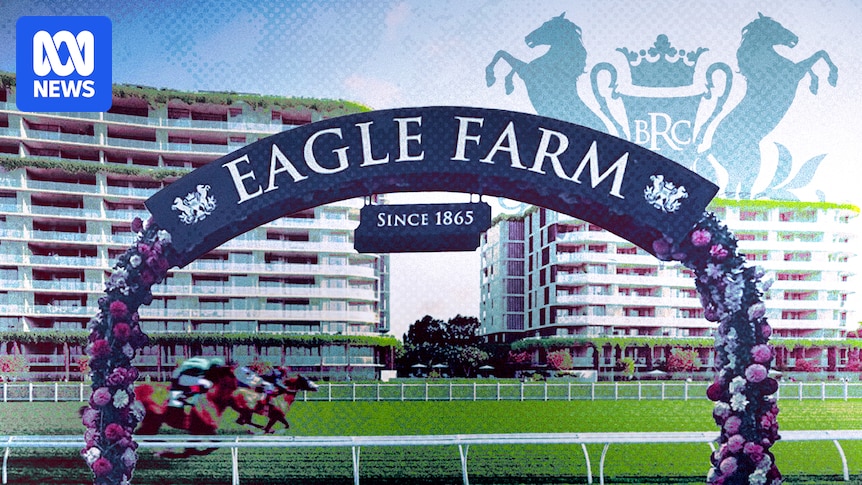
Members of Queensland’s prestigious Brisbane Racing Club (BRC) are demanding clarity following revelations that the club’s former chairman, Neville Bell, engaged in a profitable arrangement with Mirvac, the developer of its luxury residential precinct. The controversy centers around Bell’s receipt of over $50,000 annually in rental income from Mirvac for the use of his trackside apartment as a display suite, a deal made while he oversaw the $850 million project.
The disclosure emerged during a recent Annual General Meeting (AGM), with members expressing concerns about potential conflicts of interest and questioning whether the club sacrificed regular income for Bell’s benefit. Although there is no suggestion of legal wrongdoing by Bell, the incident has sparked a broader debate on governance and transparency within the club.
Governance Under the Microscope
The BRC, a historic institution in Queensland’s racing scene, is currently facing backlash over ongoing integrity issues. Complaints regarding alleged governance failures have been lodged with Racing Queensland, the Minister for Racing, and the Crime and Corruption Commission (CCC). This scrutiny coincides with the Queensland government’s announcement of significant public funding to replace the club’s aging grandstand, a project estimated to cost at least $100 million.
Businessman Neville Bell, who led the BRC for 12 years, was praised by his successor Richard Morrison for steering the club through a transformative $1.5 billion master plan. This plan included the redevelopment of the iconic Eagle Farm Racecourse into a resort-style residential complex known as Ascot Green. Bell played a pivotal role in selecting Mirvac as the joint venture partner for this ambitious project.
Details Emerge at Heated AGM
The AGM revealed that Bell had informed the BRC board in 2021 of his interest in purchasing a newly completed unit in the second tower of the development. Property records indicate that the unit was owned by the BRC, and Bell’s purchase was settled in February 2022. Following the purchase, Bell rented the apartment back to Mirvac as a display suite, a transaction not disclosed to club members until the recent AGM.
“Transparency is absolutely fundamental — what isn’t disclosed can be twice as harmful as what is,” remarked a forensic partner at a boutique advisory firm.
During the AGM, members questioned the board about the lack of disclosure regarding Bell’s rental income in the club’s annual report, a requirement for transactions involving potential conflicts of interest. Bell defended the arrangement, stating that the apartment was already tenanted by Mirvac when he acquired it and that the rental income was not a related party transaction.
Expert Opinions on Governance Practices
Experts consulted by ABC Investigations have highlighted the importance of transparency and proactive governance. A lawyer specializing in regulatory investigations questioned why the BRC did not disclose the transaction to its members, given the club’s policy permitting directors to purchase properties from its joint venture with Mirvac.
“Good governance means taking proactive steps to be transparent and accountable,” advised a partner at a mid-tier accounting firm.
In response to the concerns raised, Bell’s lawyer stated that the former chairman always acted in the best interests of the club and its members, complying with all relevant laws. Mirvac, for its part, confirmed that the apartment lease was at market value and that such arrangements are standard industry practice.
Broader Implications and Future Reforms
The AGM also raised questions about the BRC board’s spending on travel and entertainment, which amounted to over $150,000 for eight directors last year. Additionally, members inquired about a termination payout to a former property executive, with assurances given that only contractual entitlements were paid.
The controversy surrounding the BRC comes amid a broader review of Queensland’s racing industry. A landmark report released recently recommends reforms to enhance the integrity and governance of racing clubs. The Crisafulli government has accepted recommendations to prohibit related party transactions without prior approval from Racing Queensland and to implement stricter rules on club travel and spending.
“Having deals on the side that have not been revealed is not appropriate,” noted an expert in international corporate governance.
As the BRC navigates these challenges, the club’s future governance practices will likely be scrutinized closely. The implications of these developments could extend beyond the BRC, potentially influencing governance standards across the broader racing industry in Queensland.