

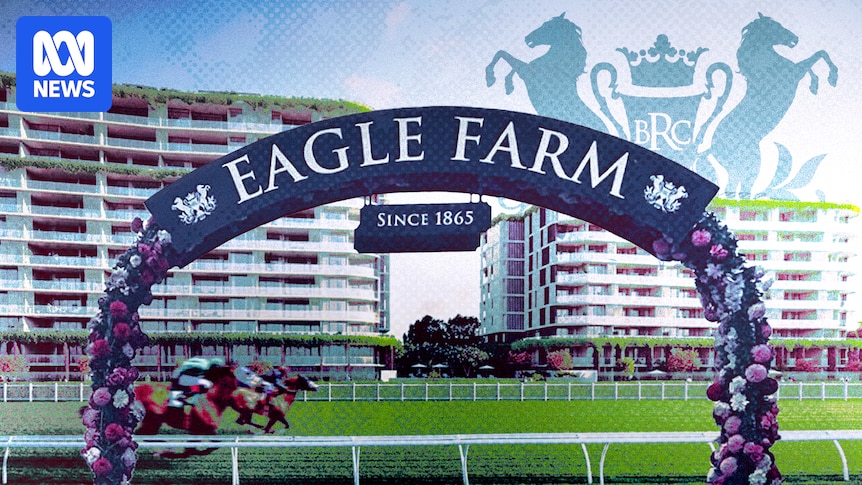
Members of Queensland’s prestigious Brisbane Racing Club (BRC) are demanding accountability following revelations that its former chairman, Neville Bell, engaged in a profitable arrangement with Mirvac, the developer of the club’s luxury residential precinct. This arrangement occurred while Bell oversaw the $850 million project. The controversy emerged during a recent Annual General Meeting, where members voiced concerns over potential conflicts of interest and governance failures.
At the heart of the issue is Bell’s receipt of over $50,000 annually in rental income from Mirvac for the use of his trackside apartment as a display suite. While there is no suggestion of legal wrongdoing, members question whether the club compromised its financial interests for Bell’s benefit. Bell maintains that he acted in the club’s best interest, adhering to all relevant laws.
Governance Under the Microscope
The BRC, one of Australia’s most historic race clubs, is already under scrutiny for broader integrity and transparency issues. ABC Investigations has uncovered complaints regarding alleged governance failures and misconduct, which have been reported to Racing Queensland, the Minister for Racing, and the Crime and Corruption Commission (CCC). These developments coincide with the Crisafulli government’s announcement of significant public funding to replace the club’s ageing grandstand, a project estimated to cost at least $100 million.
Neville Bell, who led the BRC for 12 years, was praised for his transformative leadership, which included a $1.5 billion redevelopment plan for the Eagle Farm Racecourse precinct. This plan involved a partnership with Mirvac to create Ascot Green, a resort-style residential complex. Bell’s involvement with Mirvac began in 2015, following a rigorous selection process for the joint venture.
Questions of Transparency
The AGM revealed that Bell had informed the BRC board in November 2021 of his interest in purchasing a ground-floor unit in the second tower of the development, which was owned by the BRC. The club claims the purchase was conducted in line with a policy ensuring fairness and transparency. After the sale, Bell leased the apartment back to Mirvac, a deal that was not disclosed to club members until the recent AGM.
“Transparency is absolutely fundamental — what isn’t disclosed can be twice as harmful as what is,” noted a forensic partner at a boutique advisory firm.
Members questioned why Bell’s rental income was not disclosed in the club’s annual report as a “related party disclosure,” a requirement for transactions that could influence decision-making. The club’s external auditors, Bentleys, did not respond to inquiries about the matter.
Expert Opinions and Industry Standards
Experts in audit, tax, and corporate governance have weighed in on the situation. A lawyer specializing in regulatory investigations highlighted the club’s policy allowing directors to purchase properties from its joint venture with Mirvac, questioning the lack of transparency in this particular transaction. Another expert emphasized the importance of proactive disclosure to maintain good governance.
“Good governance means taking proactive steps to be transparent and accountable. Waiting for these issues to be discussed at an AGM is very late in the piece and may reflect poorly on corporate culture,” a partner at a mid-tier accounting firm advised.
Mirvac defended the arrangement, stating that leasing investor-owned apartments for display purposes is standard industry practice. A spokesperson confirmed that all transactions were properly declared and recorded in compliance with requirements.
Broader Implications and Reforms
The AGM also raised concerns about the BRC board’s spending on travel and entertainment, as well as a termination payout to a former property executive. These issues, coupled with the abrupt departure of former CEO Tony Partridge, who signed a non-disclosure agreement, have fueled further scrutiny of the club’s governance practices.
Racing Queensland, the industry control body, attended the AGM but has not confirmed whether it is investigating the allegations. The Queensland Minister for Racing has encouraged individuals to report relevant information to regulatory bodies.
A landmark report on Queensland’s racing industry has recommended significant reforms to enhance integrity and governance. These include prohibiting related party transactions without prior approval and implementing stricter rules on club spending to ensure sustainability.
The BRC’s current chairman, Richard Morrison, has assured members that the club is committed to transparency and compliance with all corporate requirements. As the club navigates these challenges, the spotlight remains on its governance practices and the need for reform to restore member confidence.